Free delivery
65.00 €
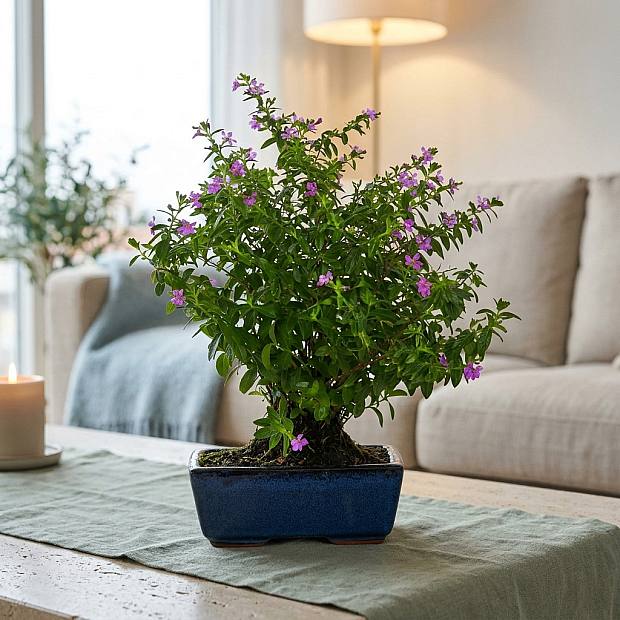
Cuphea hyssopifolia



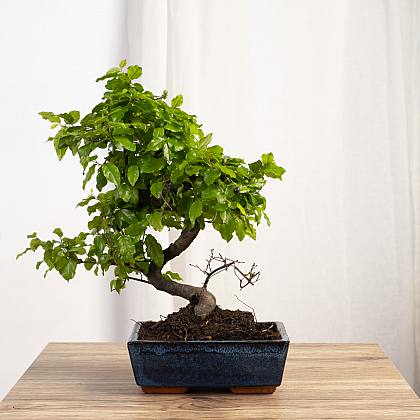
To make your Cuphea Bonsai a true showstopper, consider its placement carefully. It looks magnificent on a minimalist shelf, a warm wooden table, or a desktop where its intricate details can be appreciated up close. To ensure it grows evenly and doesn't start leaning towards the light, give the pot a quarter turn once a week. This simple trick promotes a balanced, symmetrical canopy. For an extra touch of care, especially in dry indoor environments, placing it on a humidity tray will work wonders, keeping its foliage lush and its flowers vibrant.
Why is the Cuphea often called False Heather? It's a classic case of mistaken identity in the plant world! While its profusion of tiny flowers and small leaves bear a striking resemblance to Scottish Heather (Calluna vulgaris), they are not related at all. Our lovely Cuphea belongs to the Lythraceae family, which also includes pomegranates and crepe myrtles. This botanical quirk makes it a fun conversation starter.
What truly makes this plant special for the art of bonsai is its naturally small scale. Traditional bonsai subjects are trees that are painstakingly miniaturized. The Cuphea, however, is naturally petite—its leaves are small, its flowers are tiny, and its growth is dense. This makes it a perfect candidate for creating a believable and beautifully proportioned miniature landscape right from the start. Its ability to flower so prolifically is another bonus, offering a dynamic beauty that many traditional bonsai trees can't match. When grown outdoors, those irresistible little flowers are a magnet for pollinators like hummingbirds and butterflies, turning the plant into a bustling hub of garden activity. So, while it may be a 'false' heather, its charm is 100% genuine.
Is your Cuphea sending out an SOS? Here’s how to read its dramatic signals: