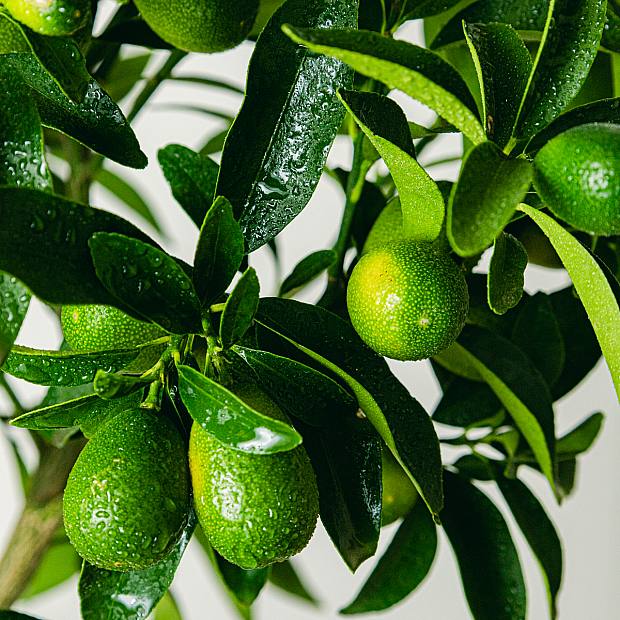




Giant Citrus Kumquat
Advice
-
Fertilisation:
- Feed your kumquats with a balanced fertiliser during spring and summer.
- Reduce fertilisation in autumn and winter, as the plant tends to be less active.
-
Pruning:
- Perform light pruning to shape and remove dead or diseased branches.
- Avoid over pruning, as this can affect fruit production.
-
Frost protection:
- Kumquats are sensitive to frost. If you live in an area where temperatures drop considerably, consider protecting the plant with blankets or bringing it inside during cold nights.
-
Pest and disease control:
- Regularly inspect leaves for signs of pests such as spider mites, aphids or mealybugs.
- Treat pests and diseases as soon as you detect them, using organic methods or products recommended for citrus.
-
Pollination:
- Kumquats are self-fertile, but cross-pollination can increase fruit production. If possible, plant more than one kumquat nearby.
-
Harvesting:
- Harvest kumquats when fully ripe. They can be eaten fresh, used in recipes or made into jams.
-
Attention to the roots:
- Avoid damaging the roots when planting or doing activities around the tree. The shallow roots of kumquats are sensitive.
Signs of weakness
-
Leaf yellowing: May be caused by nutritional deficiencies, overwatering or soil problems.
-
Premature fruit drop: This could be due to pollination problems, lack of nutrients or water stress.
-
Leaf spots: These may be signs of fungal or bacterial diseases. Disease control often involves the application of fungicides or bactericides.
-
Fruit deformities: May be caused by insects or diseases.
-
Sudden wilting: May be a sign of lack of water or root system diseases.
-
Presence of pests: Mites, aphids and other insects may affect kumquats. Curled leaves, leaf spots or the visible presence of insects can be signs of infestation.