Free delivery
65.00 €
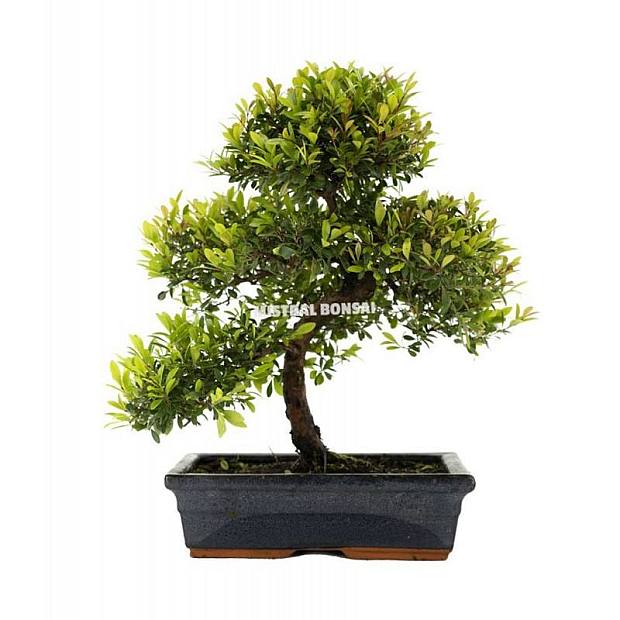
Syzygium buxifolium




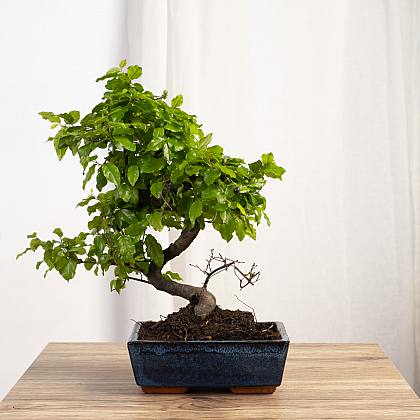
To truly elevate your Syzygium bonsai, consider its placement as a key element of your decor. The dark, glossy pot provides a beautiful contrast to light-coloured wooden surfaces. Position it against a neutral-toned wall to make its vibrant green foliage pop. The daily ritual of checking its soil and misting its leaves can become a mindful moment to start your day. Don't be afraid to gently prune new shoots to maintain its elegant shape; this interaction strengthens your connection to this beautiful living art piece.
While the art of bonsai is famously associated with Japan, its origins trace back over a thousand years to ancient China, where it was known as 'penzai.' The practice involved growing miniature landscapes in shallow containers. It was later adopted and refined by Japanese Zen Buddhists who honed the craft into the bonsai art we recognize today. The Syzygium buxifolium itself has a fascinating story. Belonging to the Myrtaceae family, it is a relative of the clove tree! While its primary appeal is its beautiful foliage and form, in its natural habitat, it produces small, white, fluffy flowers followed by purplish, edible berries. Though the berries are safe to eat, they are more of a novelty than a culinary delight, often being quite tart. Having this particular species as a bonsai means you are not just cultivating a tree, but a tiny piece of a large and flavourful family history, connecting your living room to the aromatic spice islands and ancient artistic traditions.
Your Syzygium bonsai is usually serene, but sometimes it gets a bit dramatic to tell you what it needs. Are its leaves throwing a Yellow Tantrum? They might be shouting, "I'm too wet!" or "I'm too dry!" Check the soil before reaching for the watering can. If you see crispy, brown spots, it's likely a case of Sunburn Scorch—it's been getting too much direct, harsh sunlight and needs a shadier spot. And if you notice a general, sad droopiness, it's probably just thirsty and pleading for a good drink. Pay attention to these little signs; your bonsai is a great communicator!