Cycas revoluta is not safe for children and pets. All parts of the plant contain cycasin, a toxin that can cause stomach upset, vomiting and other symptoms if ingested. Care
Light: Place the plant in bright indirect light. Avoid direct sunlight during the hottest part of the day, as this can cause burns to the leaves.
Temperature: Cycas revoluta prefers warm temperatures and does not tolerate frost. Keep the plant in a place with a constant temperature, avoiding sudden changes in temperature.
Watering: Water regularly during the growing season (spring and summer), allowing the soil to dry out slightly between waterings. Reduce watering during the winter when the plant is dormant.
Soil and drainage: Use a well-drained potting soil that allows water to drain easily. Avoid letting the plant stand in moist soil for prolonged periods, as this can lead to root rot.
Fertilisation: Apply a diluted balanced fertiliser once a month during the growing season to provide the necessary nutrients. Do not fertilise during winter.
Pruning: Remove dead or damaged leaves as needed to maintain a tidy appearance and prevent plant health problems.
Transplant: Transplant Cycas revoluta to a slightly larger pot when its roots completely fill the current pot, usually every two to three years.
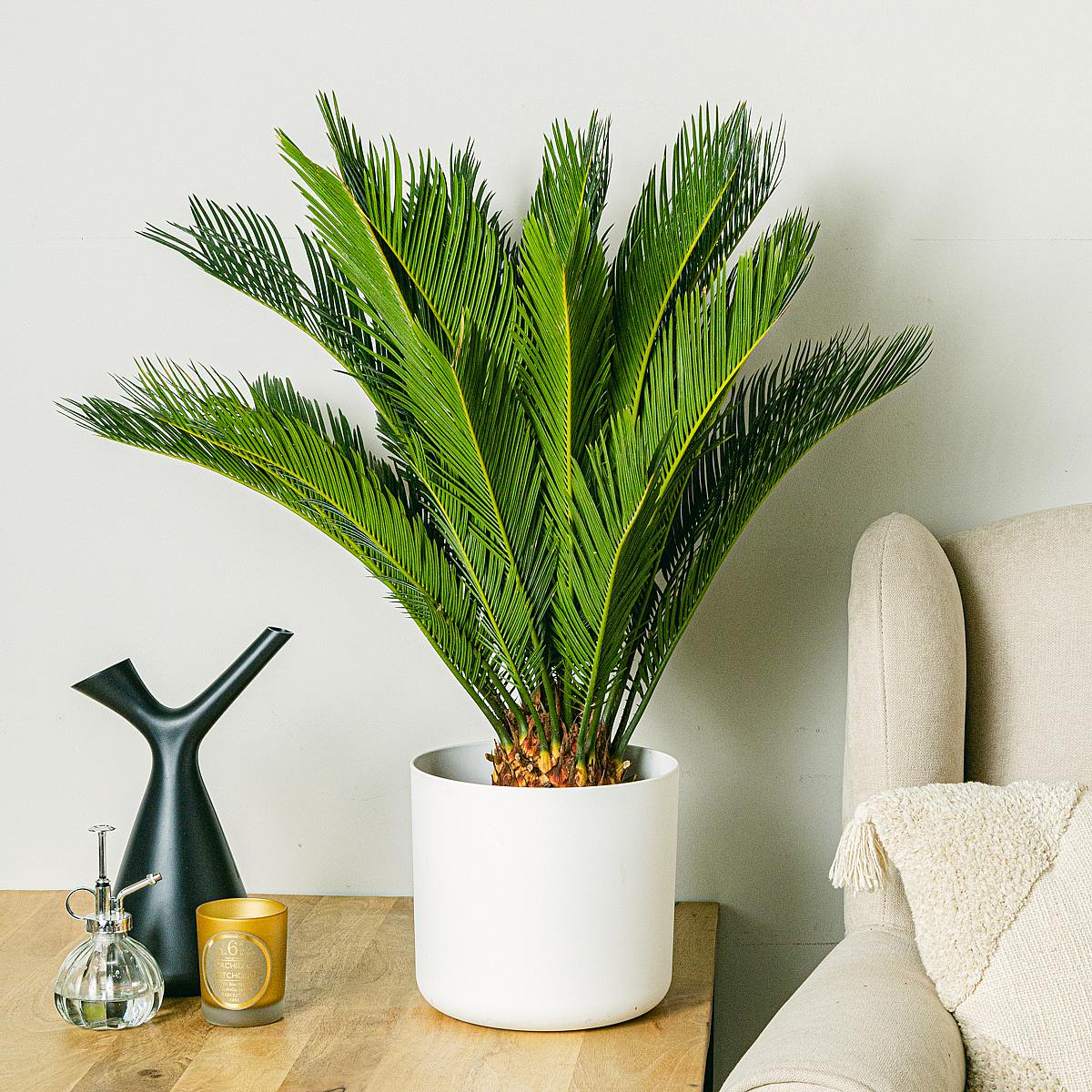
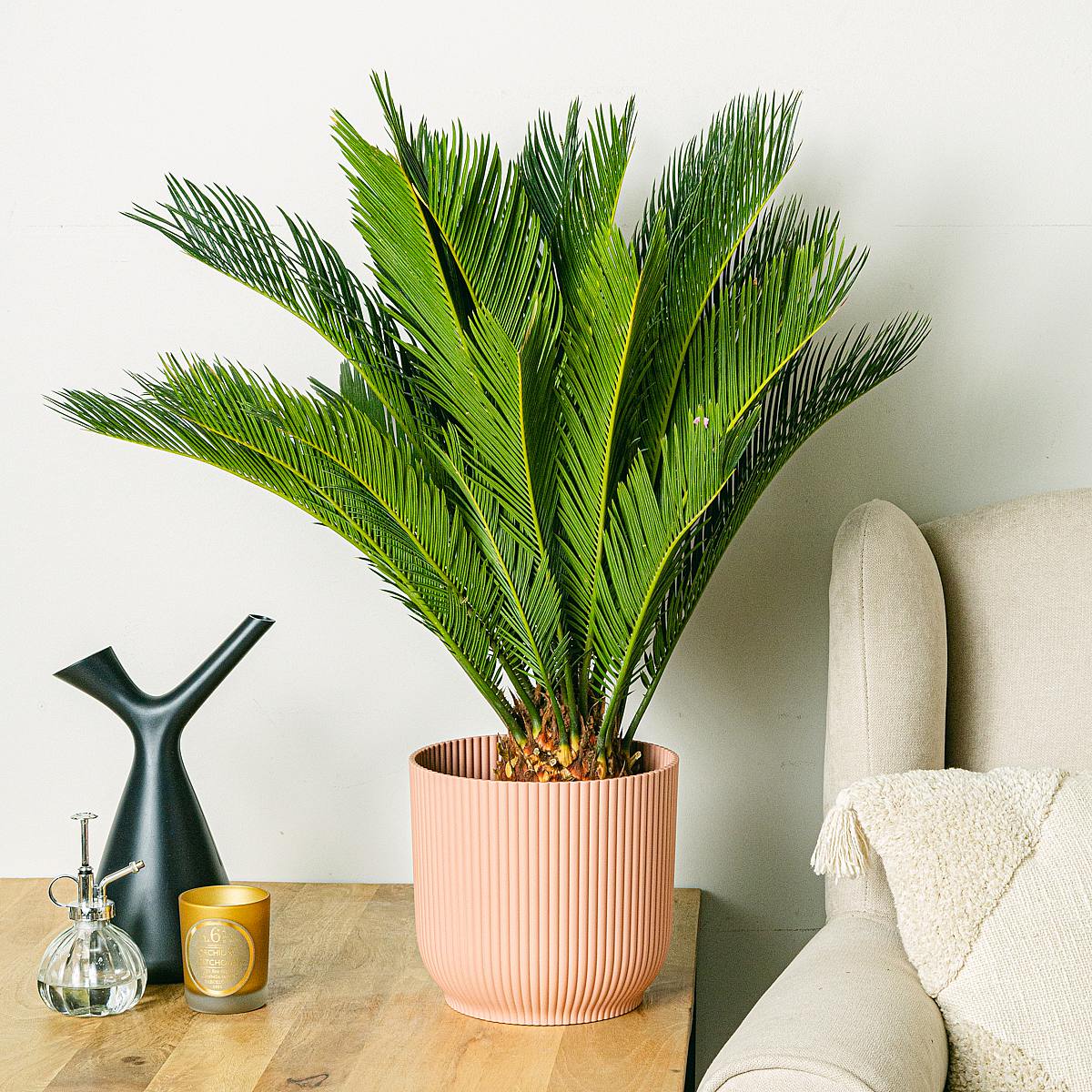
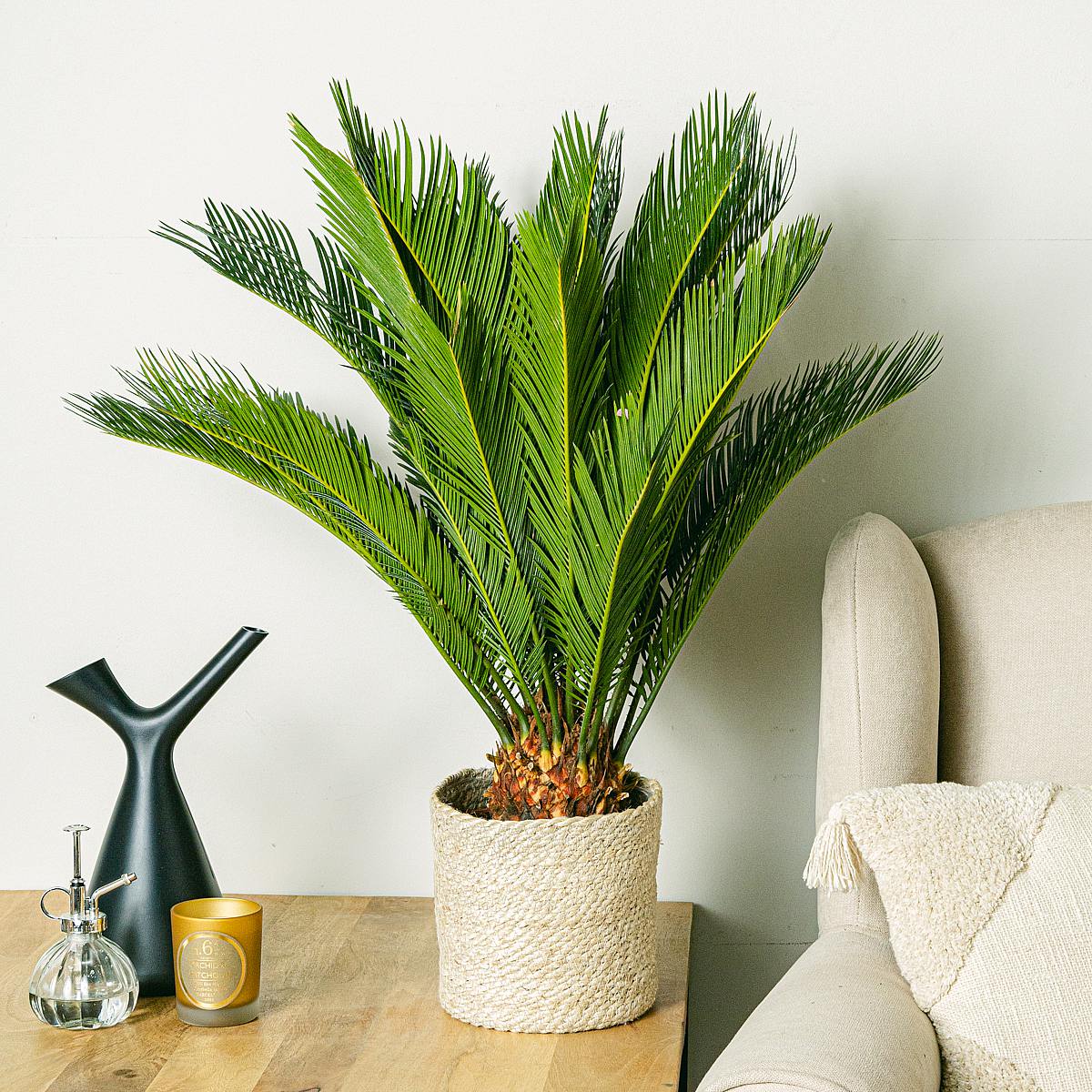
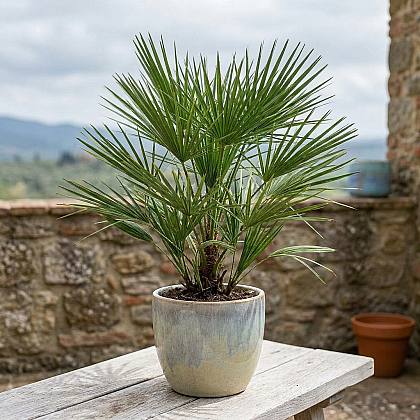
Cycas revoluta, also known as 'cica' or 'sago palm', is a fascinating ornamental plant with elegantly curving, pinnate, leathery leaves.
Specifications
Height 60-70 cm
Pot diameter 17 cm Recommendations
Cycas revoluta is not safe for children and pets. All parts of the plant contain cycasin, a toxin that can cause stomach upset, vomiting and other symptoms if ingested. Care
Light: Place the plant in bright indirect light. Avoid direct sunlight during the hottest part of the day, as this can cause burns to the leaves.
Temperature: Cycas revoluta prefers warm temperatures and does not tolerate frost. Keep the plant in a place with a constant temperature, avoiding sudden changes in temperature.
Watering: Water regularly during the growing season (spring and summer), allowing the soil to dry out slightly between waterings. Reduce watering during the winter when the plant is dormant.
Soil and drainage: Use a well-drained potting soil that allows water to drain easily. Avoid letting the plant stand in moist soil for prolonged periods, as this can lead to root rot.
Fertilisation: Apply a diluted balanced fertiliser once a month during the growing season to provide the necessary nutrients. Do not fertilise during winter.
Pruning: Remove dead or damaged leaves as needed to maintain a tidy appearance and prevent plant health problems.
Transplant: Transplant Cycas revoluta to a slightly larger pot when its roots completely fill the current pot, usually every two to three years.
Fun facts
Add to cart
Cycas revoluta, also known as 'cica' or 'sago palm', is a fascinating ornamental plant with elegantly curving, pinnate, leathery leaves.