From
Free delivery
37.00 €
41.00 €
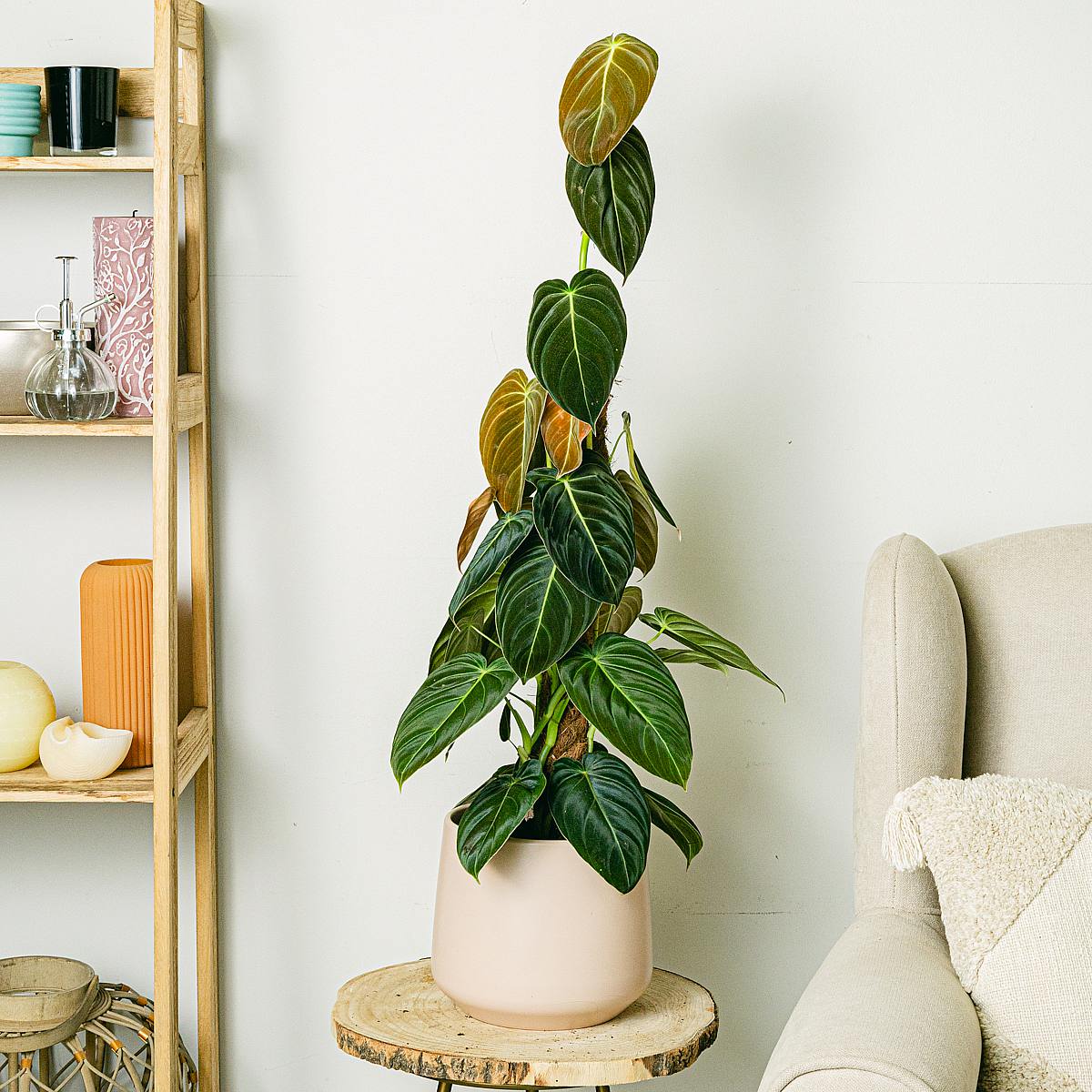
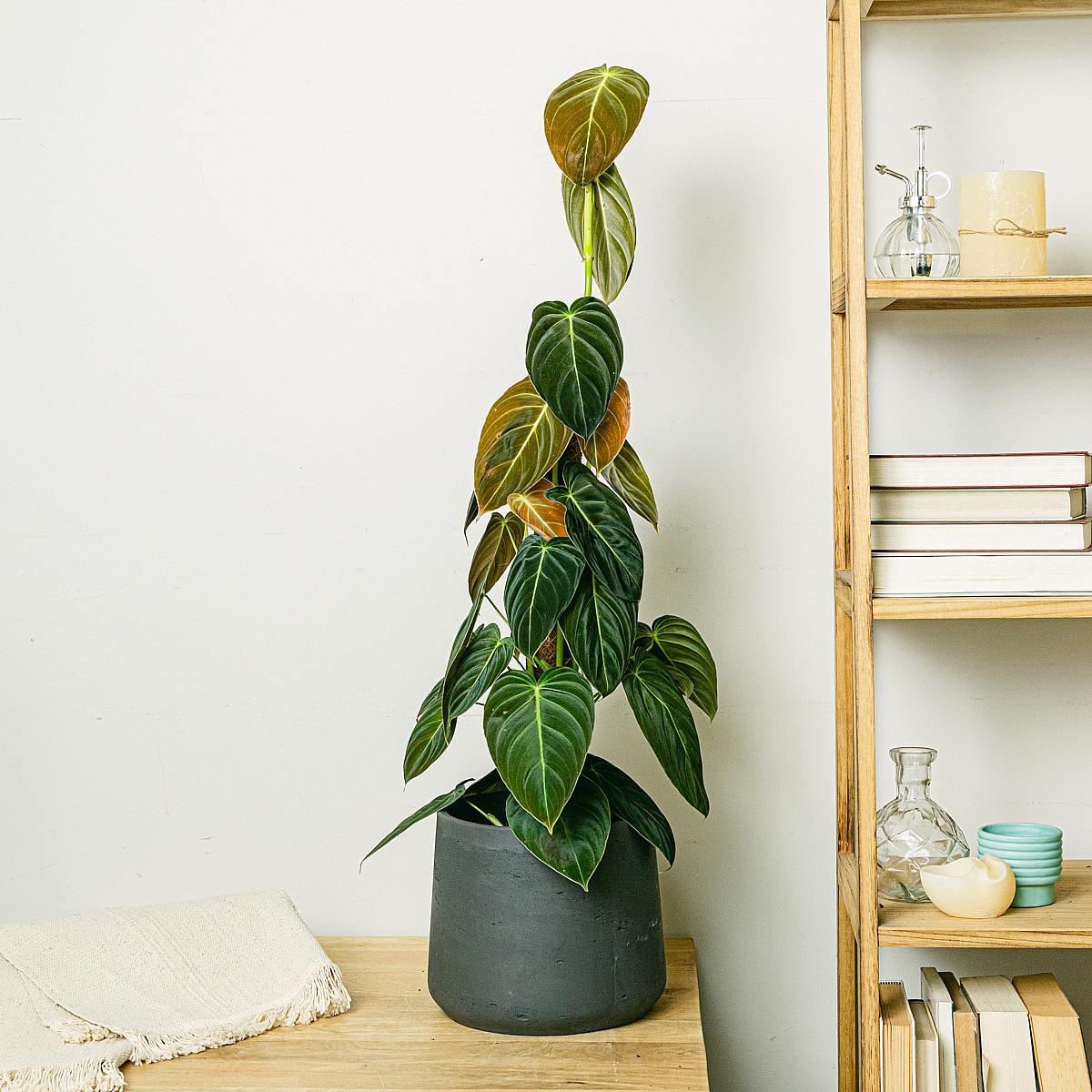
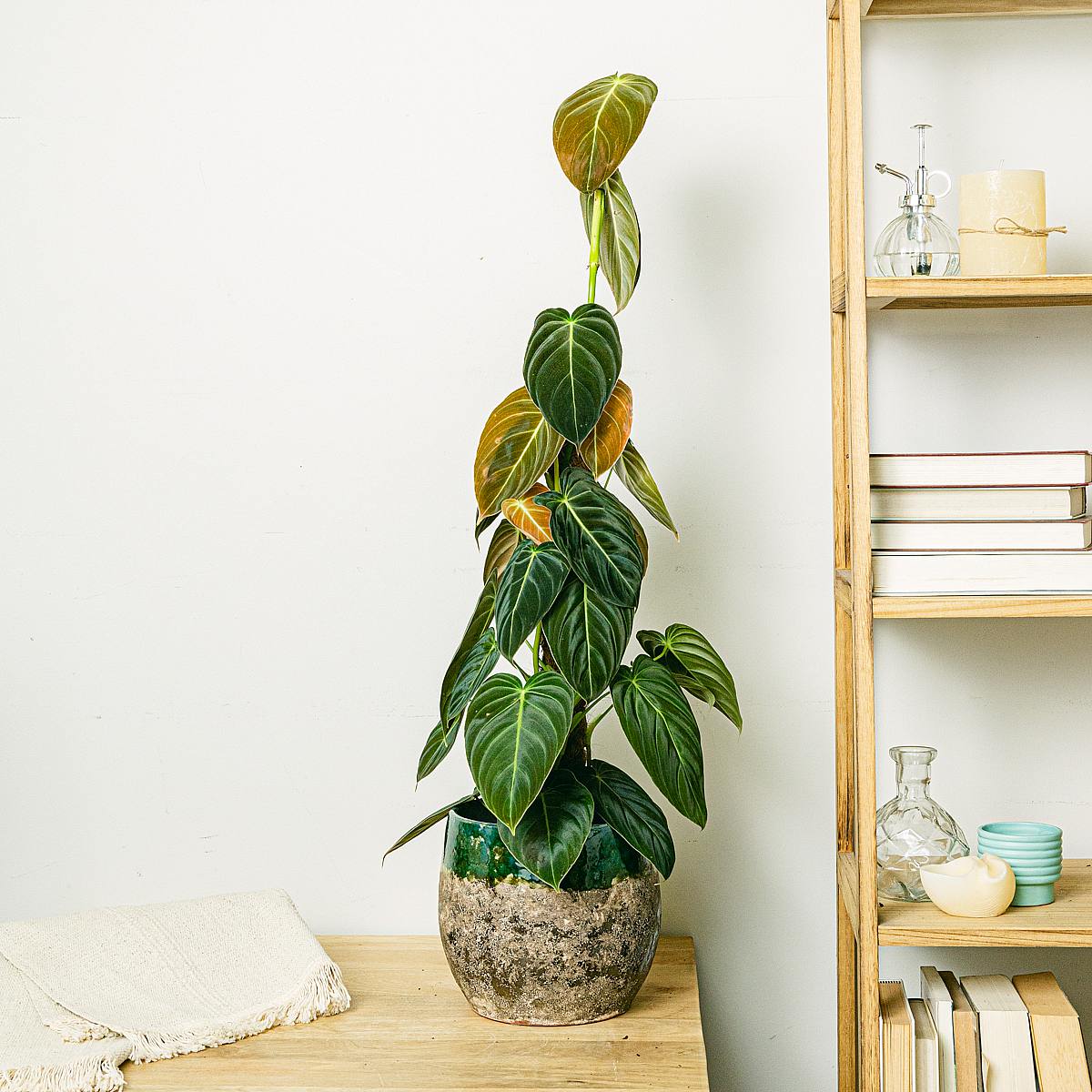
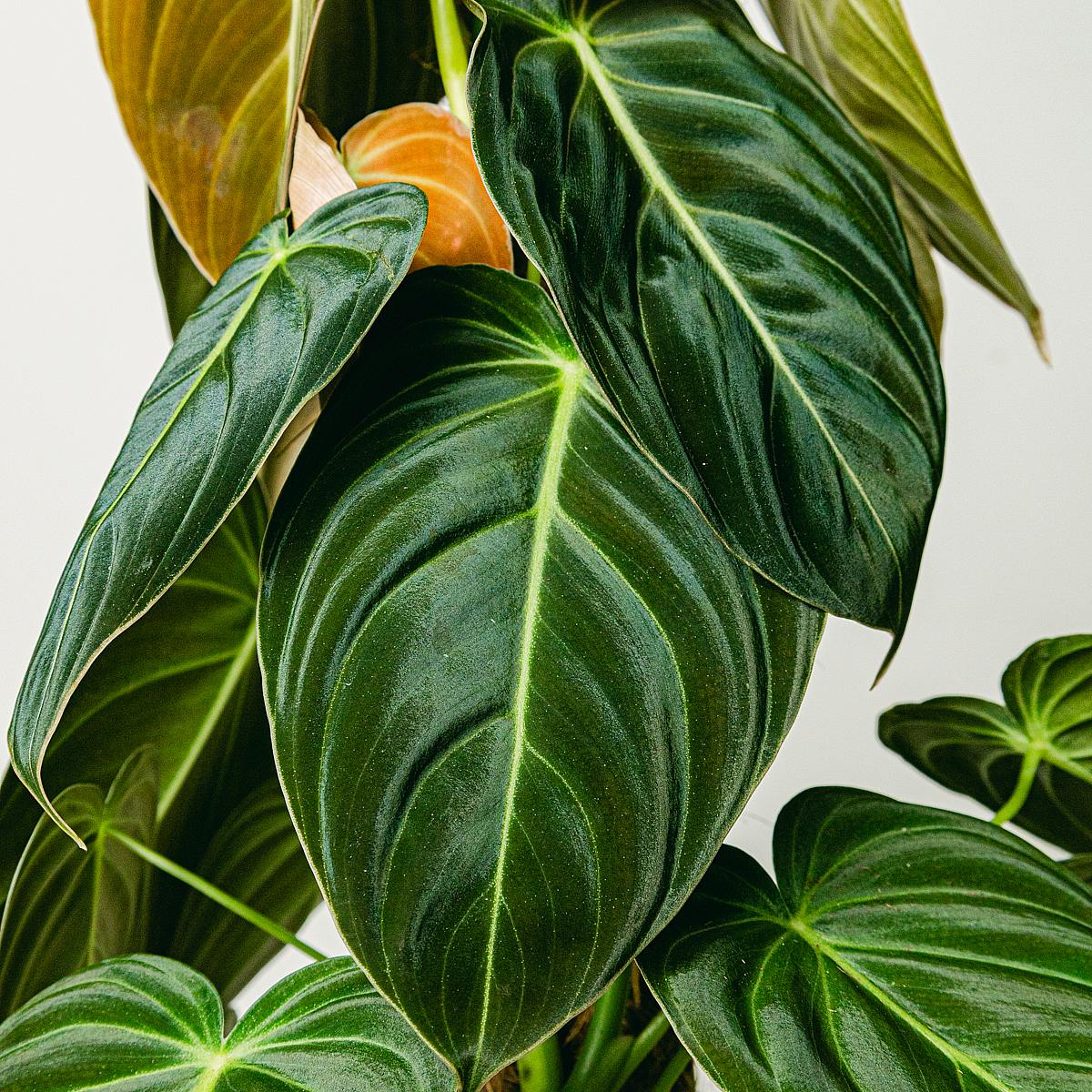





Adult leaves are so dark green they look matte black, thanks to a very high concentration of anthocyanin pigments. It is a hybrid cultivar selected specifically for this extreme colour, unique within Philodendron.
New shoots emerge in vivid burgundy red, with no mature chlorophyll. As they develop they darken through bronze and wine-green before reaching the near-black mature green. The contrast is spectacular.
Yes. Like all Philodendron, it contains calcium oxalate, causing oral irritation, salivation and vomiting in dogs and cats. Moderate toxicity typical of the genus.
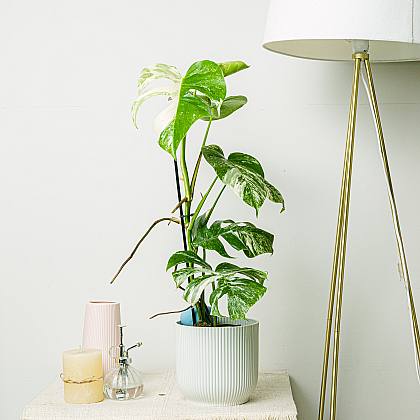
Self-supporting: it forms a compact clump with short, stiff petioles and does not need a trellis. This sets it apart from many climbing Philodendron and makes it ideal for decorative pots in living rooms.
Relatively compact: it reaches 60–90 cm in height and width as an adult. Growth is slow (1–2 new leaves a month under good conditions), but the leaves are large (30–40 cm) and very decorative.
It is a relatively old cultivar, developed in the 1980s in the United States by Bamboo Nursery. Despite its age, it remains highly sought after for its unique colour. One of the most genetically stable Philodendron: it does not revert or mutate.
Philodendron Melanochrysum, also known as Black Gold, is native to the rainforests of Central and South America.
Adult leaves are so dark green they look matte black, thanks to a very high concentration of anthocyanin pigments. It is a hybrid cultivar selected specifically for this extreme colour, unique within Philodendron.
New shoots emerge in vivid burgundy red, with no mature chlorophyll. As they develop they darken through bronze and wine-green before reaching the near-black mature green. The contrast is spectacular.
Yes. Like all Philodendron, it contains calcium oxalate, causing oral irritation, salivation and vomiting in dogs and cats. Moderate toxicity typical of the genus.
Self-supporting: it forms a compact clump with short, stiff petioles and does not need a trellis. This sets it apart from many climbing Philodendron and makes it ideal for decorative pots in living rooms.
Relatively compact: it reaches 60–90 cm in height and width as an adult. Growth is slow (1–2 new leaves a month under good conditions), but the leaves are large (30–40 cm) and very decorative.
It is a relatively old cultivar, developed in the 1980s in the United States by Bamboo Nursery. Despite its age, it remains highly sought after for its unique colour. One of the most genetically stable Philodendron: it does not revert or mutate.