From
Free delivery
37.00 €
41.00 €
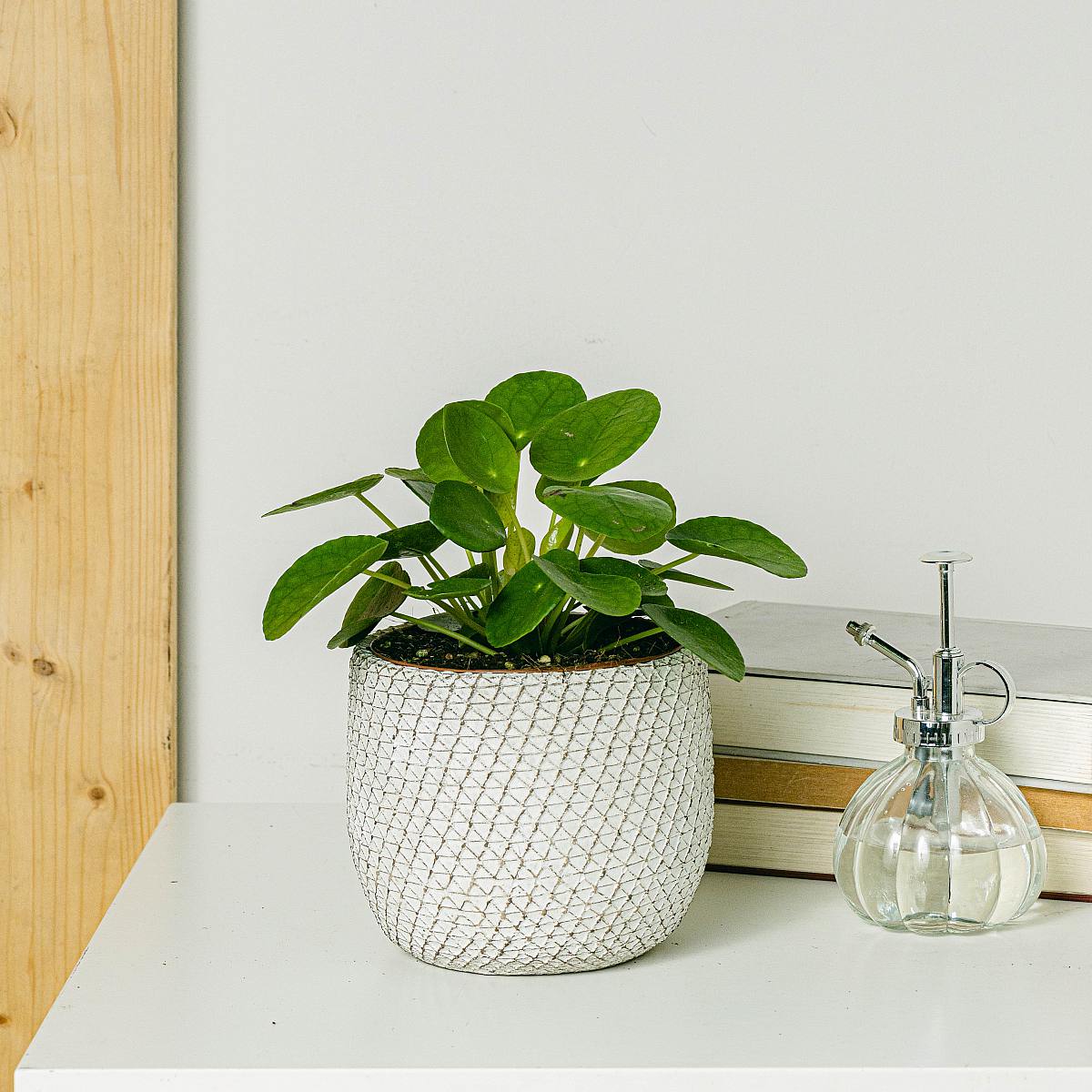
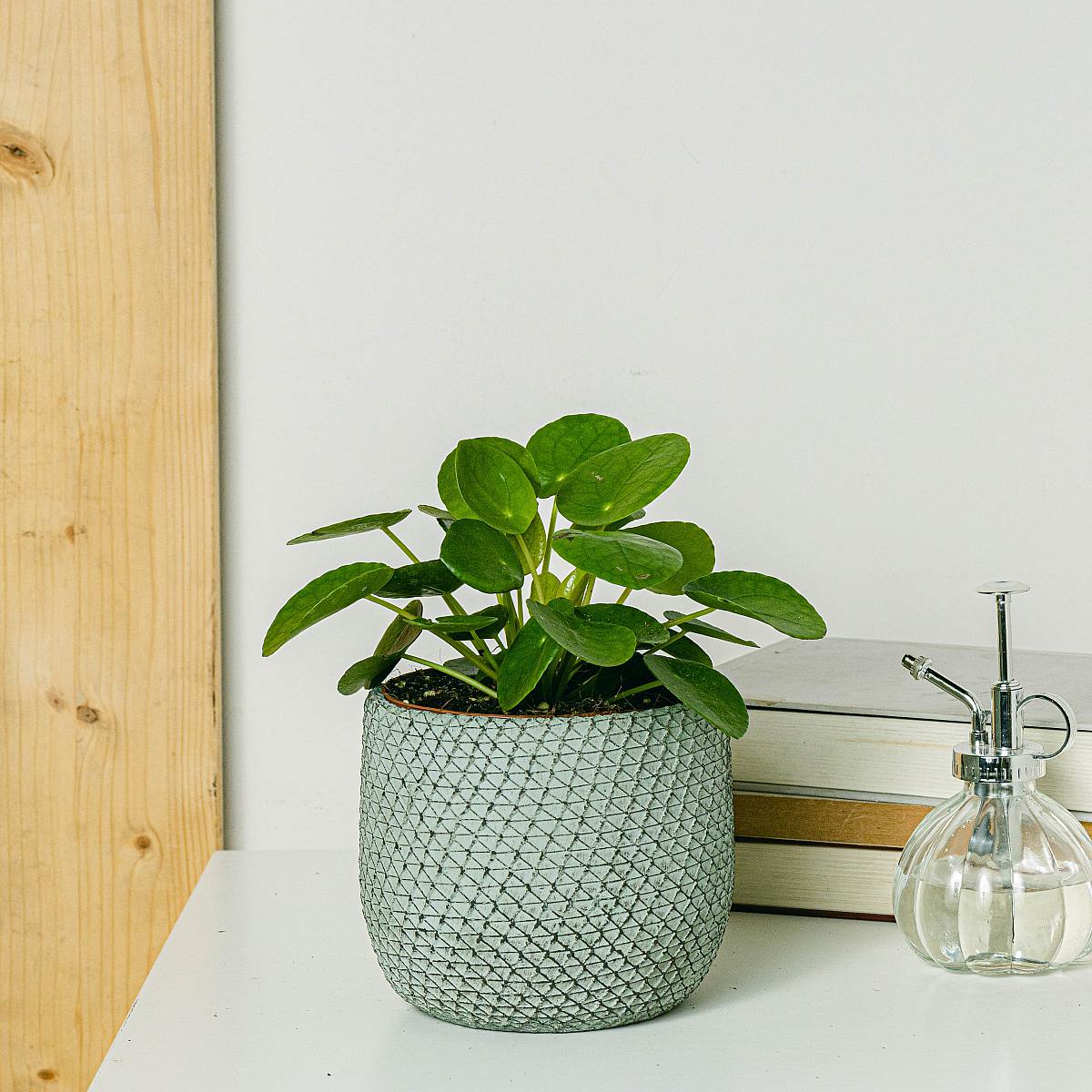
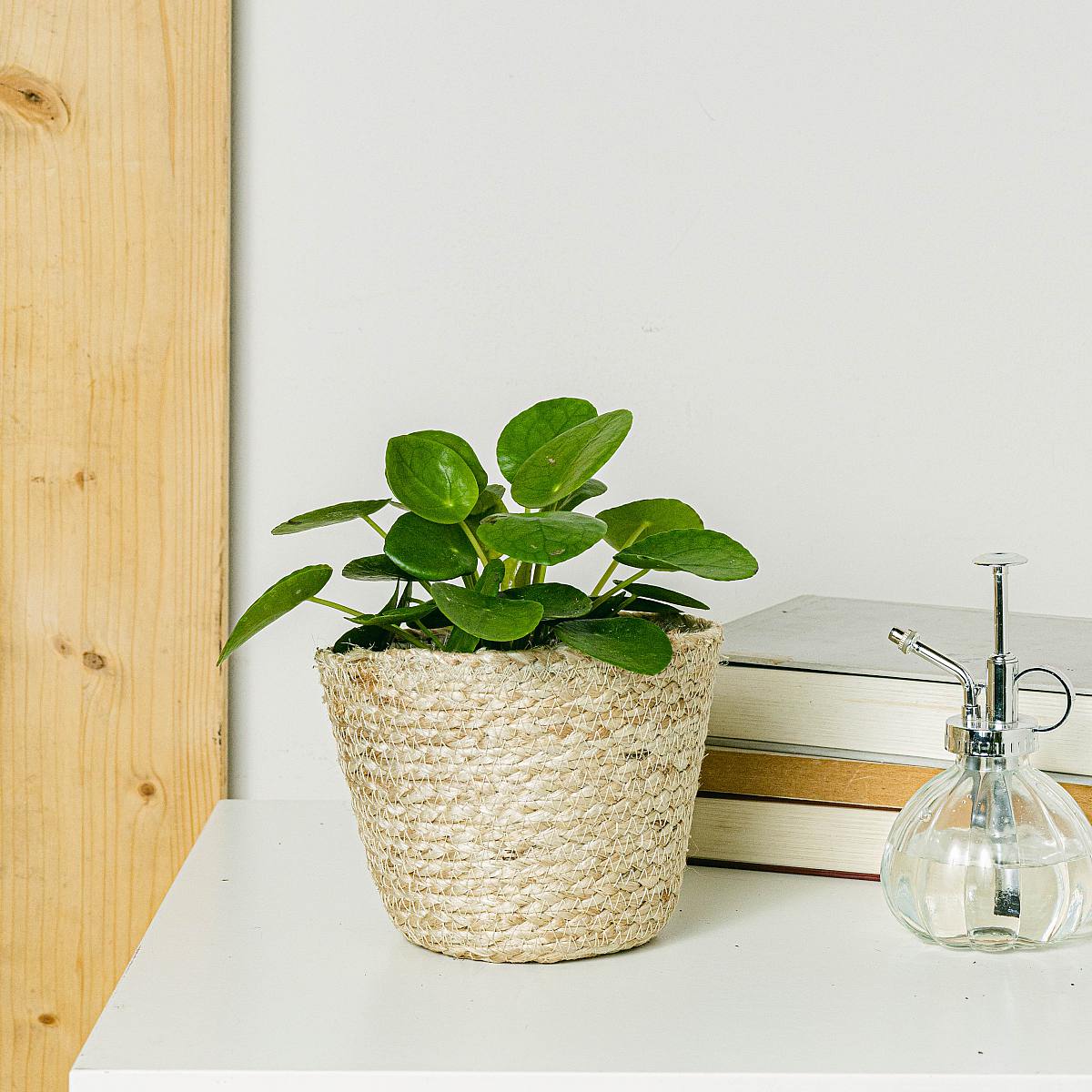
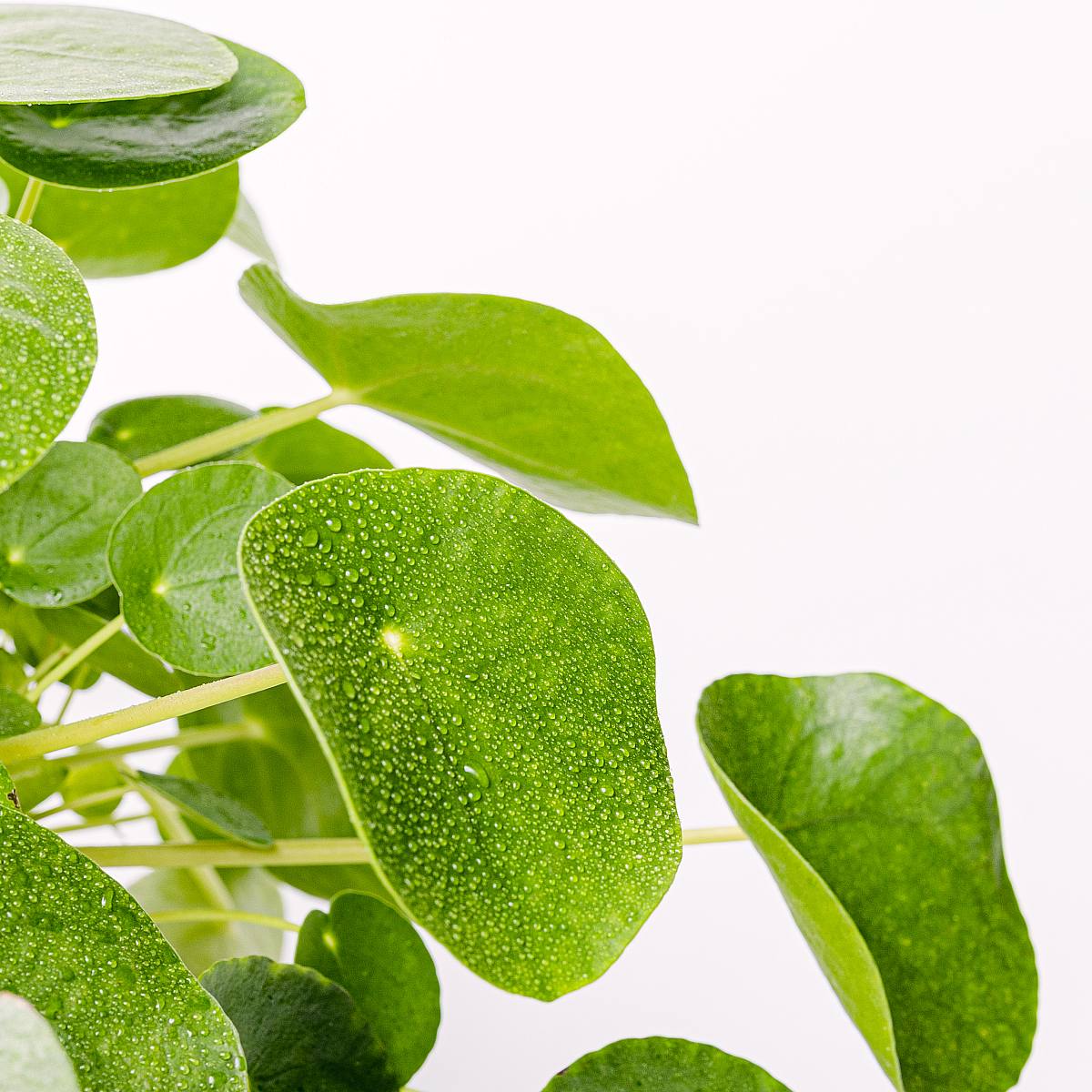




Pilea peperomioides or Chinese Money Plant. Also known as the "friendship plant" because of its ability to produce small buds that you can detach to give to friends.
This beautiful and easy to care for plant is native to Yunnan, southern China. It is known to bring good luck and prosperity to those who have it. Perhaps it is because of its unique coin-shaped leaves. Without a doubt, the vibrant deep green of the Pilea will add a natural element to your décor. Plus, its leaves stay lush all year round.
Its round, cup-shaped leaves recall ancient Chinese coins with a central hole, which in popular Asian tradition symbolizes prosperity. It is given between friends as a charm of fortune, especially because it is so easy to propagate and multiply.
The Pilea sends out two kinds of offsets: directly from the stem (between leaves) and from the soil (from underground rhizomes). Rhizome offsets are cut with a knife 2–3 cm below the surface and planted directly in moist substrate, where they root in a few weeks.
No. Pilea peperomioides is considered safe for dogs and cats according to the ASPCA database. It contains no toxic compounds nor irritant latex, making it a very popular choice for pet households.
It was virtually unknown until the 1970s. Norwegian missionary Agnar Espegren brought cuttings from China in 1946 and shared them with family and friends, spreading by word of mouth across Scandinavia for decades before reaching commercial horticulture. Hence the name 'missionary plant'.
Leaves curling inward usually mean too much direct light or insufficient watering. If they are flat but lose their shine, it tends to be lack of light. Pilea is expressive: leaf shape is a good indicator of overall health.
Yes, although its flowers are so small and discreet they often go unnoticed. It sends up small pinkish stalks with clusters of tiny white or cream flowers. Blooms typically appear in spring after a cool winter. Flowering does not affect later development.
Also known as Pilea Peperomioides or simply Money Plant.
Pilea peperomioides or Chinese Money Plant. Also known as the "friendship plant" because of its ability to produce small buds that you can detach to give to friends.
This beautiful and easy to care for plant is native to Yunnan, southern China. It is known to bring good luck and prosperity to those who have it. Perhaps it is because of its unique coin-shaped leaves. Without a doubt, the vibrant deep green of the Pilea will add a natural element to your décor. Plus, its leaves stay lush all year round.
Its round, cup-shaped leaves recall ancient Chinese coins with a central hole, which in popular Asian tradition symbolizes prosperity. It is given between friends as a charm of fortune, especially because it is so easy to propagate and multiply.
The Pilea sends out two kinds of offsets: directly from the stem (between leaves) and from the soil (from underground rhizomes). Rhizome offsets are cut with a knife 2–3 cm below the surface and planted directly in moist substrate, where they root in a few weeks.
No. Pilea peperomioides is considered safe for dogs and cats according to the ASPCA database. It contains no toxic compounds nor irritant latex, making it a very popular choice for pet households.
It was virtually unknown until the 1970s. Norwegian missionary Agnar Espegren brought cuttings from China in 1946 and shared them with family and friends, spreading by word of mouth across Scandinavia for decades before reaching commercial horticulture. Hence the name 'missionary plant'.
Leaves curling inward usually mean too much direct light or insufficient watering. If they are flat but lose their shine, it tends to be lack of light. Pilea is expressive: leaf shape is a good indicator of overall health.
Yes, although its flowers are so small and discreet they often go unnoticed. It sends up small pinkish stalks with clusters of tiny white or cream flowers. Blooms typically appear in spring after a cool winter. Flowering does not affect later development.