From
Free delivery
46.00 €
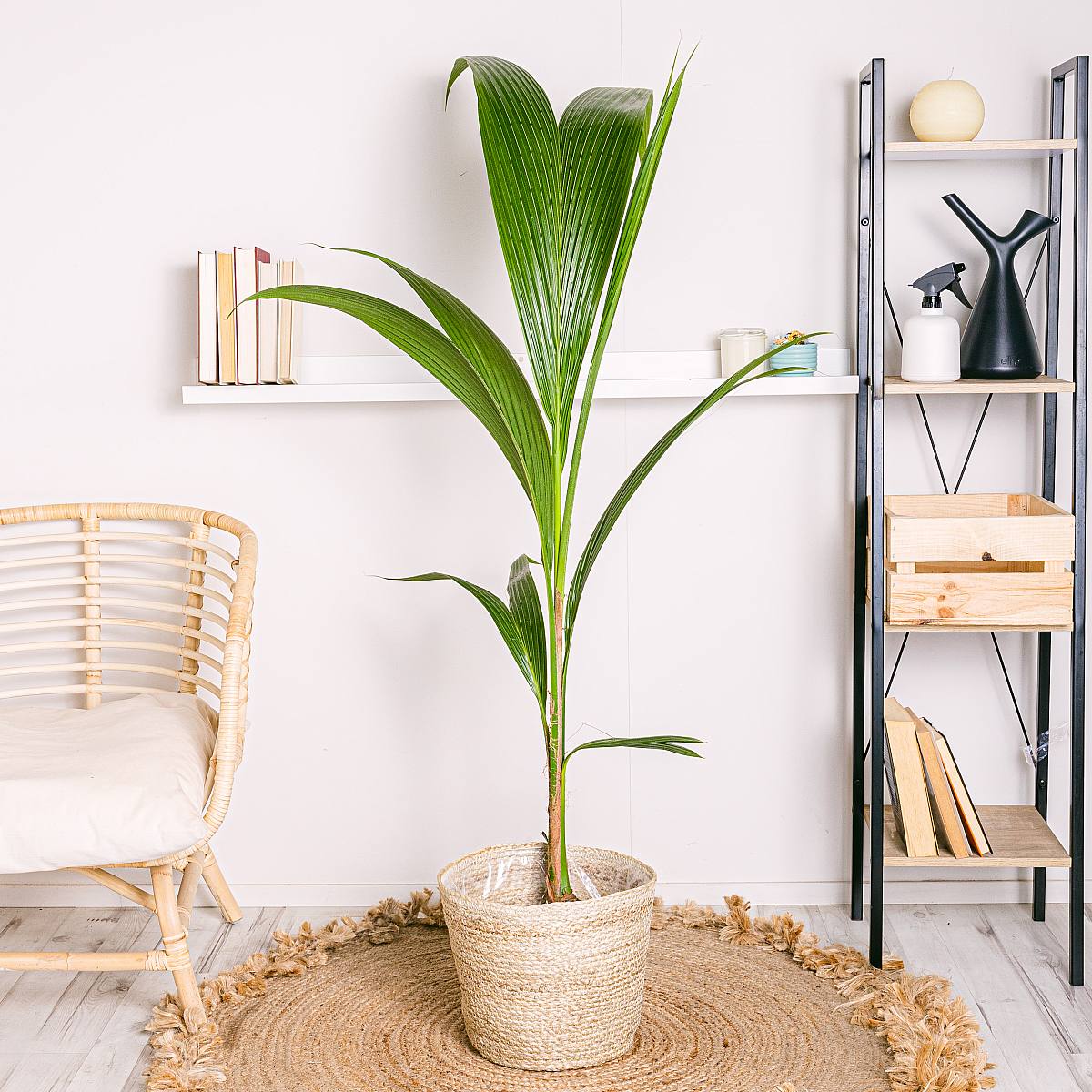
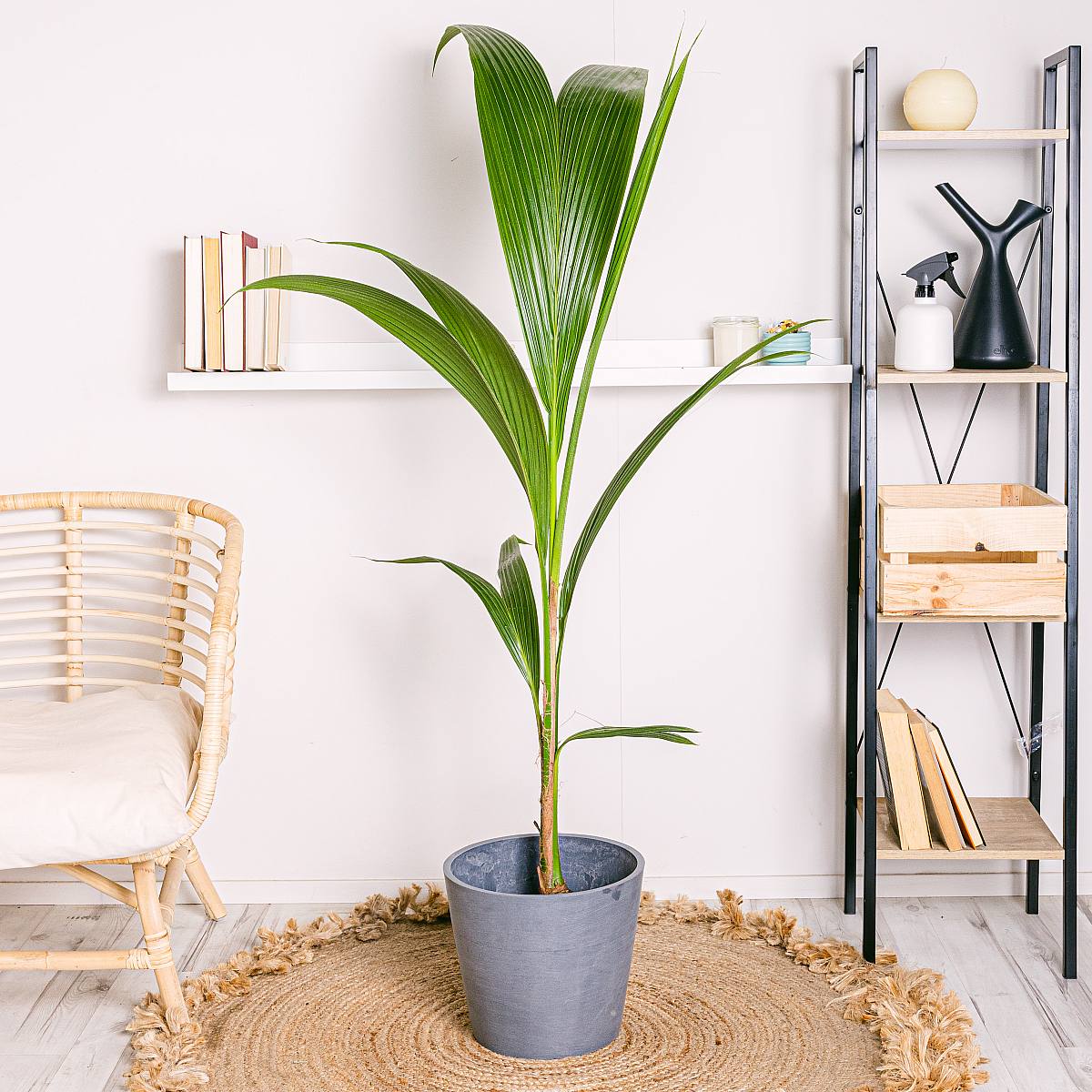
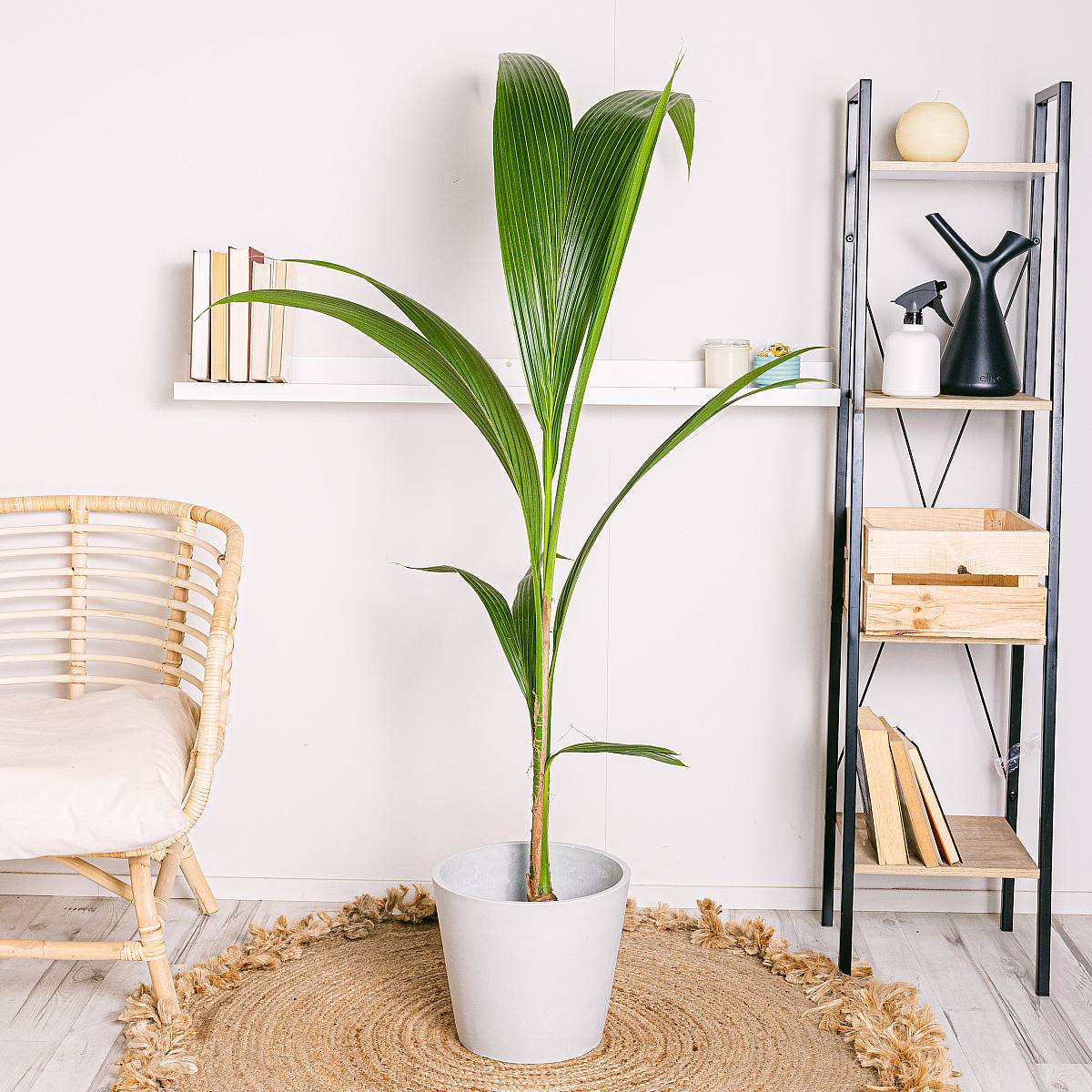
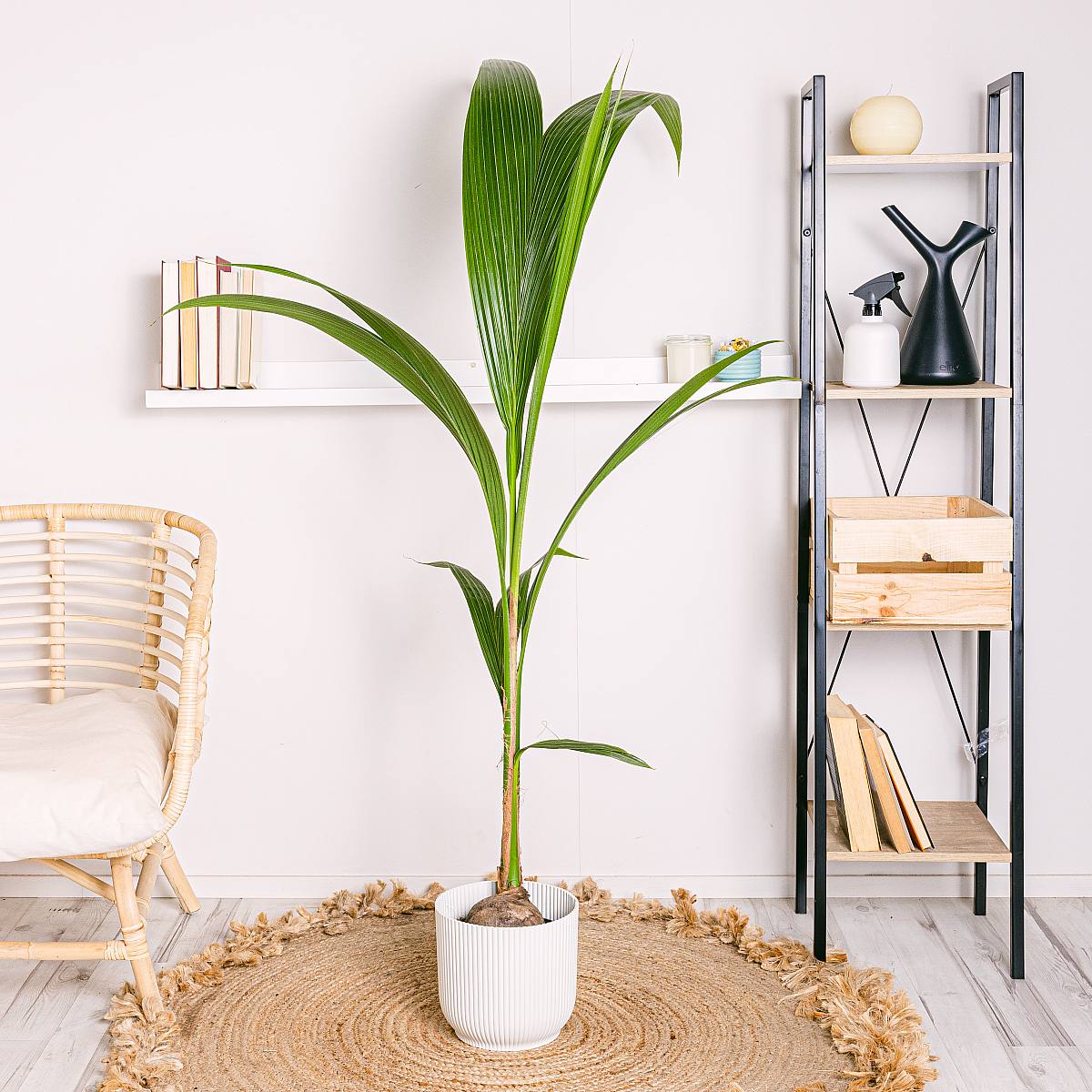




It is a plant that comes from the fruit of the coconut, native to the Caribbean. It is an original plant of great beauty, which is very decorative.
Recommendations:
It is a pet-safe plant.
This plant requires average care.
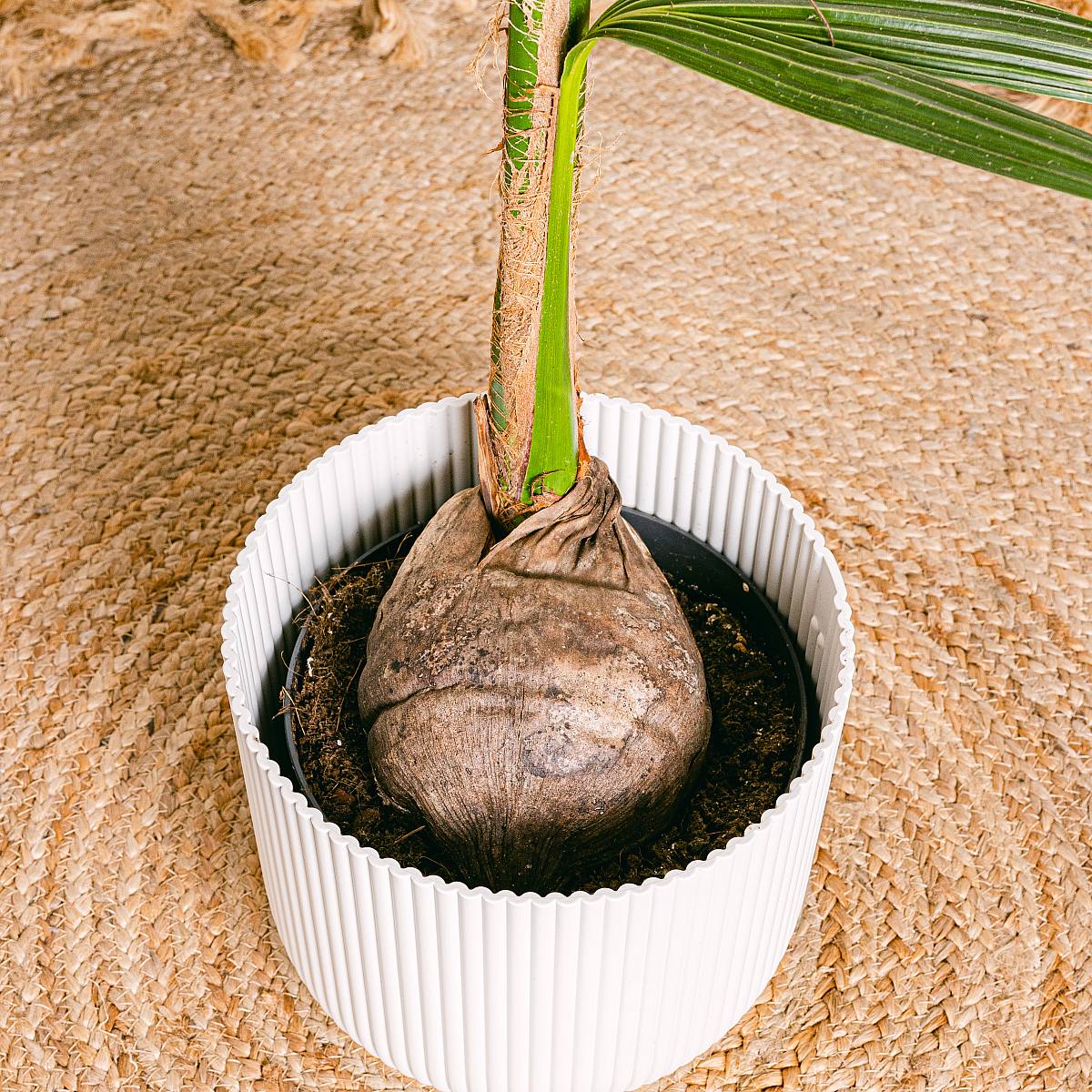
Avoid wetting the coconut directly when watering.
It is important not to expose it to temperatures below 15 degrees, so in winter it should be kept indoors.
Care:
No transplanting requirements. It is happy in a small to medium pot with little soil.
The coconut fruit has many beneficial functions, from the water inside, the fleshy pulp and the outer fibres.
Almost never. The coconut tree needs 6+ hours of direct sun, constant warmth (25–32 °C), high humidity and lots of room to fruit. Indoors in temperate climates it is impossible: the plant survives ornamentally but never flowers or fruits.
No. The coconut tree is considered non-toxic to dogs and cats. Leaves, fibre and coconut water are safe at contact and ingestion. It is a safe choice in animal households, although whole coconuts can be a choking hazard for small pets.
It is the trickiest tropical palm indoors: it rarely lasts more than 2–3 years. It needs greenhouse-like conditions (intense sun, >70% humidity, warmth) that few homes can provide. Nurseries usually sell young specimens that decline quickly.
An open scientific debate: two theories compete. One proposes a western Pacific origin (Indonesia–Malaysia); the other a broader Indo-Pacific tropics. The nut floats in seawater for months without losing viability, which spread the species along all tropical coasts.
Up to 80–100 years. It starts fruiting at 6–10 years and produces coconuts for decades. An adult coconut tree yields 50–200 nuts a year, depending on variety. Centennial specimens are documented in Polynesia and the Philippines.
It is a sales trick: a fresh sprouted coconut is set on top of the substrate as a decorative element. The coconut does not feed the new plant (which is independent). When the nut rots after months, it should be removed to avoid fungus.
Also known as Coco Nucifera, it is an exotic, Caribbean plant with elegant green leaves and a slender stem.
It is a plant that comes from the fruit of the coconut, native to the Caribbean. It is an original plant of great beauty, which is very decorative.
Recommendations:
It is a pet-safe plant.
This plant requires average care.
Avoid wetting the coconut directly when watering.
It is important not to expose it to temperatures below 15 degrees, so in winter it should be kept indoors.
Care:
No transplanting requirements. It is happy in a small to medium pot with little soil.
The coconut fruit has many beneficial functions, from the water inside, the fleshy pulp and the outer fibres.
Almost never. The coconut tree needs 6+ hours of direct sun, constant warmth (25–32 °C), high humidity and lots of room to fruit. Indoors in temperate climates it is impossible: the plant survives ornamentally but never flowers or fruits.
No. The coconut tree is considered non-toxic to dogs and cats. Leaves, fibre and coconut water are safe at contact and ingestion. It is a safe choice in animal households, although whole coconuts can be a choking hazard for small pets.
It is the trickiest tropical palm indoors: it rarely lasts more than 2–3 years. It needs greenhouse-like conditions (intense sun, >70% humidity, warmth) that few homes can provide. Nurseries usually sell young specimens that decline quickly.
An open scientific debate: two theories compete. One proposes a western Pacific origin (Indonesia–Malaysia); the other a broader Indo-Pacific tropics. The nut floats in seawater for months without losing viability, which spread the species along all tropical coasts.
Up to 80–100 years. It starts fruiting at 6–10 years and produces coconuts for decades. An adult coconut tree yields 50–200 nuts a year, depending on variety. Centennial specimens are documented in Polynesia and the Philippines.
It is a sales trick: a fresh sprouted coconut is set on top of the substrate as a decorative element. The coconut does not feed the new plant (which is independent). When the nut rots after months, it should be removed to avoid fungus.