Free delivery
42.00 €
47.00 €
Plants are often associated with soil, but in reality, some plants, called epiphytes, live without soil. Instead, they live off the air and are an excellent choice for those who want to add a touch of green to their home or office, without the work and maintenance that regular plants require.
how to care for air plants
Air plants feed on the humidity in the air.
- If they are outdoors, the dew itself is enough for them to live on.
- If they are kept indoors, all they need is to be sprayed with a little water 3 to 5 times a week.
If spraying doesn't work for you, you can soak them in water for 40 minutes once a week.
When wet they love to be well ventilated.
This product includes:
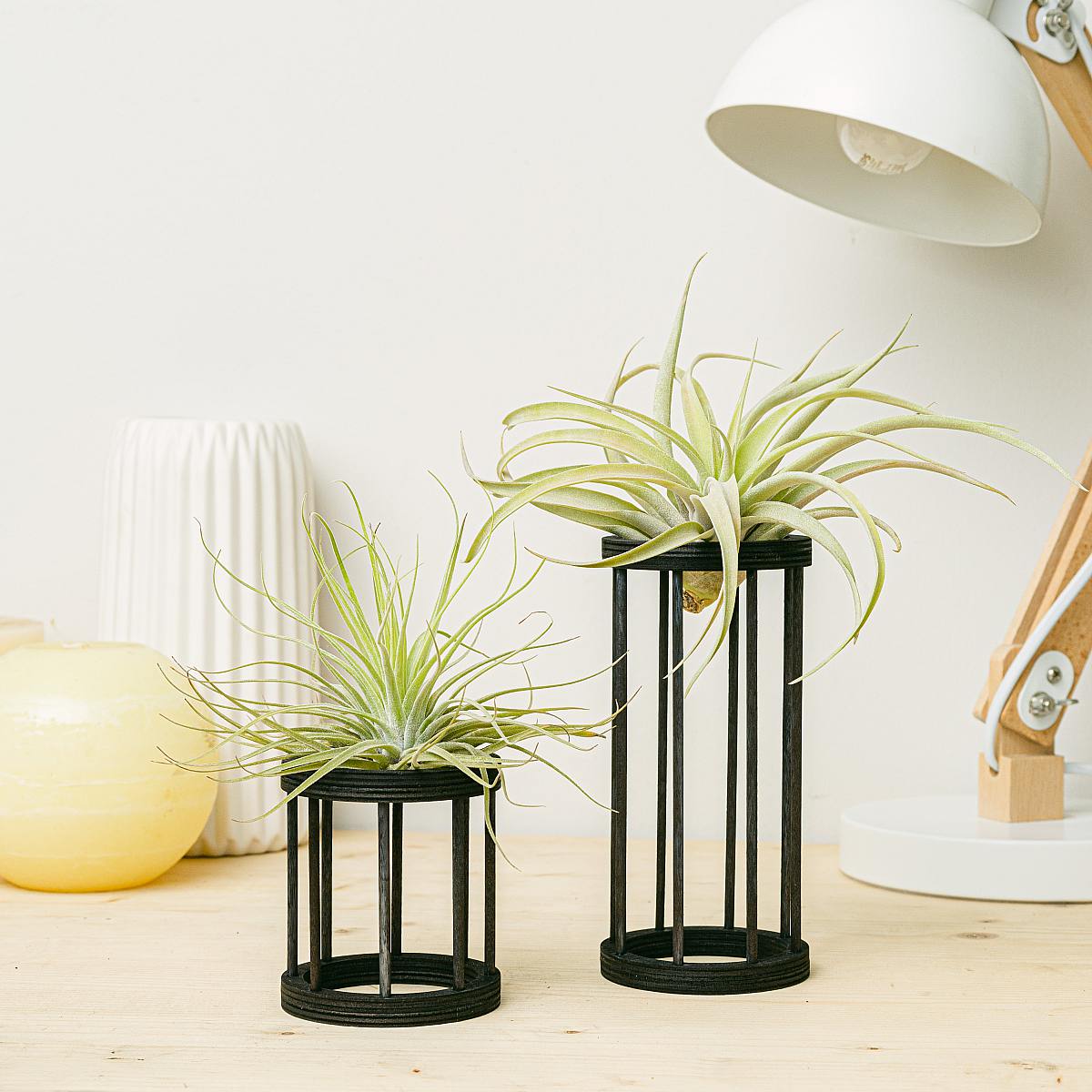
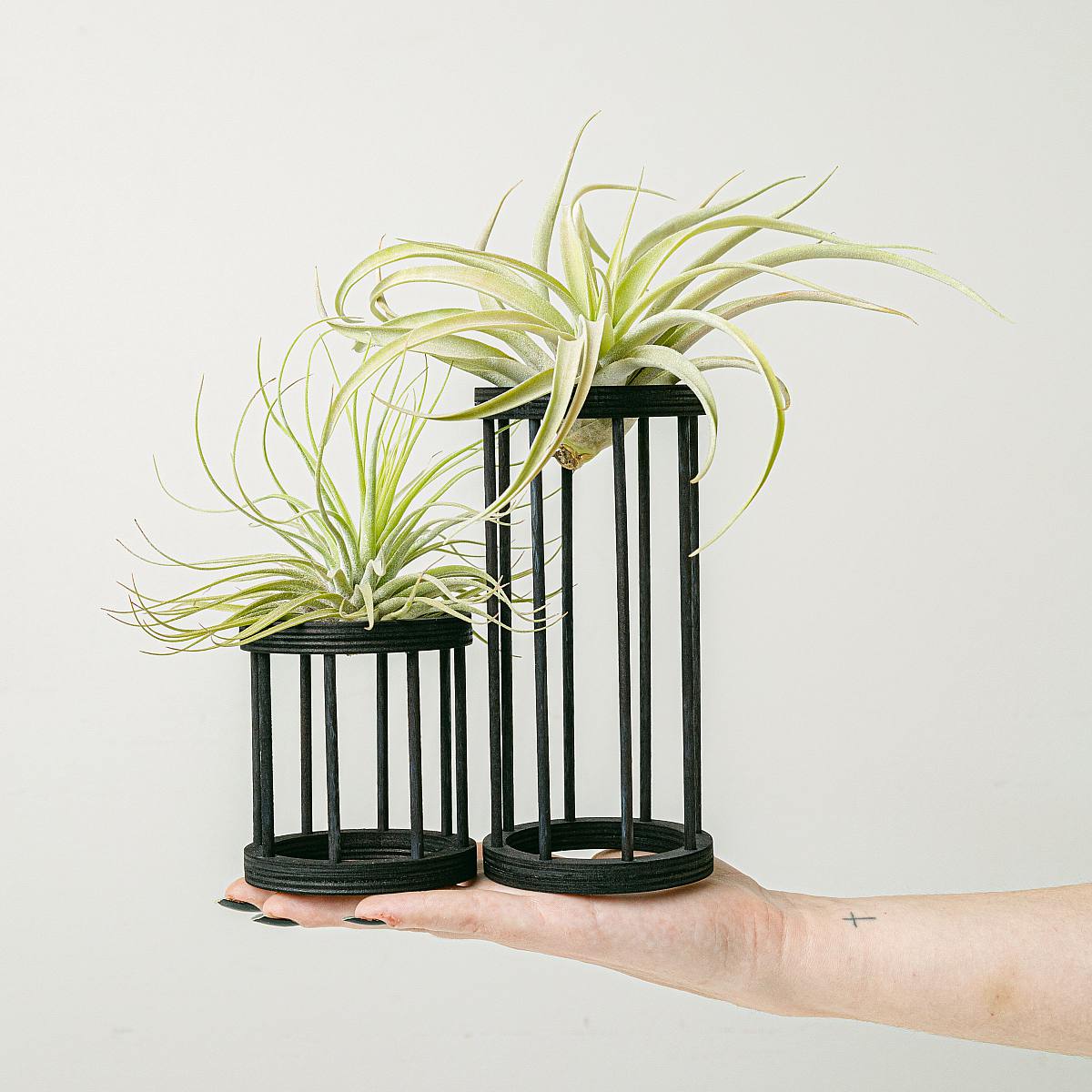
- 2 Black wooden stands
- ELI Air Plant
- VEL Air Plant
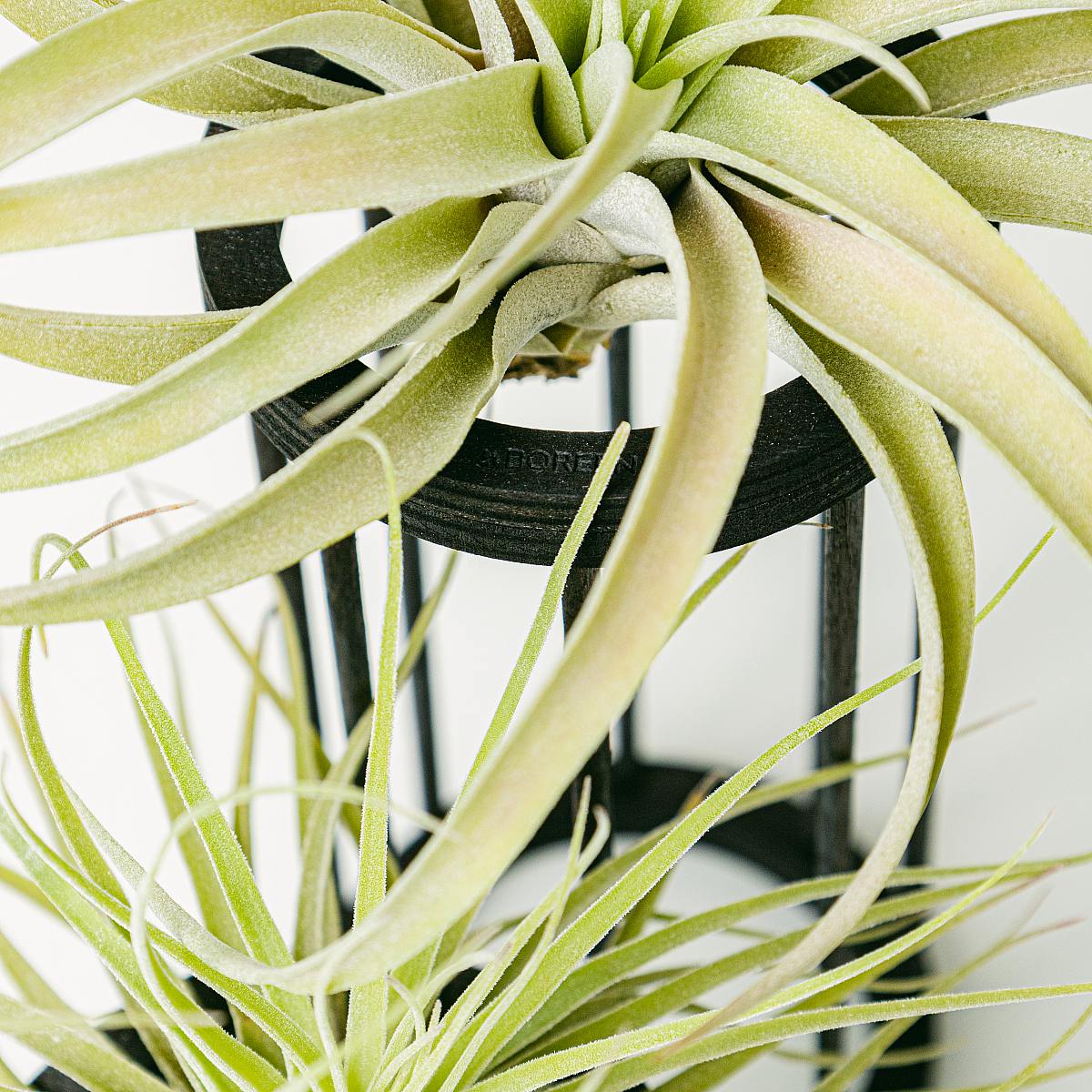
Tillandsia are obligate epiphytes: in the wild they live on trees, rocks or even electrical wires with no soil contact. They absorb water and nutrients from humid air and rain through specialized hairs (trichomes) on their leaves. They do NOT need soil.
By submersion: once a week the whole plant is submerged in chlorine-free water for 20–30 minutes, then shaken off and dried upside down. Do NOT water like a regular plant: water trapped in the rosette centre rots the plant.
No. Tillandsia are considered non-toxic to dogs and cats. One of the safest options for pet households, especially because they are typically hung or placed high, making them less accessible.
Yes. Tillandsia are monocarpic: each individual plant flowers once in its life (with very showy flowers, often violet or red) and then dies. Before dying it produces side 'pups' that detach and grow as independent plants, perpetuating the clump.
Tillandsia recurvata and T. usneoides are common on trees in warm zones (the southern US, Mexico, South America). They grow hanging from cables and branches forming grey 'beards'. Used as ornamentals in floral arrangements and weddings, dry or fresh.
More than 650 accepted species, distributed throughout tropical and subtropical America. The most commercial in Europe are: T. ionantha (the classic), T. xerographica (large, silvery grey), T. caput-medusae (with tentacles), T. cyanea (pink). Each with slightly different care.
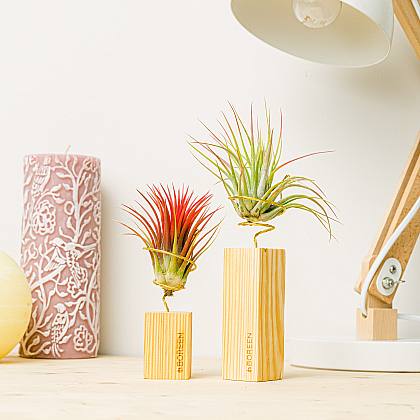
Duo of Black wooden stands with air plants Eli and Vel
Plants are often associated with soil, but in reality, some plants, called epiphytes, live without soil. Instead, they live off the air and are an excellent choice for those who want to add a touch of green to their home or office, without the work and maintenance that regular plants require.
how to care for air plants
Air plants feed on the humidity in the air.
- If they are outdoors, the dew itself is enough for them to live on.
- If they are kept indoors, all they need is to be sprayed with a little water 3 to 5 times a week.
If spraying doesn't work for you, you can soak them in water for 40 minutes once a week.
When wet they love to be well ventilated.
This product includes:
- 2 Black wooden stands
- ELI Air Plant
- VEL Air Plant
Tillandsia are obligate epiphytes: in the wild they live on trees, rocks or even electrical wires with no soil contact. They absorb water and nutrients from humid air and rain through specialized hairs (trichomes) on their leaves. They do NOT need soil.
By submersion: once a week the whole plant is submerged in chlorine-free water for 20–30 minutes, then shaken off and dried upside down. Do NOT water like a regular plant: water trapped in the rosette centre rots the plant.
No. Tillandsia are considered non-toxic to dogs and cats. One of the safest options for pet households, especially because they are typically hung or placed high, making them less accessible.
Yes. Tillandsia are monocarpic: each individual plant flowers once in its life (with very showy flowers, often violet or red) and then dies. Before dying it produces side 'pups' that detach and grow as independent plants, perpetuating the clump.
Tillandsia recurvata and T. usneoides are common on trees in warm zones (the southern US, Mexico, South America). They grow hanging from cables and branches forming grey 'beards'. Used as ornamentals in floral arrangements and weddings, dry or fresh.
More than 650 accepted species, distributed throughout tropical and subtropical America. The most commercial in Europe are: T. ionantha (the classic), T. xerographica (large, silvery grey), T. caput-medusae (with tentacles), T. cyanea (pink). Each with slightly different care.