Free delivery
189.00 €
Care
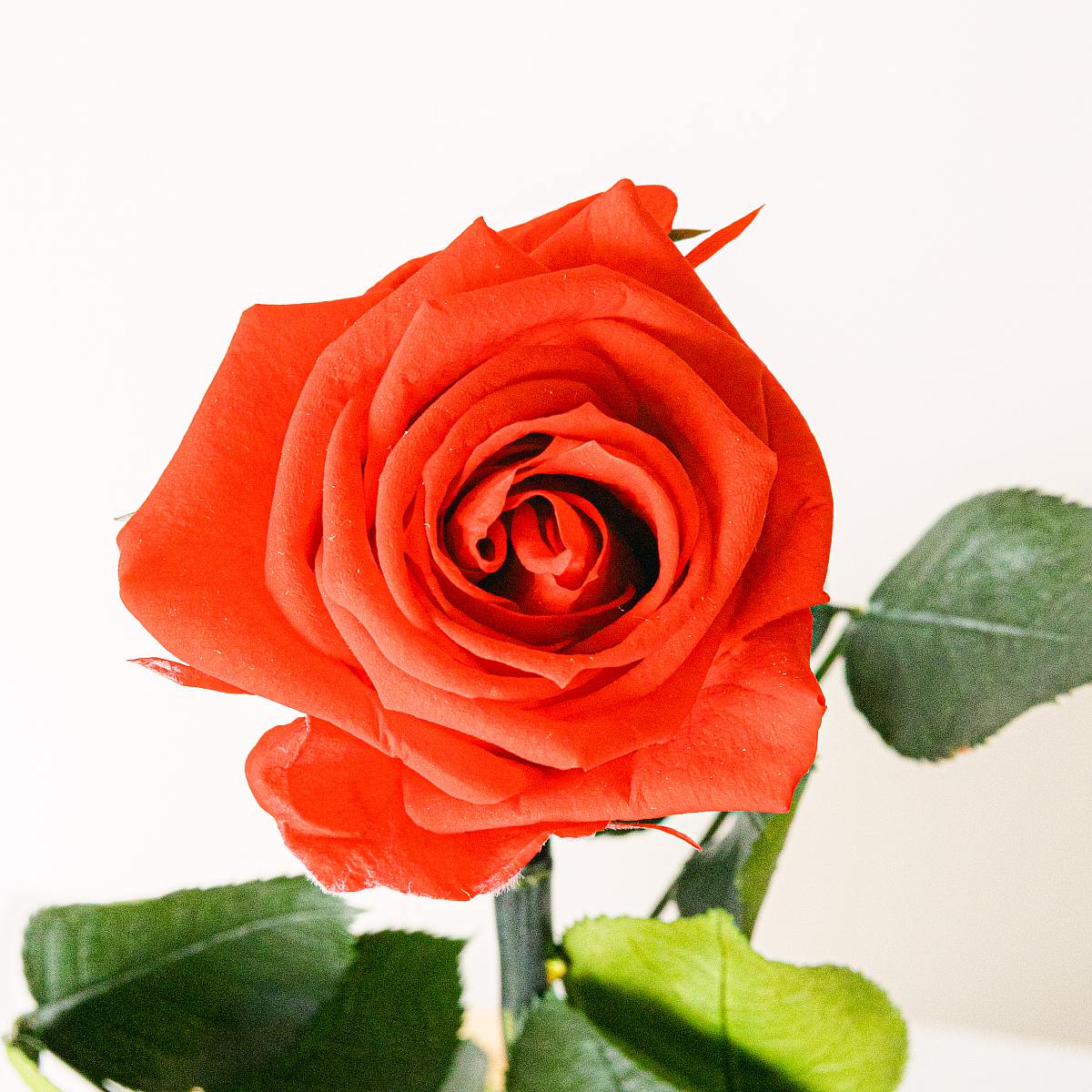
Yes, they are real roses harvested at peak opening and put through a preservation process: the natural sap is replaced with glycerine and plant dyes, halting ageing. The flower keeps its texture, shape and softness almost indistinguishably from a fresh one.
Between 2 and 5 years in optimal condition, depending on environment (humidity, light, handling). Without water, intense direct light or repeated touching it can last even longer. Not eternal despite the marketing name, but exceptionally long-lasting.
Mildly. Chemicals used in preservation (glycerine and dyes) are safe on contact but can cause digestive upset if ingested in quantity. Keep out of reach of pets that mouth decorative objects.
Almost zero care: do NOT water, do NOT expose to direct sun, do NOT touch petals repeatedly, keep at moderate humidity (40–60 %) and stable temperature. Intense UV light can fade colour over the years. Dust off by gently blowing.
The preservation process is complex and artisanal: it requires specialized equipment, precision chemistry and quality control. A preserved rose can be 5–10× the price of a fresh one but pays off through years of life vs. 1–2 weeks.
Mainly Ecuador, Colombia and Kenya, the world's main growers of premium roses. Roses are harvested locally and processed in nearby plants before export. Industrial preservation grew massively in the 1990s and has been refined ever since.
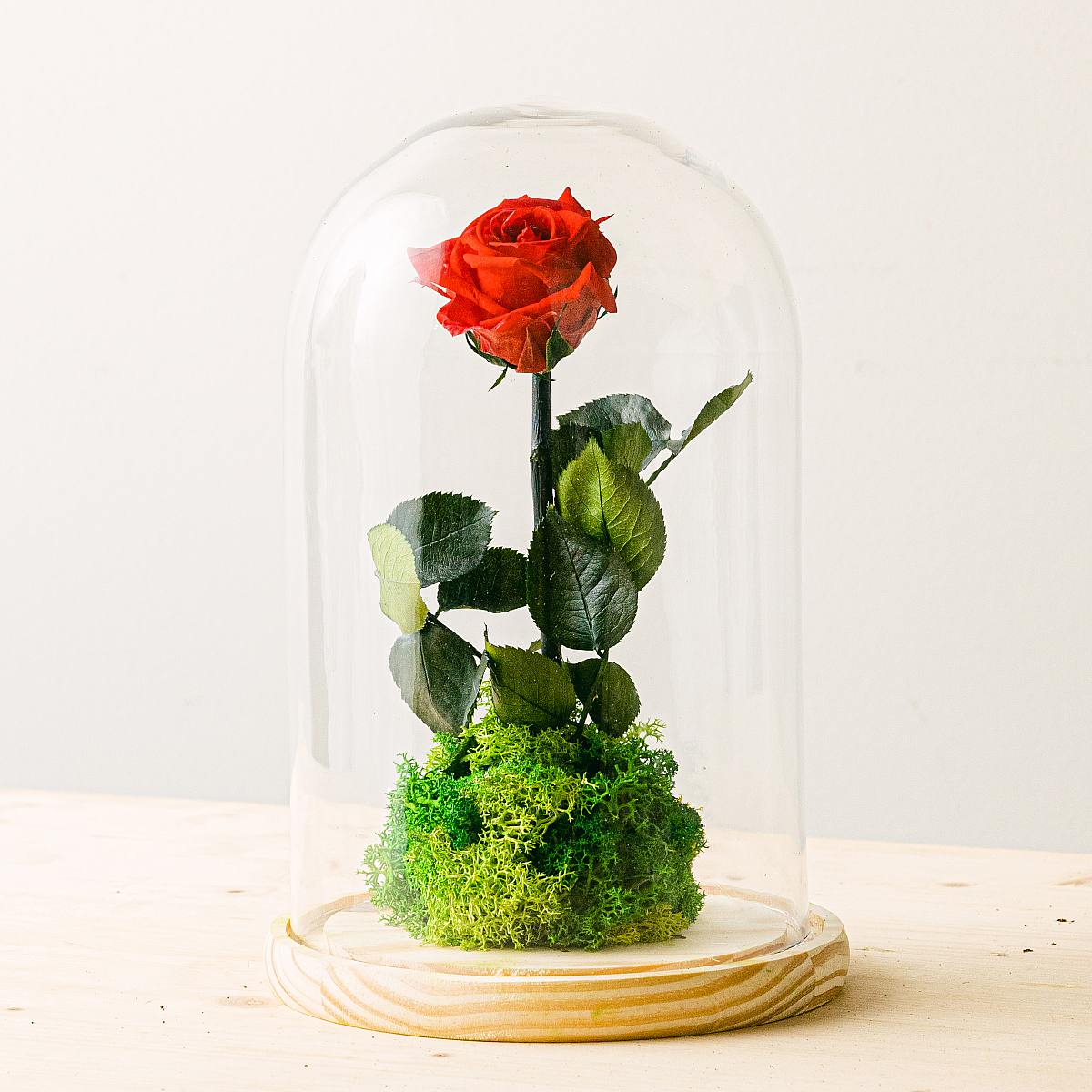
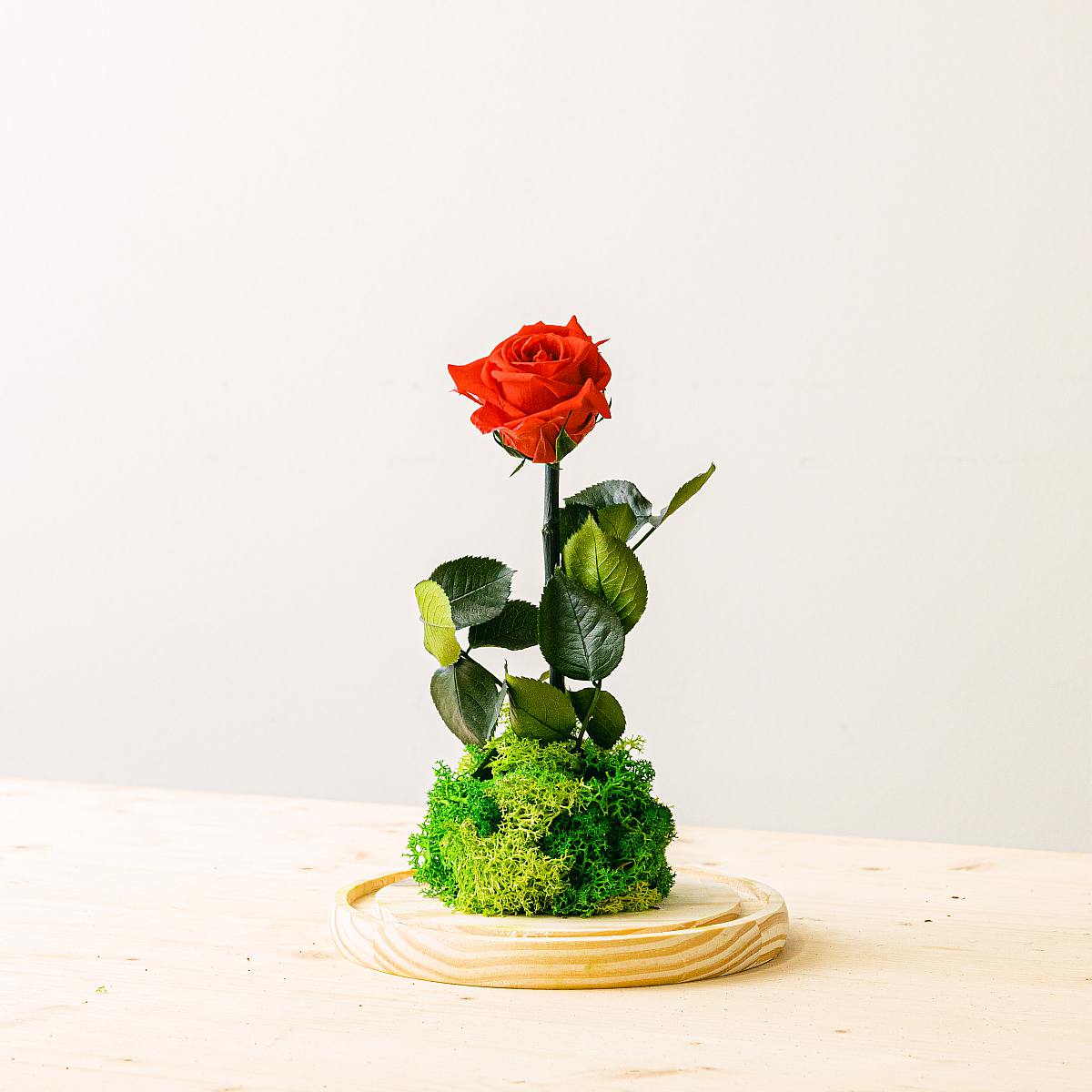
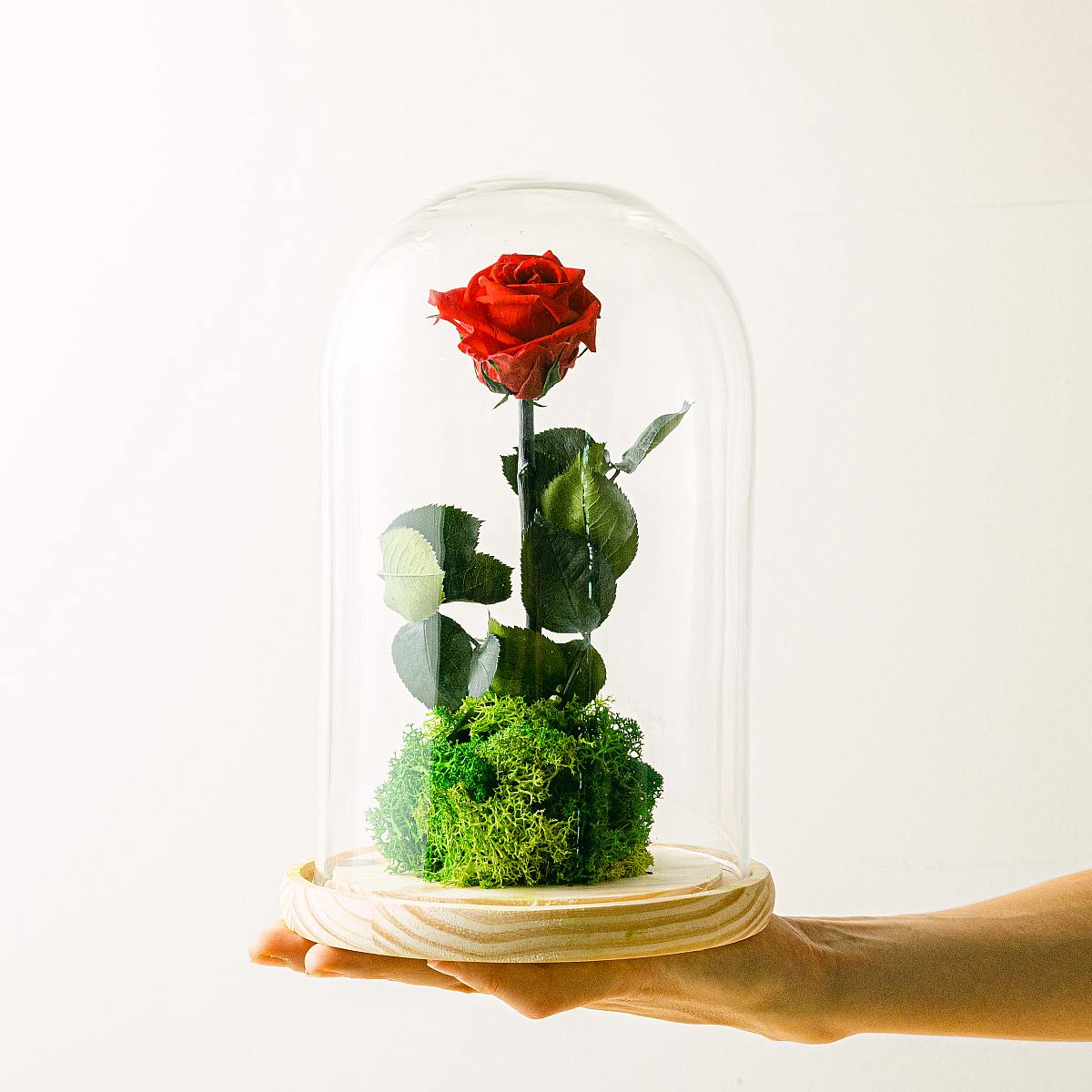
The Garden Rose is a natural preserved rose that never needs to be watered and lasts for years.
Care
Yes, they are real roses harvested at peak opening and put through a preservation process: the natural sap is replaced with glycerine and plant dyes, halting ageing. The flower keeps its texture, shape and softness almost indistinguishably from a fresh one.
Between 2 and 5 years in optimal condition, depending on environment (humidity, light, handling). Without water, intense direct light or repeated touching it can last even longer. Not eternal despite the marketing name, but exceptionally long-lasting.
Mildly. Chemicals used in preservation (glycerine and dyes) are safe on contact but can cause digestive upset if ingested in quantity. Keep out of reach of pets that mouth decorative objects.
Almost zero care: do NOT water, do NOT expose to direct sun, do NOT touch petals repeatedly, keep at moderate humidity (40–60 %) and stable temperature. Intense UV light can fade colour over the years. Dust off by gently blowing.
The preservation process is complex and artisanal: it requires specialized equipment, precision chemistry and quality control. A preserved rose can be 5–10× the price of a fresh one but pays off through years of life vs. 1–2 weeks.
Mainly Ecuador, Colombia and Kenya, the world's main growers of premium roses. Roses are harvested locally and processed in nearby plants before export. Industrial preservation grew massively in the 1990s and has been refined ever since.