From
Free delivery
42.00 €








Recommendations
Care
Benefits
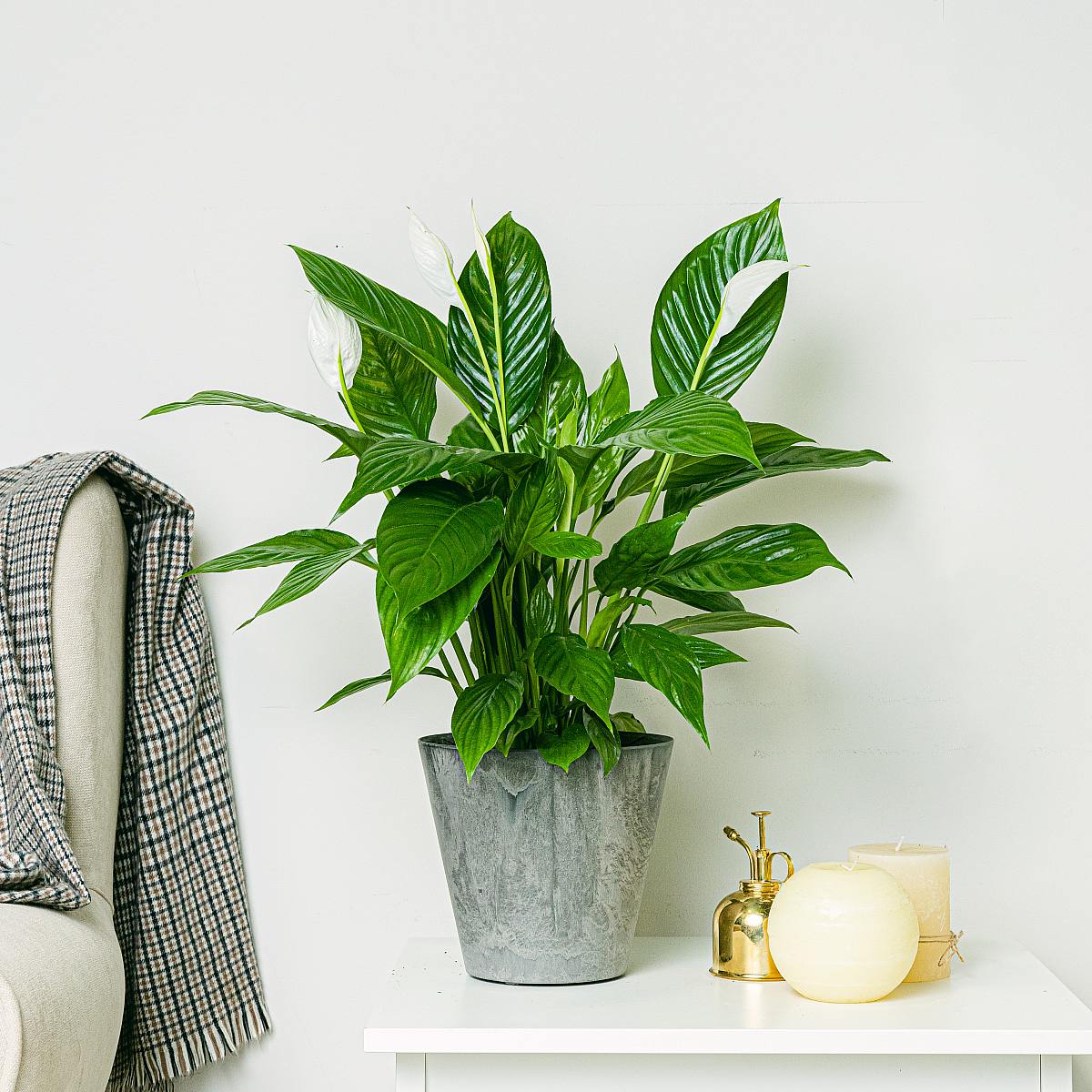
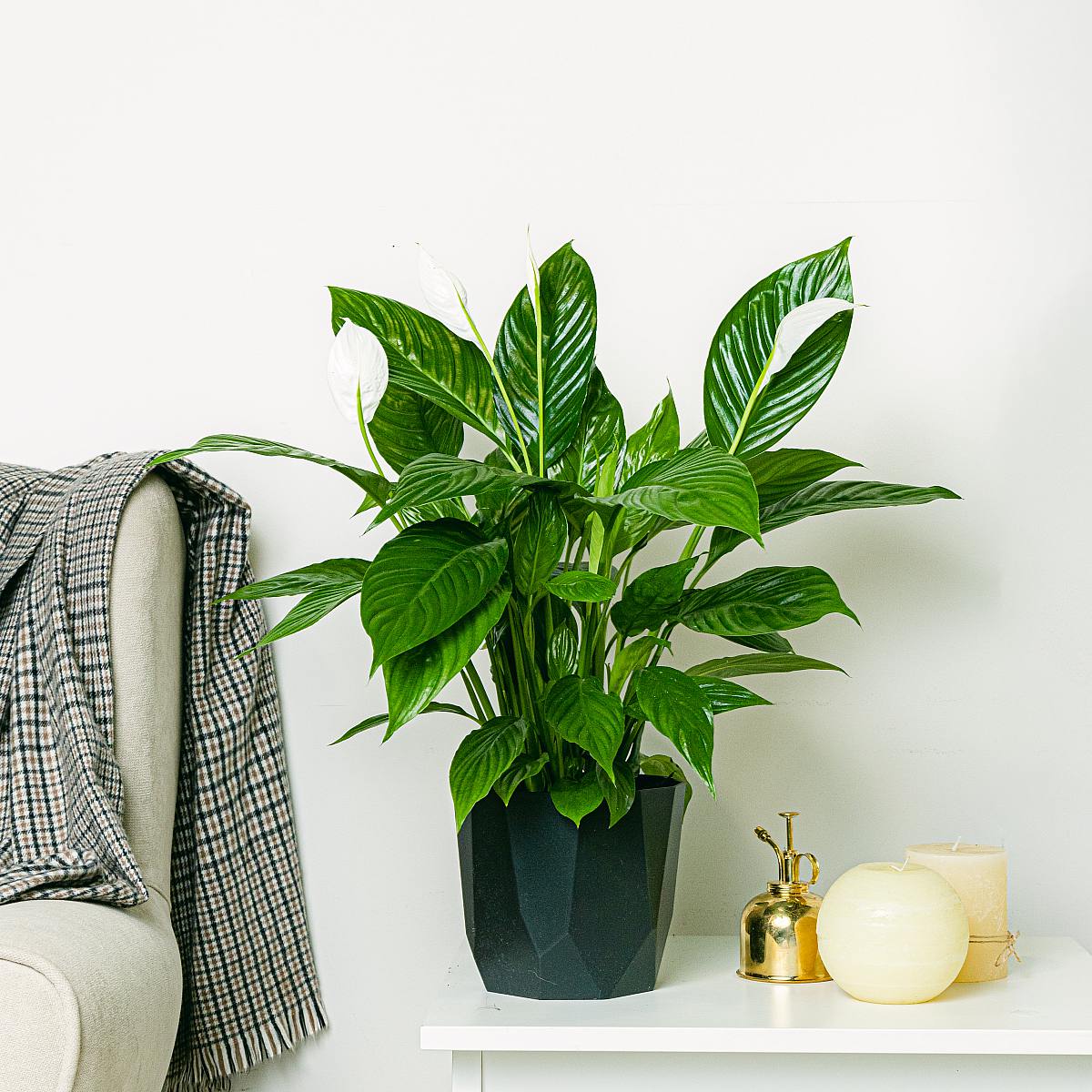
Not exactly. What looks like a white petal is a spathe, a modified leaf that wraps around the inflorescence. The actual flowers are the dozens of small yellow or cream points clustered on the central spadix. The same structure as in Anthurium and Calla.
Yes. It contains calcium oxalate in leaves and stems, causing intense oral irritation, drooling and vomiting in dogs and cats. The poisoning is unpleasant but rarely dangerous. It is not the 'true' lily (Lilium), which is far more toxic and can be fatal to cats.
NASA's clean-air study (1989) concluded that Spathiphyllum was one of the most effective plants for removing formaldehyde, benzene, trichloroethylene and ammonia from indoor air. Later studies temper the effect in real homes, but its absorption capacity is well documented.
Because of the white-flag shape of its spathe, universally associated with peace and surrender. It is also one of the most-given plants in mourning and difficult moments thanks to its symbolism of calm and rest. The name became popular in the United States in the 1950s.
The white spathe turns green as the plant ages (at the end of bloom, which is normal), but also if it gets too much light or excess nitrogen fertilizer. If every new flower comes out green from the start, the cause is usually over-fertilization.
Each spathe lasts 4 to 8 weeks. A healthy plant in good conditions can bloom twice a year, usually in spring and autumn. If it does not bloom, the cause is usually lack of light: it needs bright indirect light to start blooming.
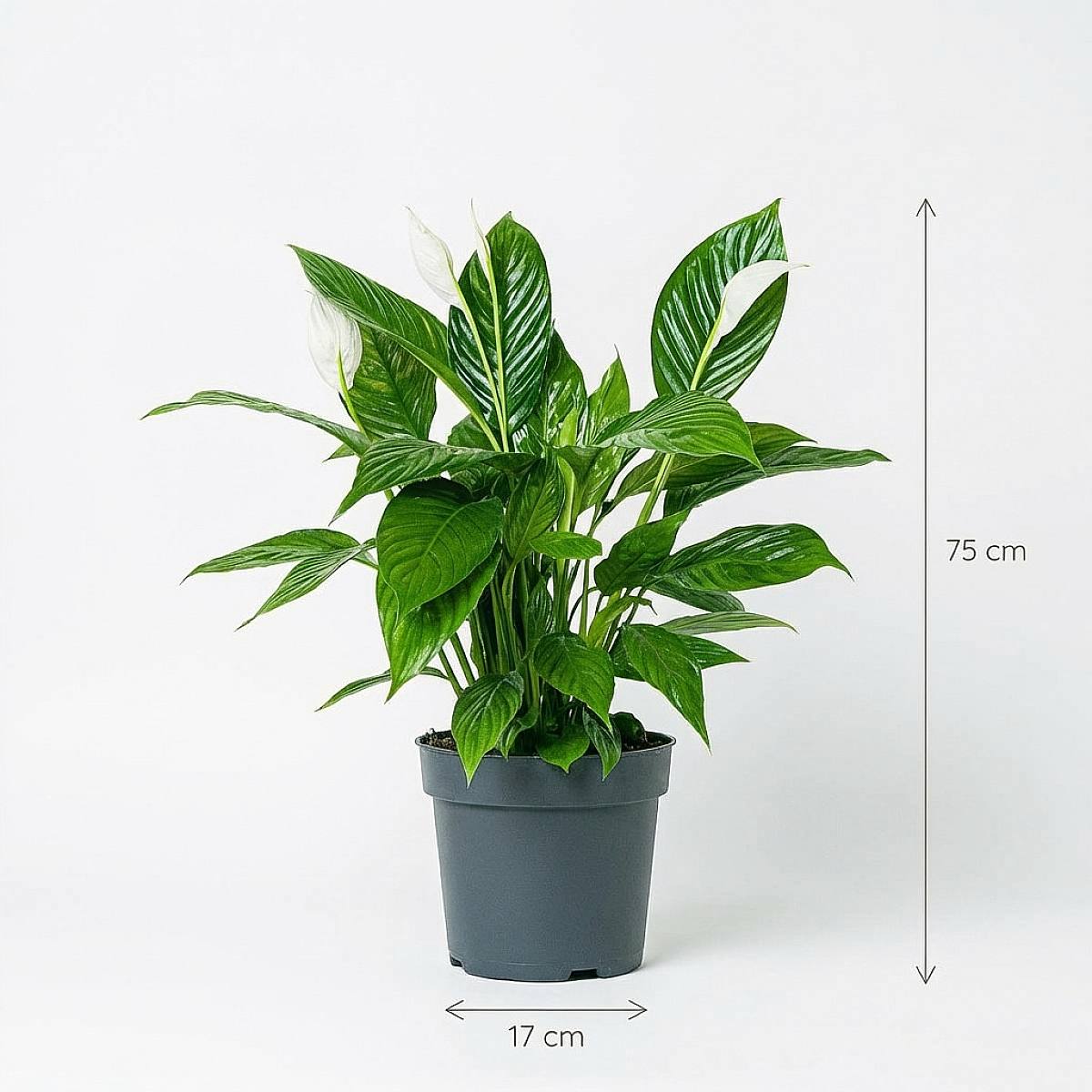
Spathiphyllum wallisi or Peace Lily is also known as "peace flower".
Recommendations
Care
Benefits
Not exactly. What looks like a white petal is a spathe, a modified leaf that wraps around the inflorescence. The actual flowers are the dozens of small yellow or cream points clustered on the central spadix. The same structure as in Anthurium and Calla.
Yes. It contains calcium oxalate in leaves and stems, causing intense oral irritation, drooling and vomiting in dogs and cats. The poisoning is unpleasant but rarely dangerous. It is not the 'true' lily (Lilium), which is far more toxic and can be fatal to cats.
NASA's clean-air study (1989) concluded that Spathiphyllum was one of the most effective plants for removing formaldehyde, benzene, trichloroethylene and ammonia from indoor air. Later studies temper the effect in real homes, but its absorption capacity is well documented.
Because of the white-flag shape of its spathe, universally associated with peace and surrender. It is also one of the most-given plants in mourning and difficult moments thanks to its symbolism of calm and rest. The name became popular in the United States in the 1950s.
The white spathe turns green as the plant ages (at the end of bloom, which is normal), but also if it gets too much light or excess nitrogen fertilizer. If every new flower comes out green from the start, the cause is usually over-fertilization.
Each spathe lasts 4 to 8 weeks. A healthy plant in good conditions can bloom twice a year, usually in spring and autumn. If it does not bloom, the cause is usually lack of light: it needs bright indirect light to start blooming.