From
Free delivery
46.00 €







Recommendations
Care
Benefits
It has been the indoor palm par excellence since the 19th century, mass-cultivated in Victorian England for living rooms. Its modest size, tolerance of low light and elegant appearance made it a symbol of bourgeois decoration across Europe.
No. The parlour palm is considered non-toxic to dogs and cats according to the ASPCA. It is one of the safest large indoor plants for pet households, alongside Pilea and other palms.
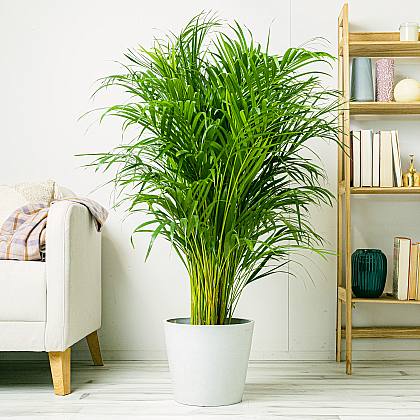
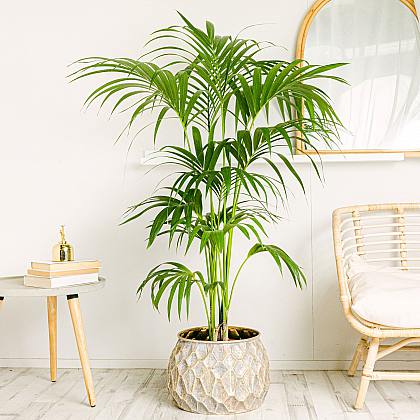
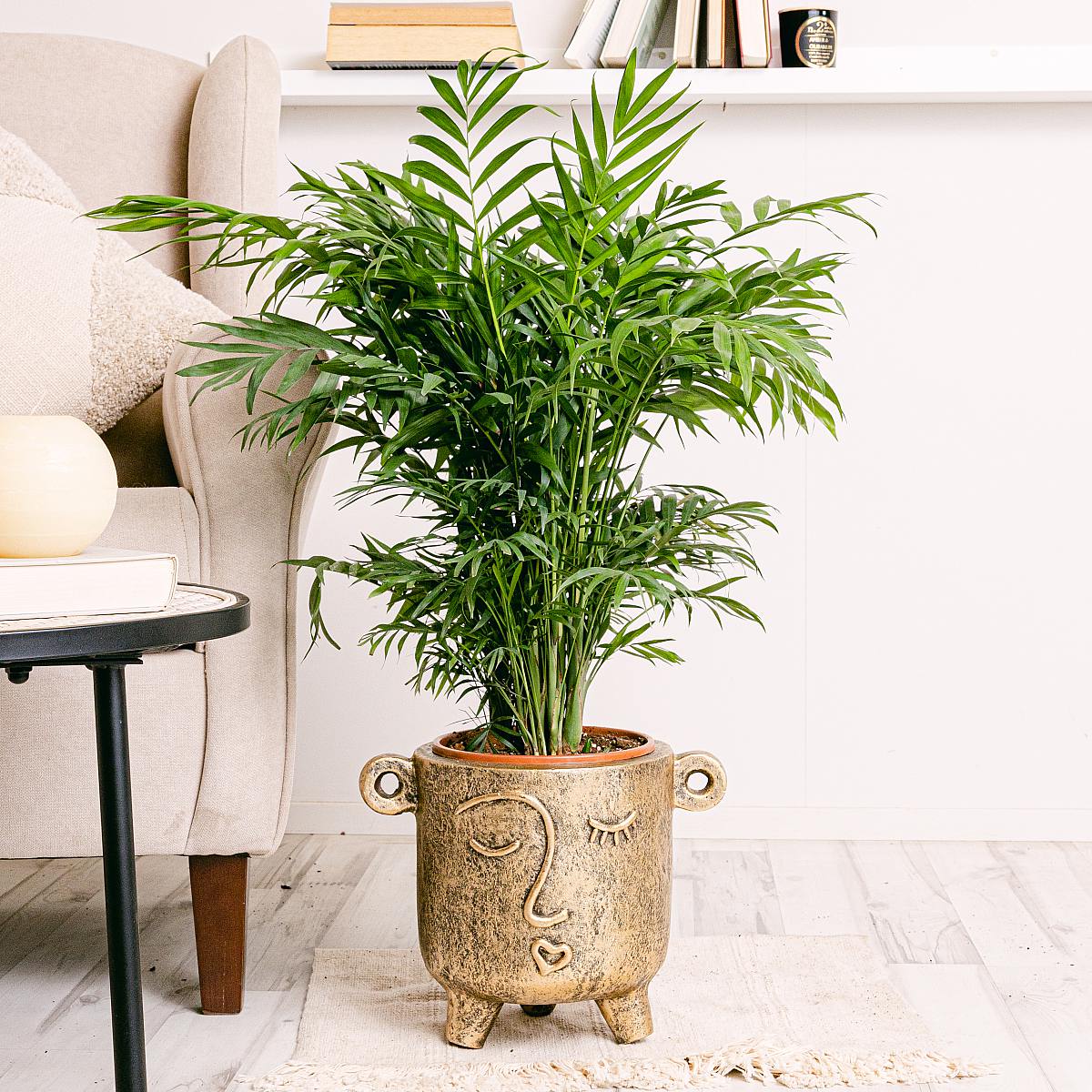
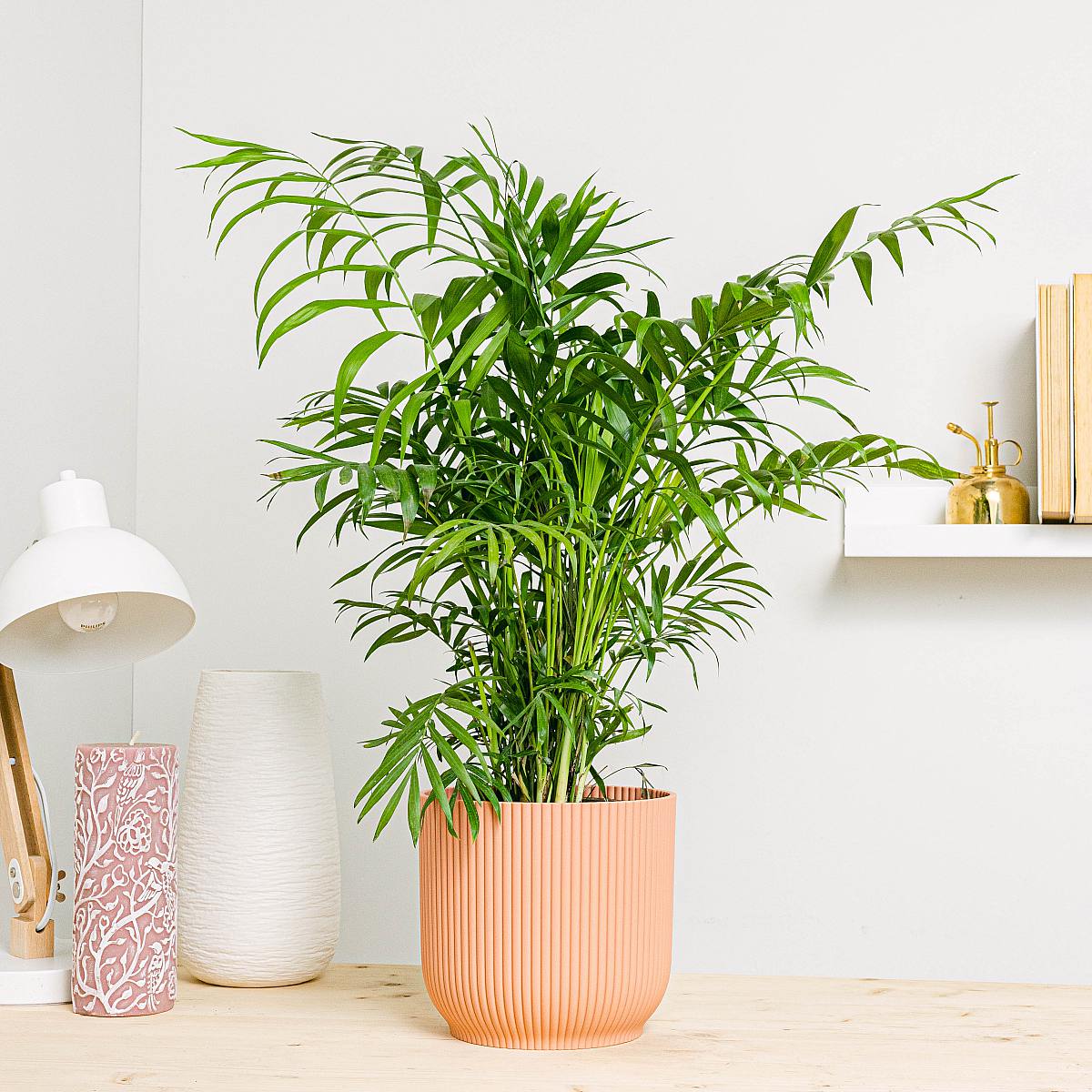
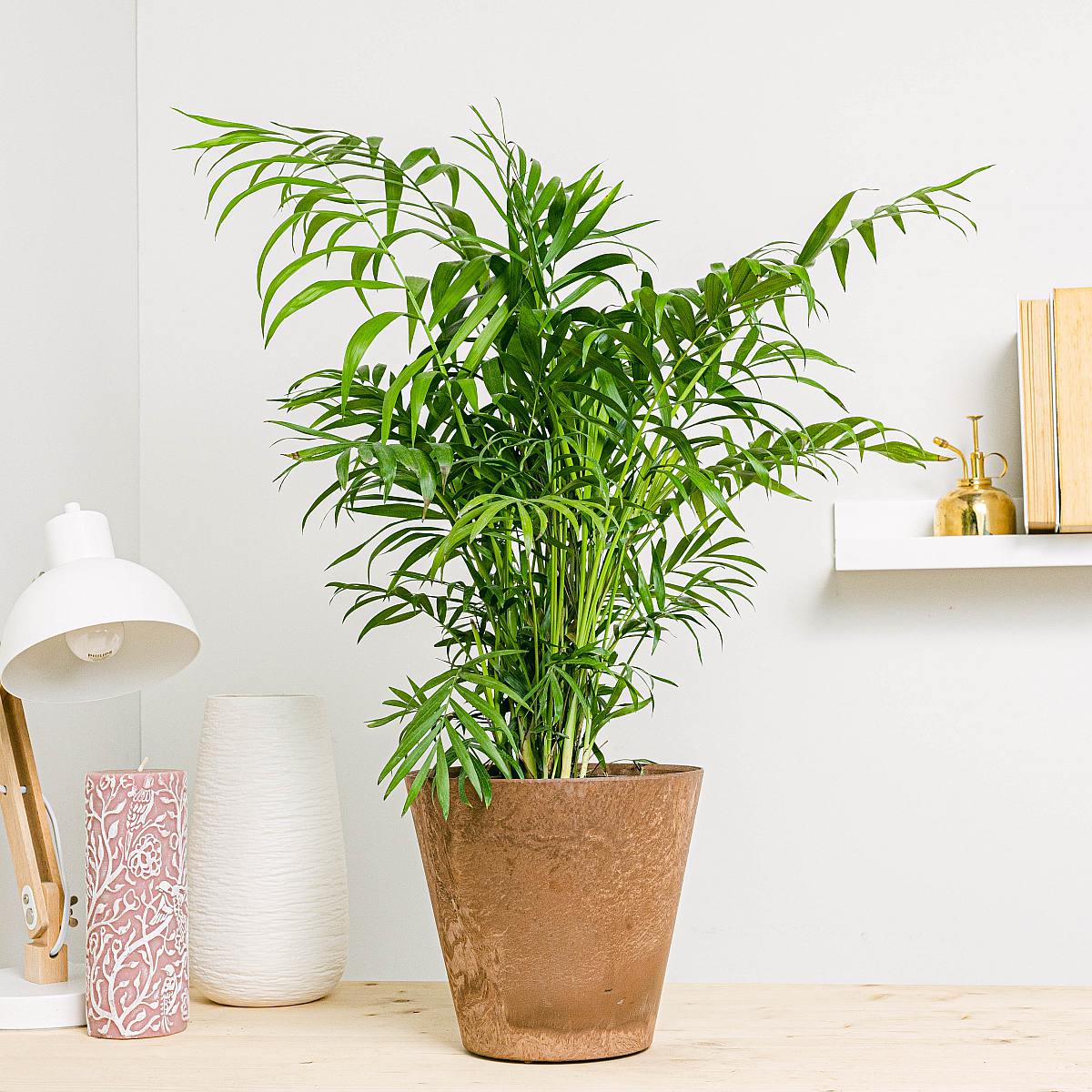
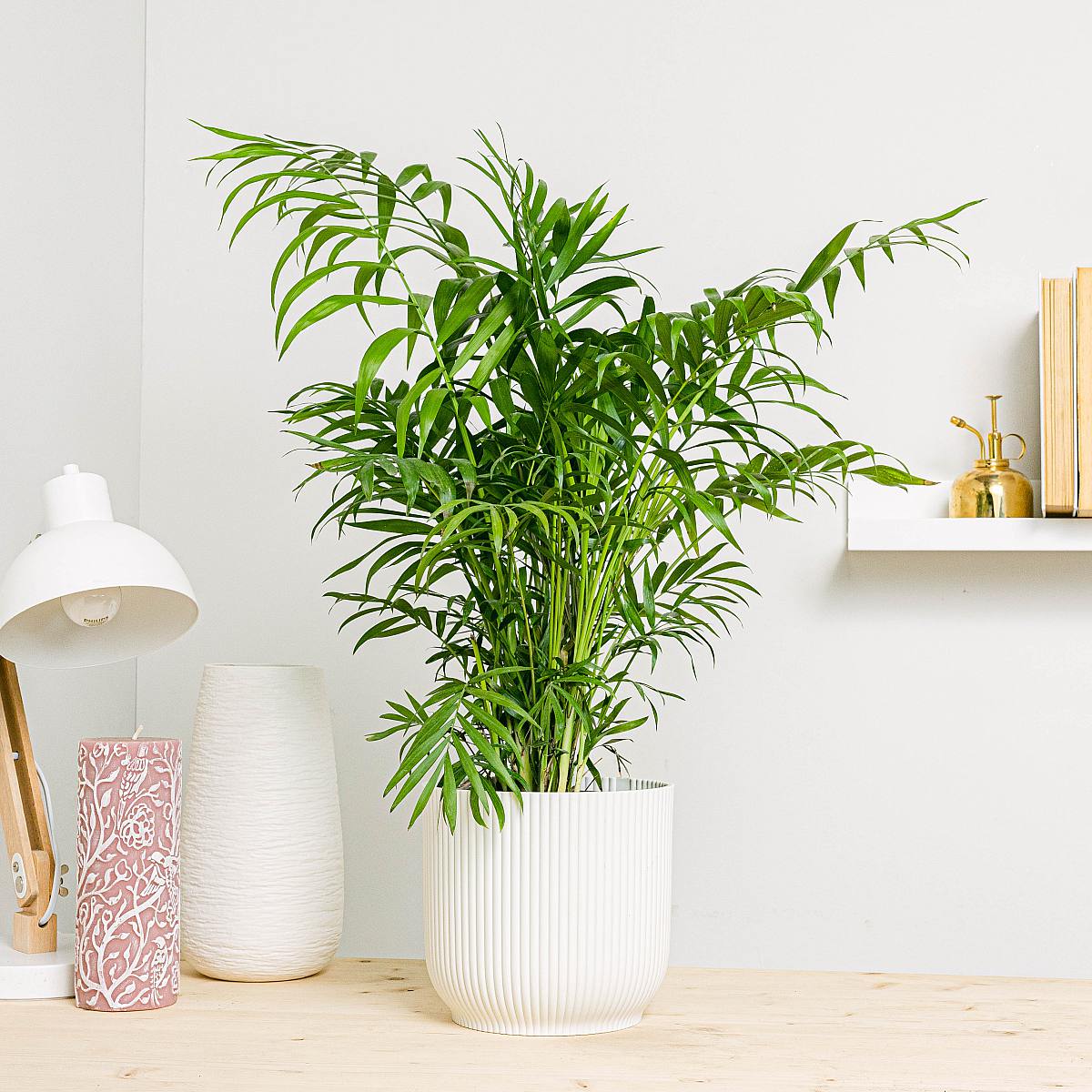
Indoors it reaches 1.5–2 m, rarely more. It is one of the most compact palms: in its natural habitat it tops out at 2.5 m. Growth is slow (10–15 cm a year), making it ideal where a giant plant is unwanted.
Yes, on mature plants. It blooms with clusters of small yellow flowers and produces pea-sized round black berries. The berries are not edible nor toxic, just decorative. Fruiting is rare indoors due to lack of pollination (the plant is dioecious — separate males and females).
Natural behaviour: old leaves yellow and fall as the plant grows upward. They should be pruned progressively to keep the look. If the whole plant yellows, the cause is overwatering or insufficient light.
It is native to the tropical forests of southeast Mexico (Chiapas, Oaxaca) and Guatemala, where it grows in the moderately shaded understorey. Its trade name 'elegans' (Latin for 'elegant') reflects how Victorians valued its refined bearing.
Chamaedorea elegans. Commonly known as "lounge palm" or "indoor palm".
Recommendations
Care
Benefits
It has been the indoor palm par excellence since the 19th century, mass-cultivated in Victorian England for living rooms. Its modest size, tolerance of low light and elegant appearance made it a symbol of bourgeois decoration across Europe.
No. The parlour palm is considered non-toxic to dogs and cats according to the ASPCA. It is one of the safest large indoor plants for pet households, alongside Pilea and other palms.
Indoors it reaches 1.5–2 m, rarely more. It is one of the most compact palms: in its natural habitat it tops out at 2.5 m. Growth is slow (10–15 cm a year), making it ideal where a giant plant is unwanted.
Yes, on mature plants. It blooms with clusters of small yellow flowers and produces pea-sized round black berries. The berries are not edible nor toxic, just decorative. Fruiting is rare indoors due to lack of pollination (the plant is dioecious — separate males and females).
Natural behaviour: old leaves yellow and fall as the plant grows upward. They should be pruned progressively to keep the look. If the whole plant yellows, the cause is overwatering or insufficient light.
It is native to the tropical forests of southeast Mexico (Chiapas, Oaxaca) and Guatemala, where it grows in the moderately shaded understorey. Its trade name 'elegans' (Latin for 'elegant') reflects how Victorians valued its refined bearing.