From
Free delivery
42.00 €
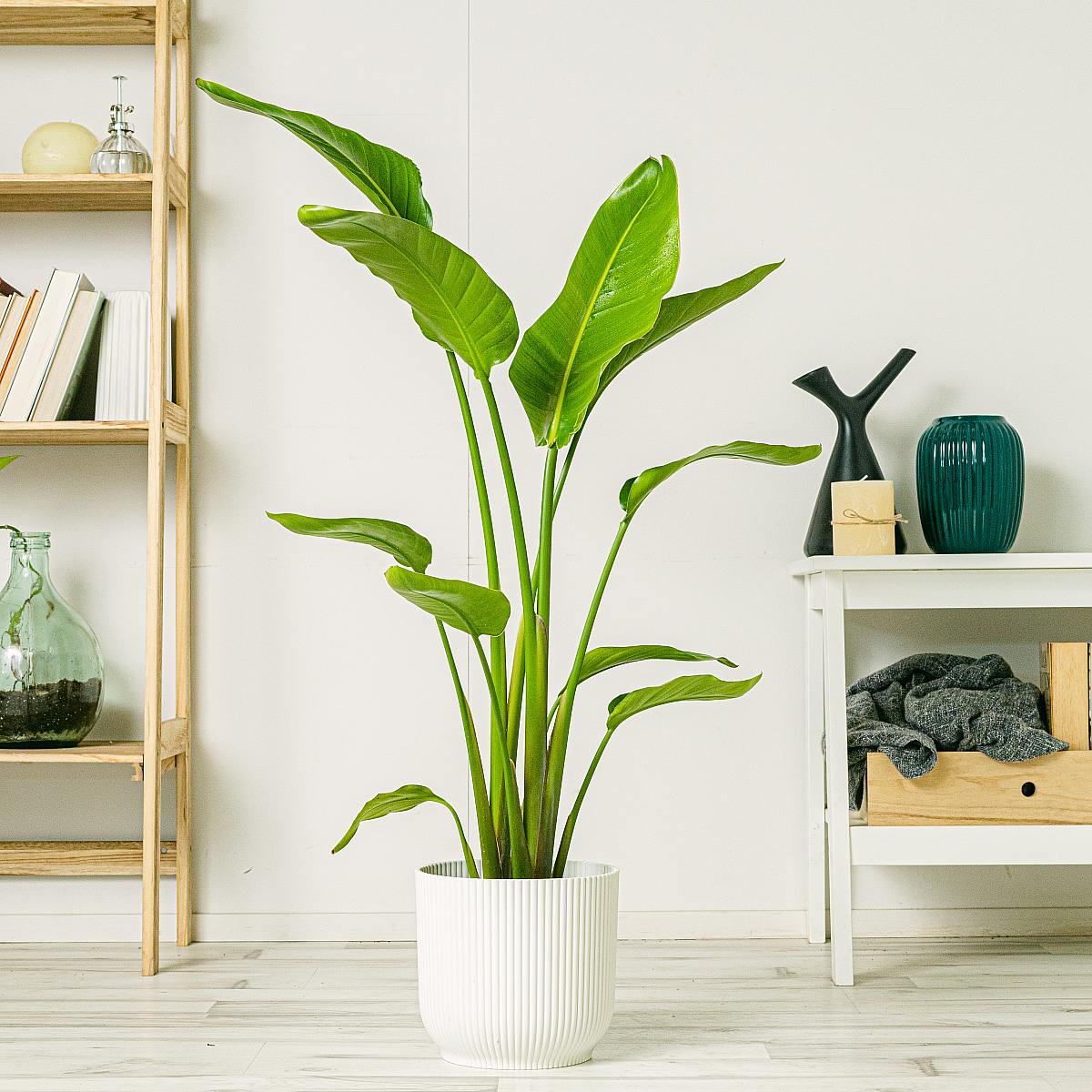
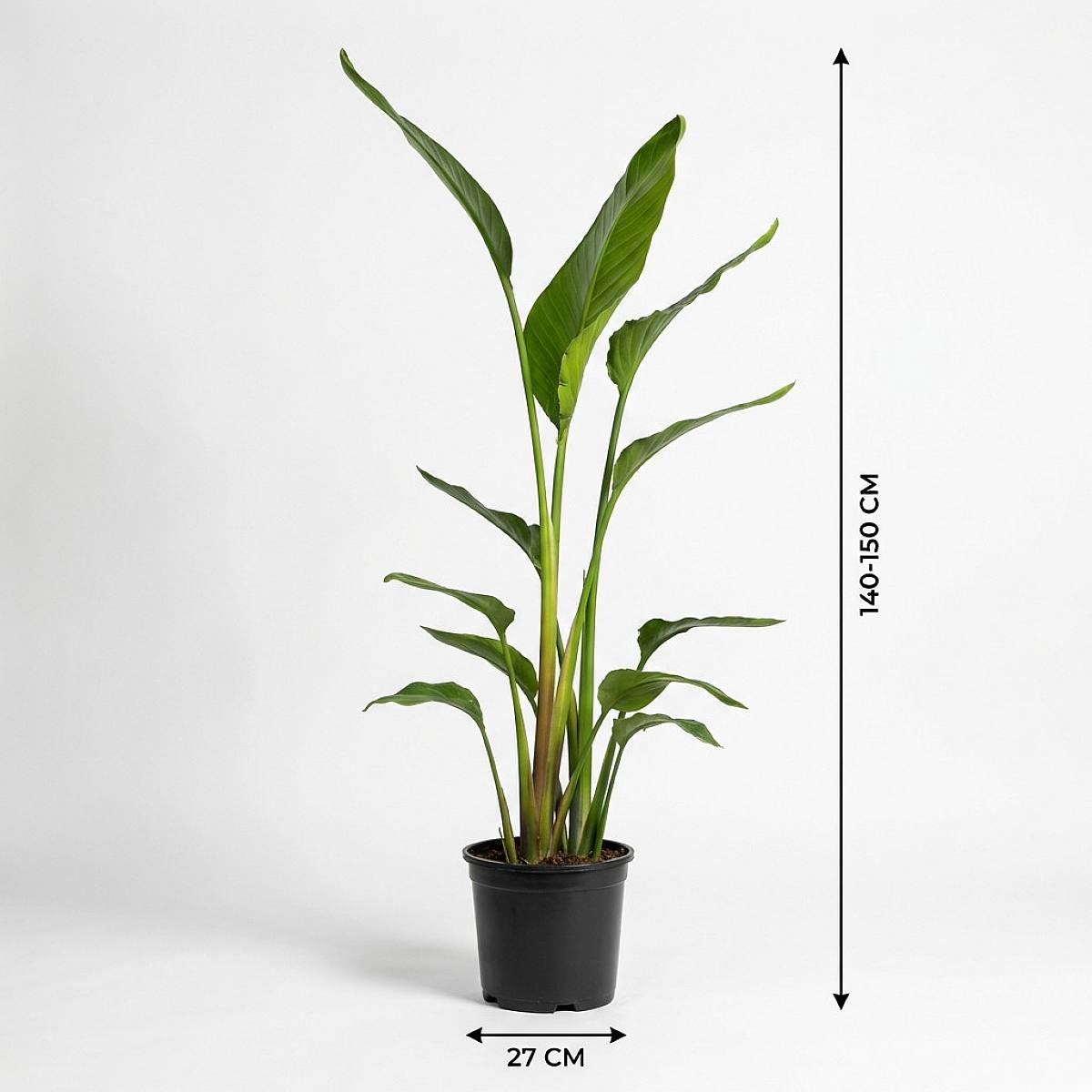
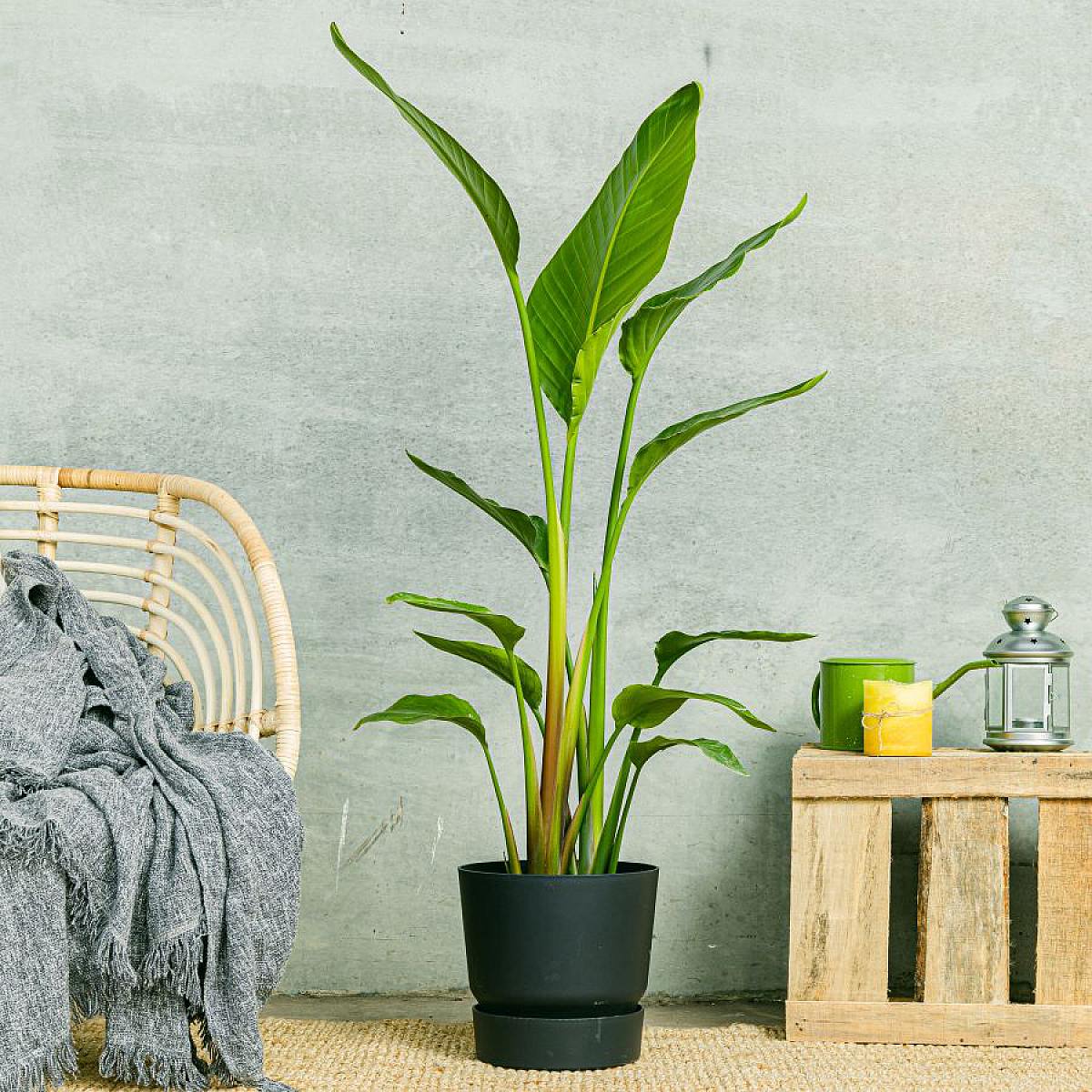






Recommendations - This exotic plant is of tropical African origin, but it thrives in temperate climates and withstands temperatures as low as -2 degrees Celsius. - It can be toxic to humans or pets, causing tummy aches from ingesting the leaves.
Care - Light: It adapts to any level of light. - Watering Moderate: Once a week in winter. Twice a week in summer. When the substratum is dry. - Humidity: Likes to feel cool, spray twice a week. - Top tip: It is a slow grower, so we recommend repotting only every 3 years. A well drained substrate is ideal.
Benefits - It is a very grateful and long-lasting decorative plant. Ideal for all kinds of spaces, with a lot of light or not. - It can be used to create separators for work spaces or rest areas. - Very decorative due to its tropical touch. When it is happy, it blooms in summer. Helps to purify the air.
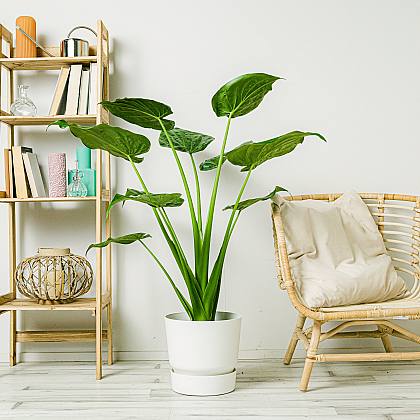
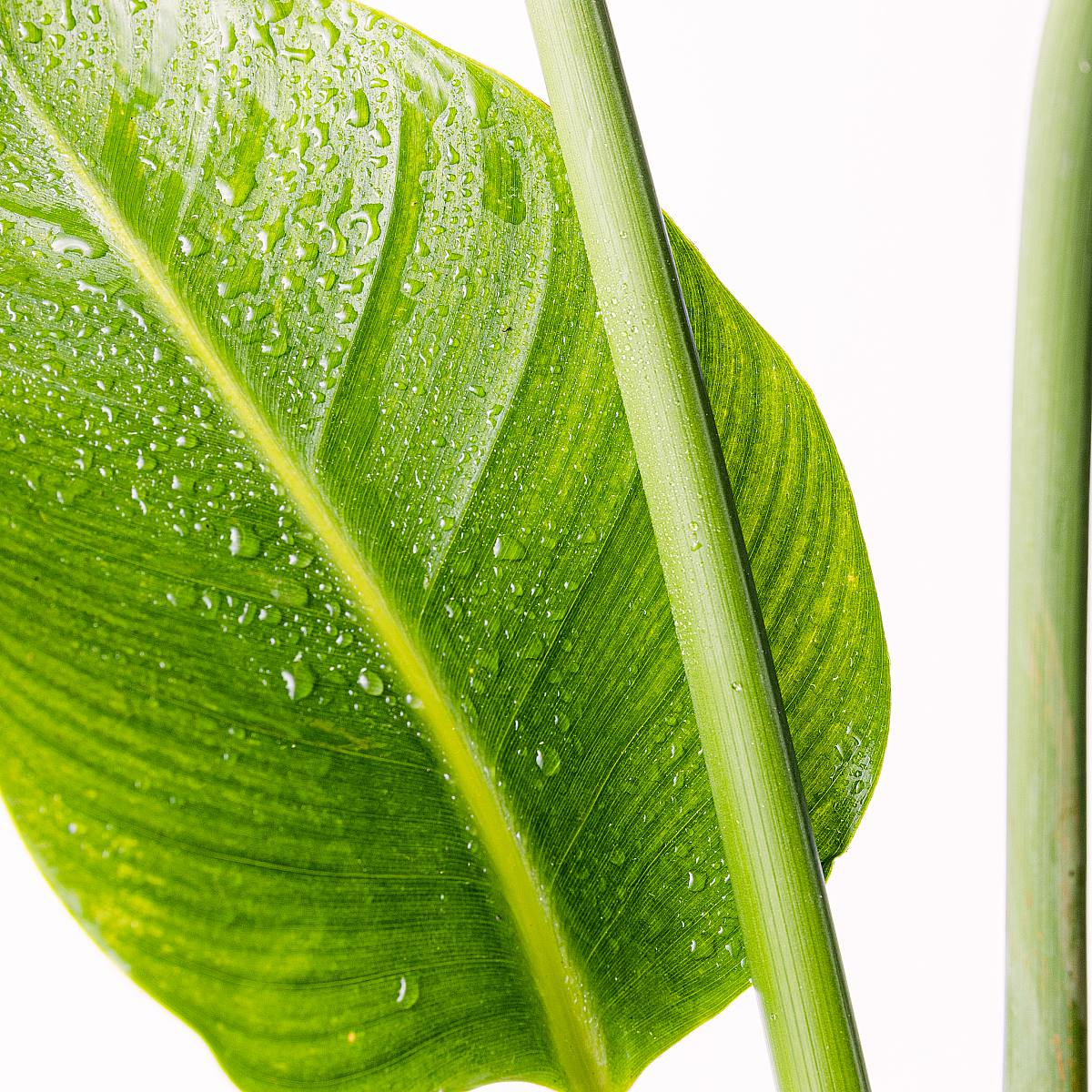
The large, elongated, ribbed leaves of Strelitzia nicolai clearly resemble those of Musa, but they are not related: they belong to different families (Strelitziaceae vs Musaceae). The similarity is convergent evolution: both grow in tropical, windy climates and developed similar leaves to capture light and resist wind.
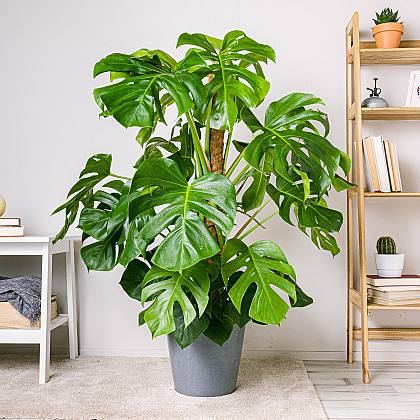
It is a natural adaptation, not a problem. Large leaves split deliberately along the veins to let wind pass through without tearing the whole leaf — exactly as in bananas and Monstera. Indoors with little airflow it happens less, but it is a normal sign of a healthy plant.
Nicolai and augusta are the same species (augusta is an old botanical synonym): a giant plant with banana-like leaves, up to 6 m, with white-and-blue flowers. Reginae is a separate, much smaller species (1–2 m) with medium leaves and the classic orange-and-blue 'bird of paradise' flower. The one sold for living rooms is almost always nicolai.
Mildly. Flowers, seeds and leaves contain tannins and small amounts of cyanogenic compounds that cause nausea, vomiting and drooling in dogs and cats. Toxicity is low compared to Lilium or Dieffenbachia, but symptoms can be unpleasant if the animal chews the large leaves.
Very rarely. Nicolai needs lots of direct light and many years before blooming, and a typical living-room rarely meets its needs. In Mediterranean gardens or large outdoor pots it does bloom. The flower is enormous: near-black bracts from which white petals and a blue tongue emerge.
The species was named in 1858 in honour of Tsar Nicholas I of Russia, a great patron of the botanical gardens of Saint Petersburg, where it was first cultivated outside Africa. The genus name — Strelitzia — comes from Queen Charlotte of Mecklenburg-Strelitz, wife of George III of England.
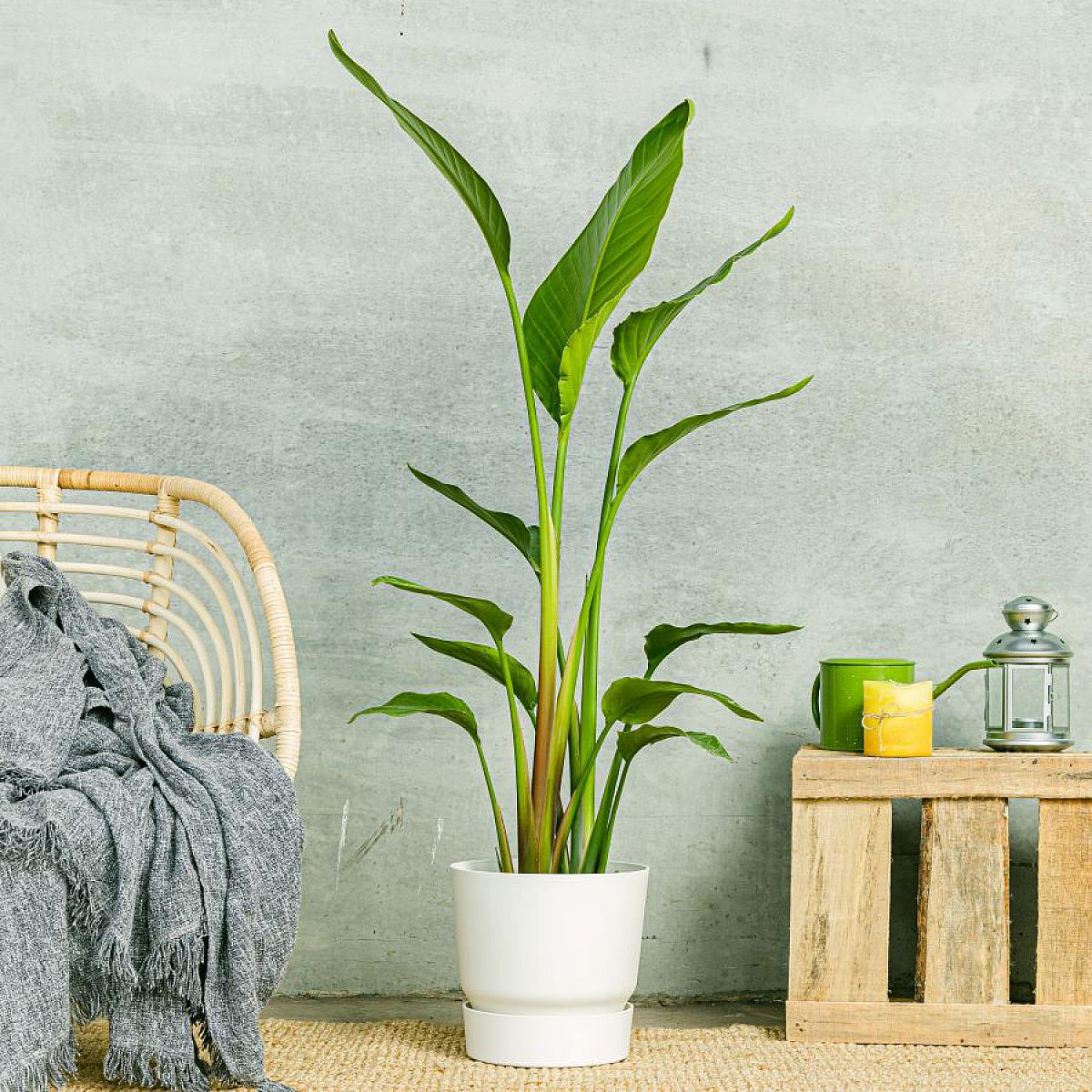
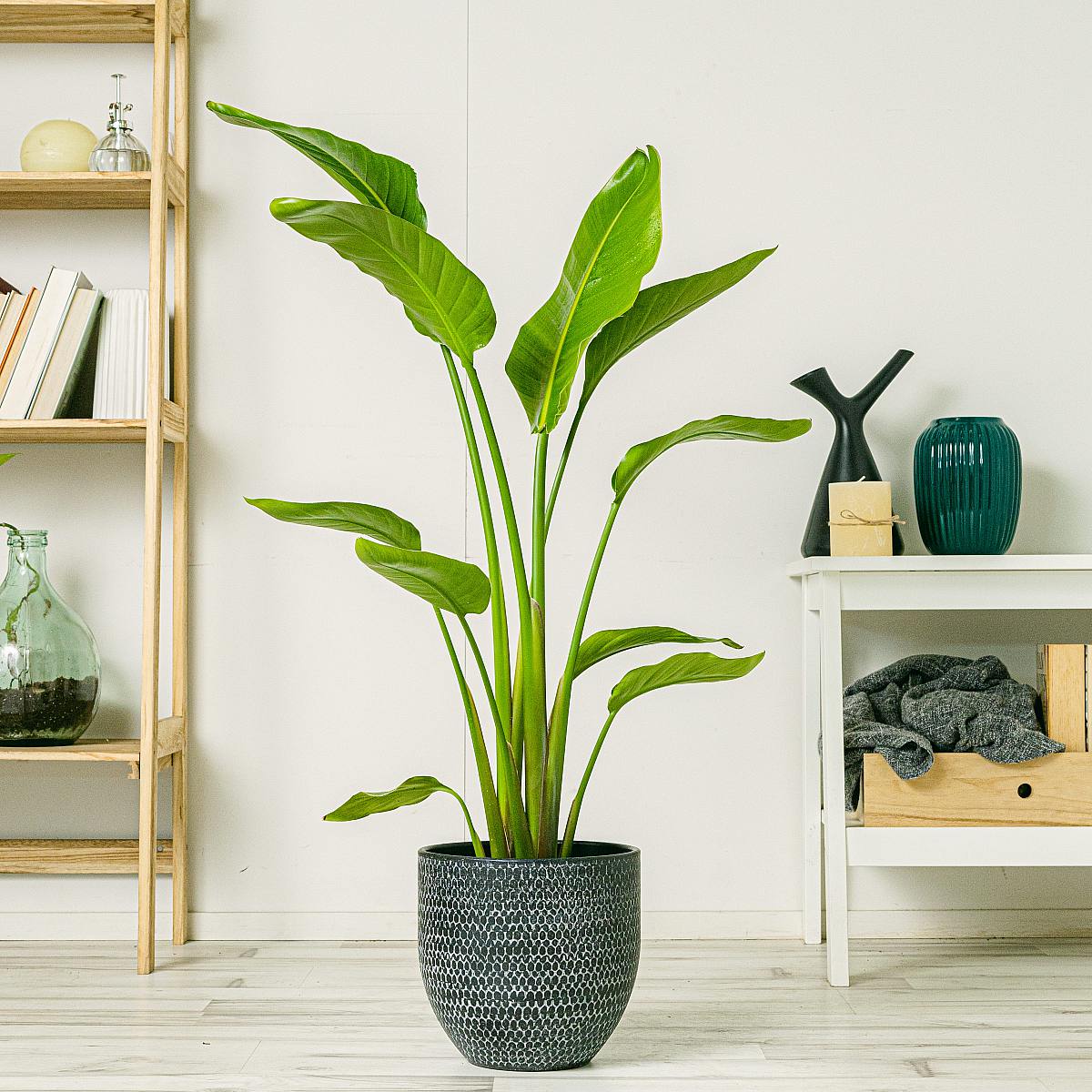
Strelitzia nicolai. Also known as Bird of Paradise.
Recommendations - This exotic plant is of tropical African origin, but it thrives in temperate climates and withstands temperatures as low as -2 degrees Celsius. - It can be toxic to humans or pets, causing tummy aches from ingesting the leaves.
Care - Light: It adapts to any level of light. - Watering Moderate: Once a week in winter. Twice a week in summer. When the substratum is dry. - Humidity: Likes to feel cool, spray twice a week. - Top tip: It is a slow grower, so we recommend repotting only every 3 years. A well drained substrate is ideal.
Benefits - It is a very grateful and long-lasting decorative plant. Ideal for all kinds of spaces, with a lot of light or not. - It can be used to create separators for work spaces or rest areas. - Very decorative due to its tropical touch. When it is happy, it blooms in summer. Helps to purify the air.
The large, elongated, ribbed leaves of Strelitzia nicolai clearly resemble those of Musa, but they are not related: they belong to different families (Strelitziaceae vs Musaceae). The similarity is convergent evolution: both grow in tropical, windy climates and developed similar leaves to capture light and resist wind.
It is a natural adaptation, not a problem. Large leaves split deliberately along the veins to let wind pass through without tearing the whole leaf — exactly as in bananas and Monstera. Indoors with little airflow it happens less, but it is a normal sign of a healthy plant.
Nicolai and augusta are the same species (augusta is an old botanical synonym): a giant plant with banana-like leaves, up to 6 m, with white-and-blue flowers. Reginae is a separate, much smaller species (1–2 m) with medium leaves and the classic orange-and-blue 'bird of paradise' flower. The one sold for living rooms is almost always nicolai.
Mildly. Flowers, seeds and leaves contain tannins and small amounts of cyanogenic compounds that cause nausea, vomiting and drooling in dogs and cats. Toxicity is low compared to Lilium or Dieffenbachia, but symptoms can be unpleasant if the animal chews the large leaves.
Very rarely. Nicolai needs lots of direct light and many years before blooming, and a typical living-room rarely meets its needs. In Mediterranean gardens or large outdoor pots it does bloom. The flower is enormous: near-black bracts from which white petals and a blue tongue emerge.
The species was named in 1858 in honour of Tsar Nicholas I of Russia, a great patron of the botanical gardens of Saint Petersburg, where it was first cultivated outside Africa. The genus name — Strelitzia — comes from Queen Charlotte of Mecklenburg-Strelitz, wife of George III of England.