From
Free delivery
46.00 €






Recommendations
Some varieties (especially Citrus × limon 'Eureka' and 'Lunario') are remontant: they produce flowers and fruit several times a year instead of in a single season. This makes them popular as indoor plants where you can have lemons at different stages simultaneously.
It is an ancient hybrid: a natural cross between citron (Citrus medica) and bitter orange (Citrus aurantium) that arose thousands of years ago in Southeast Asia. There is no original 'wild lemon'; it has always been a cultivated plant.
Mildly, like all citrus. Essential oils (limonene, linalool) and psoralens cause digestive upset, vomiting and phototoxic dermatitis in dogs and cats. Toxicity is low to moderate, not dangerous except in large ingestion.
With age the plant directs less energy to many fruits and more to a few large ones. This is natural. Young lemon trees (5–15 years) are the most productive in quantity; very old ones (40+) produce less but with superior flavour.
With good care, 50–100 years. Lemon trees over 150 years old are documented in traditional Mediterranean orchards (Valencia, Sicily). Pot life is usually 20–30 years due to root and nutrient limitations.
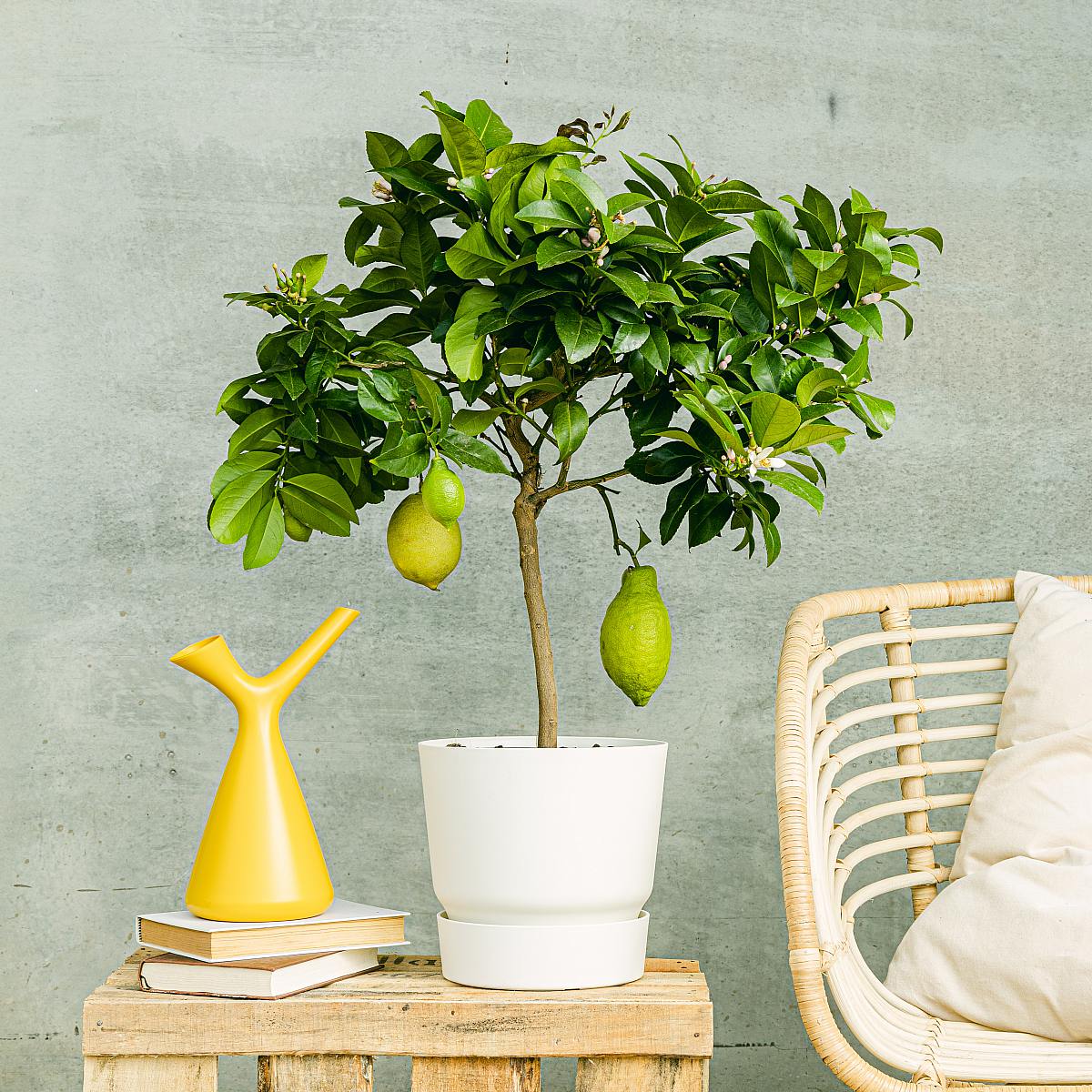
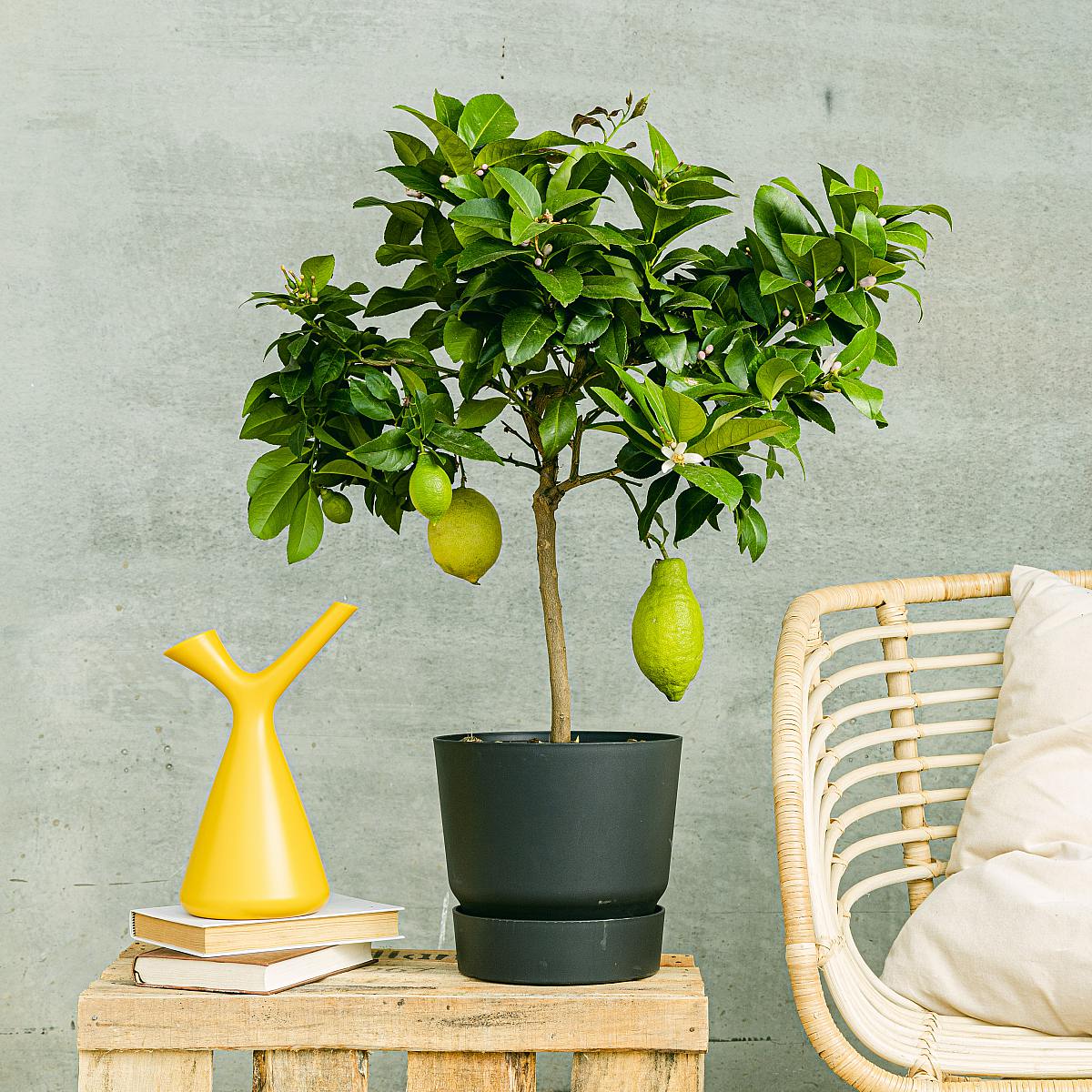
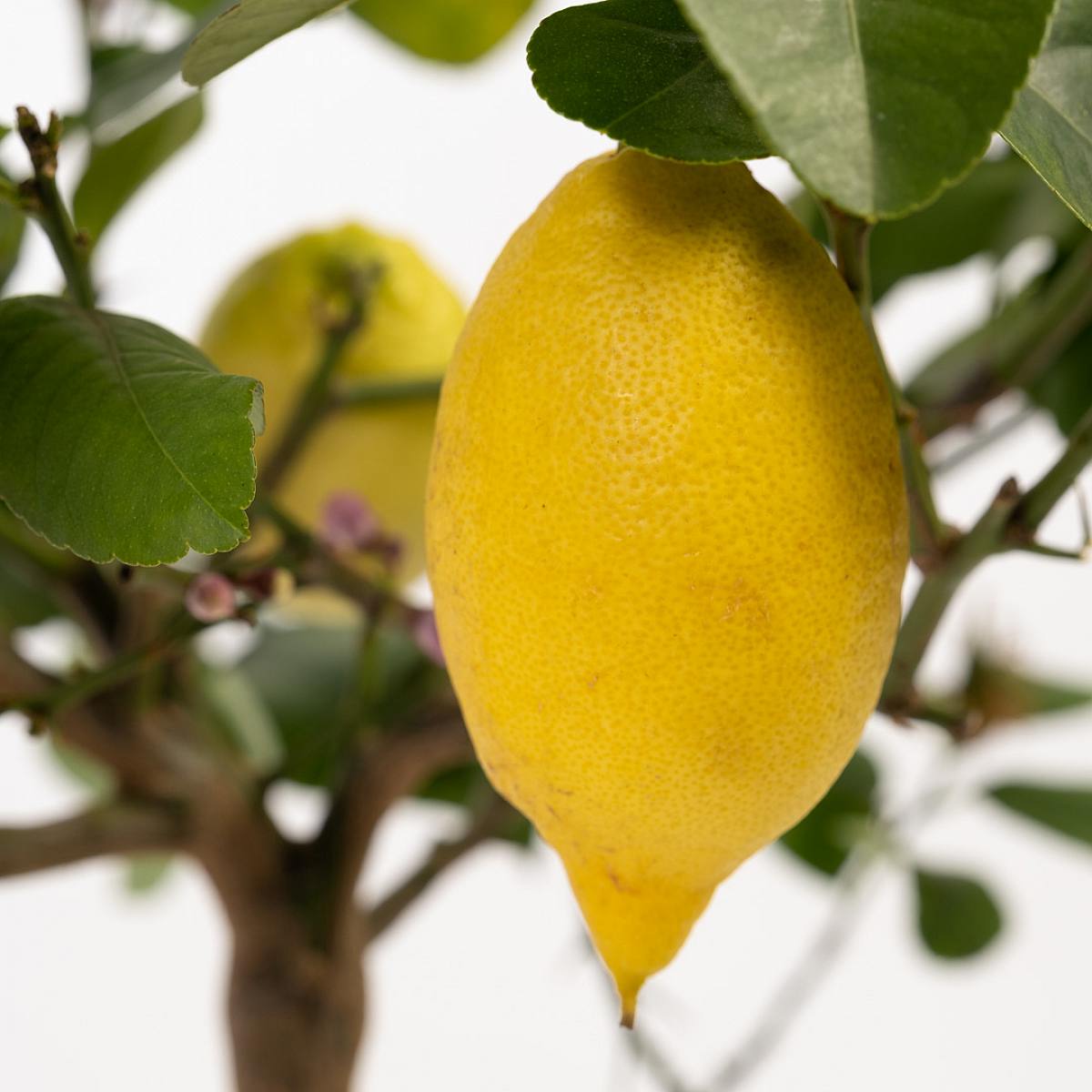
The yellow colour develops with cold: if night temperatures do not drop below 13–15 °C for several weeks, the lemon can ripen without losing its green. In tropical climates without winter, lemons are picked green. They are perfectly ripe — only the external colour differs.
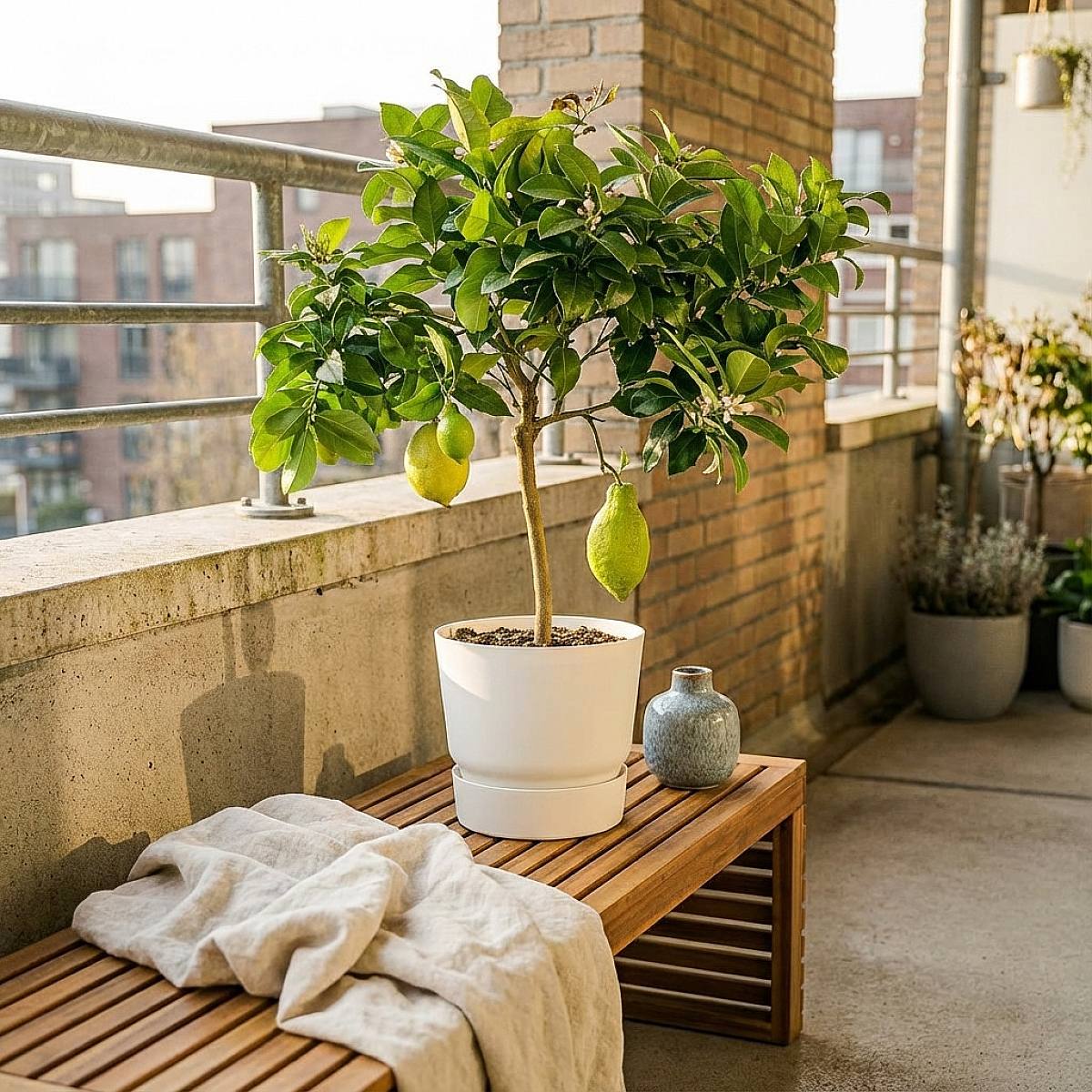
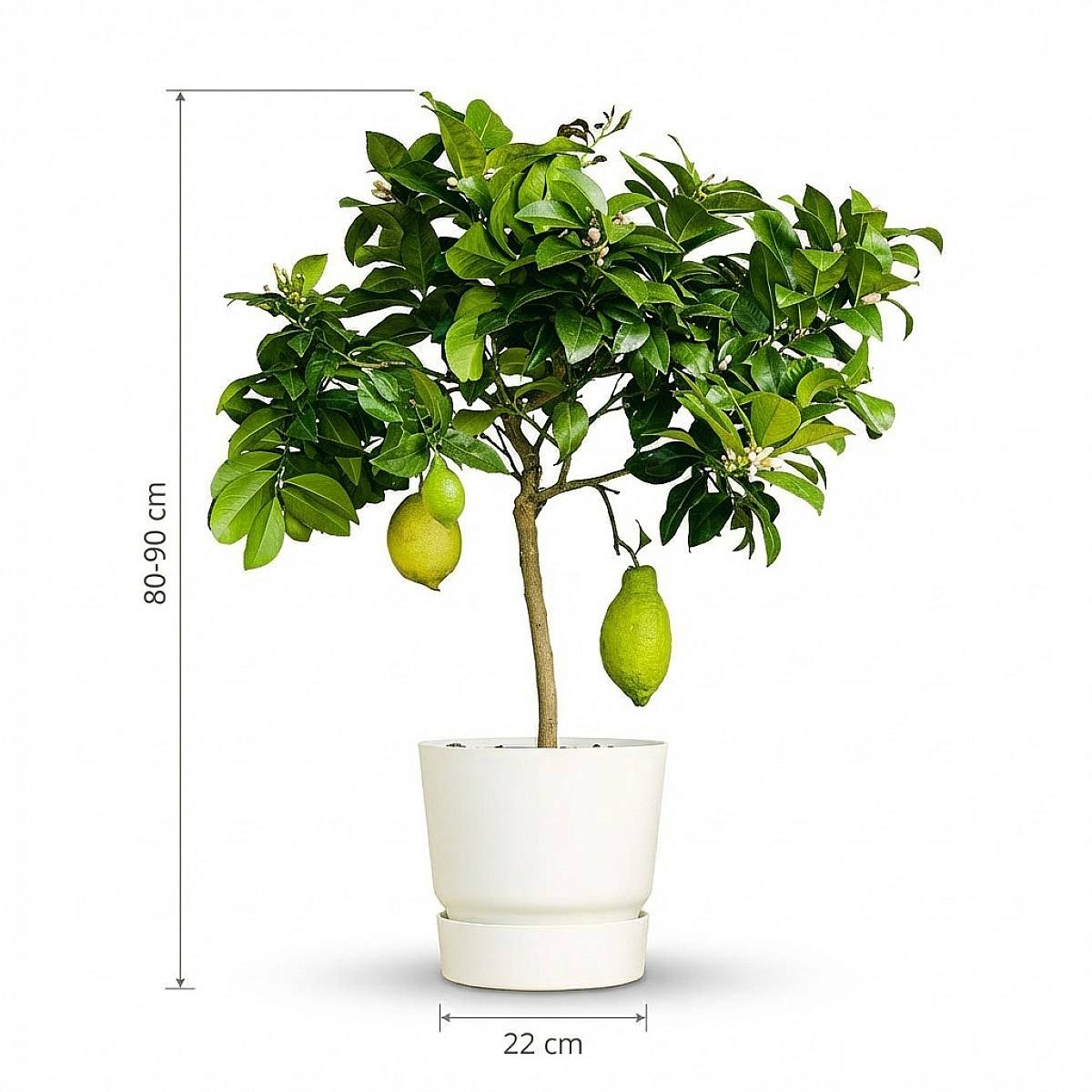
Citrus x lemon, also known as lemon tree, originated in Asia more than two thousand years ago.
Recommendations
Some varieties (especially Citrus × limon 'Eureka' and 'Lunario') are remontant: they produce flowers and fruit several times a year instead of in a single season. This makes them popular as indoor plants where you can have lemons at different stages simultaneously.
It is an ancient hybrid: a natural cross between citron (Citrus medica) and bitter orange (Citrus aurantium) that arose thousands of years ago in Southeast Asia. There is no original 'wild lemon'; it has always been a cultivated plant.
Mildly, like all citrus. Essential oils (limonene, linalool) and psoralens cause digestive upset, vomiting and phototoxic dermatitis in dogs and cats. Toxicity is low to moderate, not dangerous except in large ingestion.
With age the plant directs less energy to many fruits and more to a few large ones. This is natural. Young lemon trees (5–15 years) are the most productive in quantity; very old ones (40+) produce less but with superior flavour.
With good care, 50–100 years. Lemon trees over 150 years old are documented in traditional Mediterranean orchards (Valencia, Sicily). Pot life is usually 20–30 years due to root and nutrient limitations.
The yellow colour develops with cold: if night temperatures do not drop below 13–15 °C for several weeks, the lemon can ripen without losing its green. In tropical climates without winter, lemons are picked green. They are perfectly ripe — only the external colour differs.