Free delivery
39.00 €






Recommendations
Care
Benefits
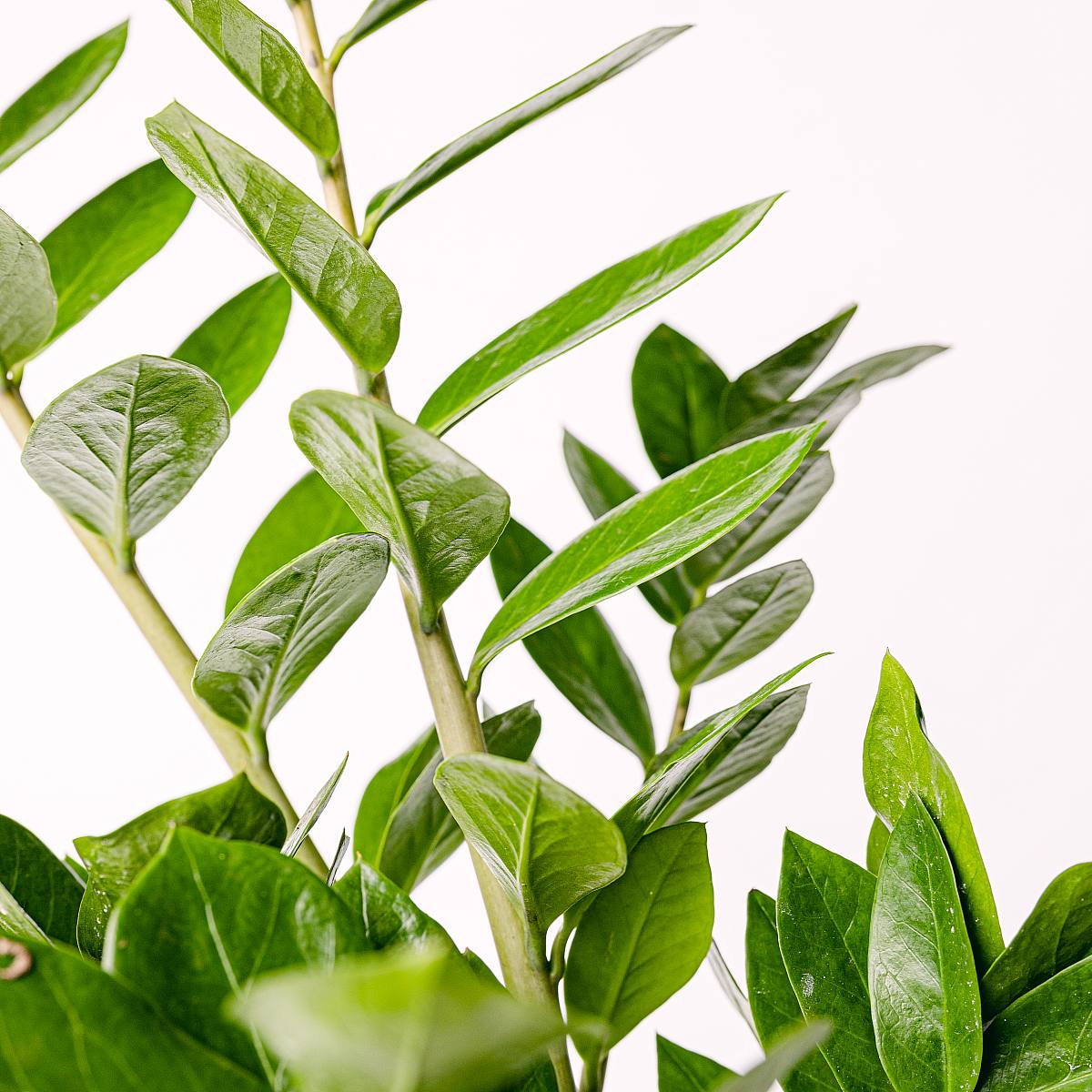
It stores water and nutrients in large underground tubers, allowing it to survive months without watering. Its leaves have a waxy cuticle that hugely cuts water loss. It tolerates low light, dry air, lack of fertilization and prolonged neglect better than almost any other indoor plant.
Yes. The whole plant contains calcium oxalate crystals that irritate mouth, tongue and digestive tract on chewing. It causes drooling, vomiting and difficulty swallowing in dogs and cats. Toxicity is mild to moderate, rarely needing veterinary treatment unless ingestion is large.
No. The myth comes from a Polish study in the 2000s that detected trace amounts of a compound present in many plants and was misinterpreted. The Zamioculcas is no more dangerous than any other Araceae plant. Just keep out of reach of pets and small children.
They are reserve organs: they store water, starch and nutrients that the plant uses when it cannot get them externally. In its natural habitat — areas with long dry seasons — they are what allow the Zamioculcas to resprout after months without rain. They grow yearly when the plant has space.
Yes, but rarely indoors. When it does it produces a creamy spadix surrounded by a green spathe, similar to a small Spathiphyllum, near the soil and half-hidden among the leaves. It usually appears on mature plants several years old.
It is native to East Africa, especially Kenya, Tanzania and South Africa, where it grows in rocky soils and dry forests. Although it became popular as an indoor plant only in the 1990s (thanks to Dutch growers), it had been known locally for centuries.
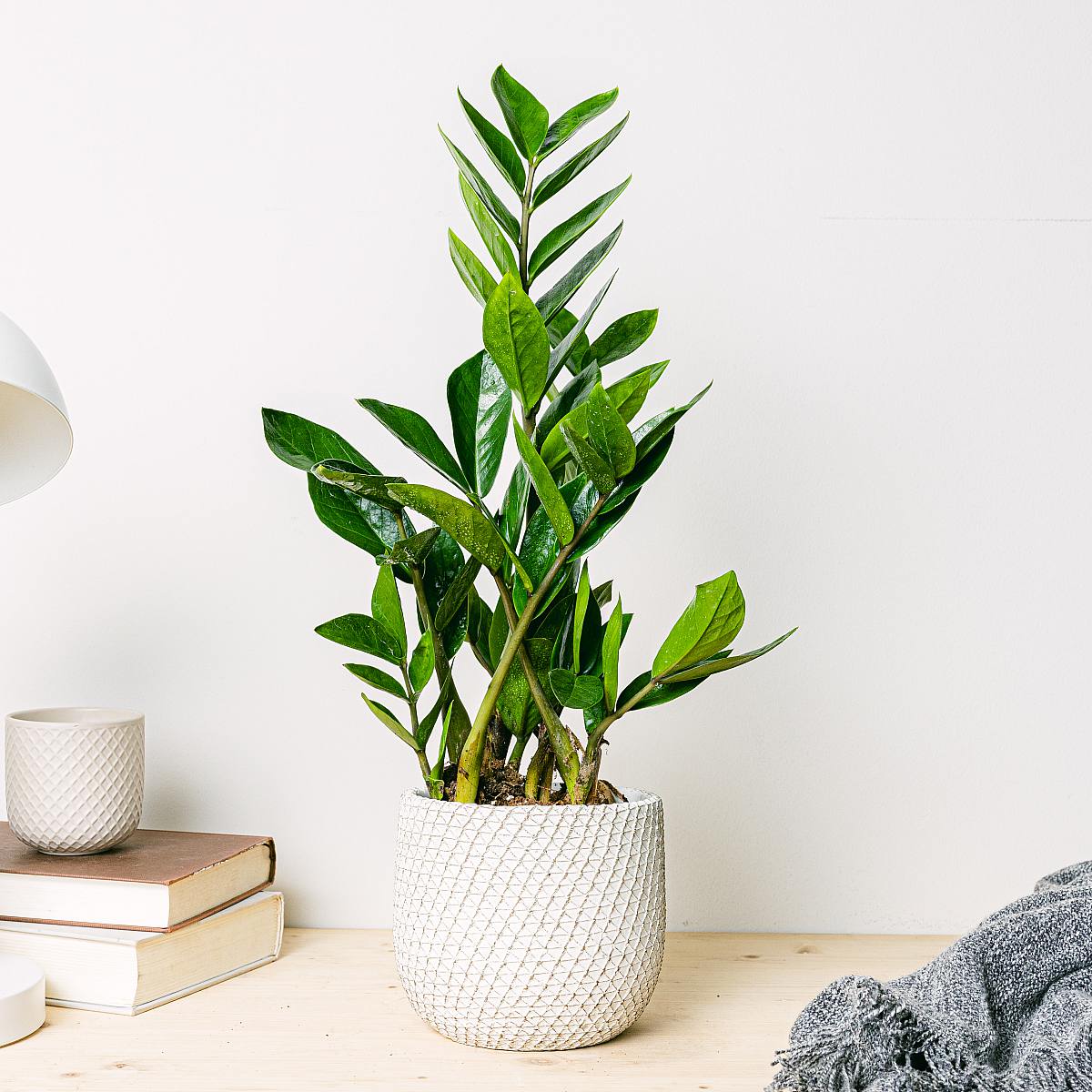
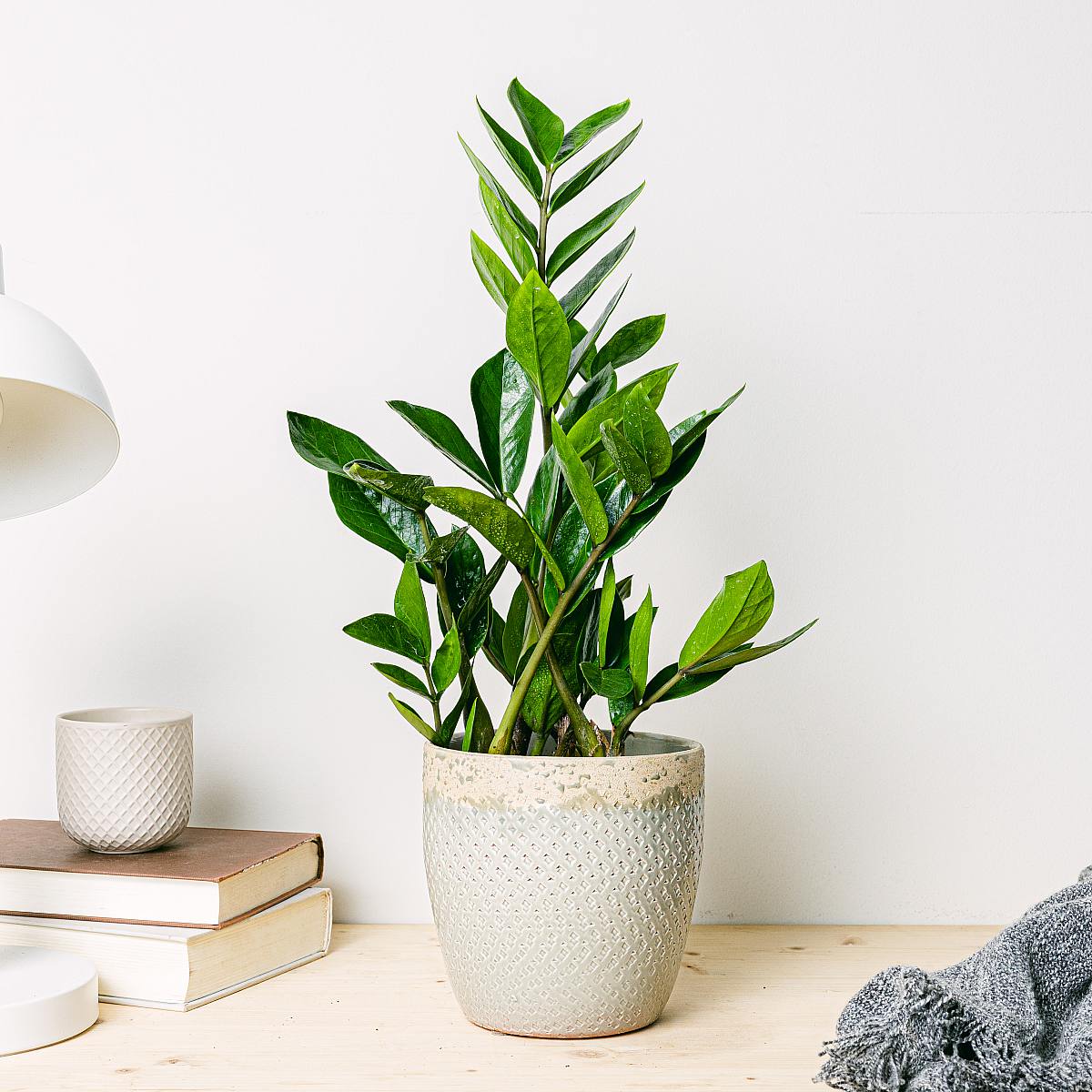
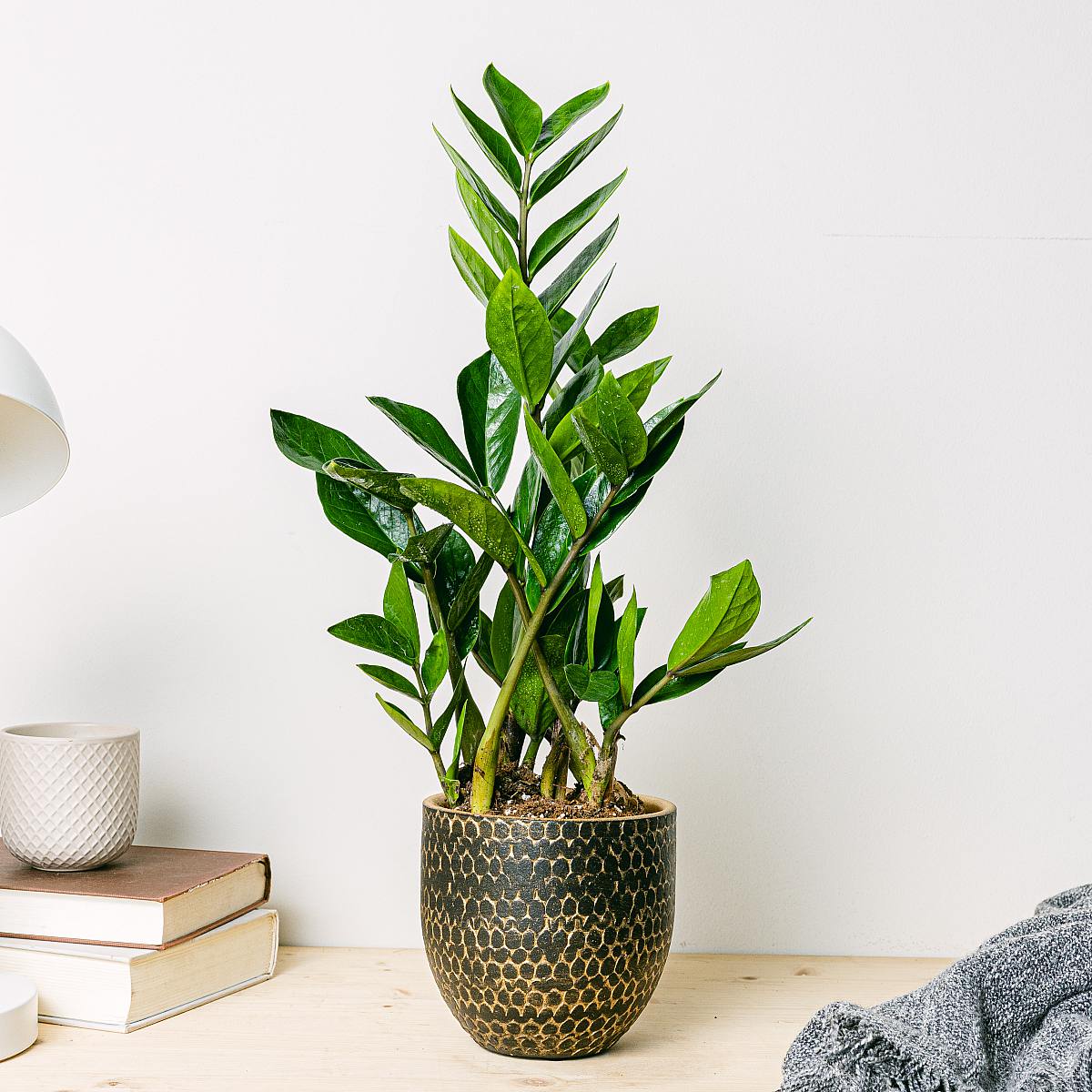
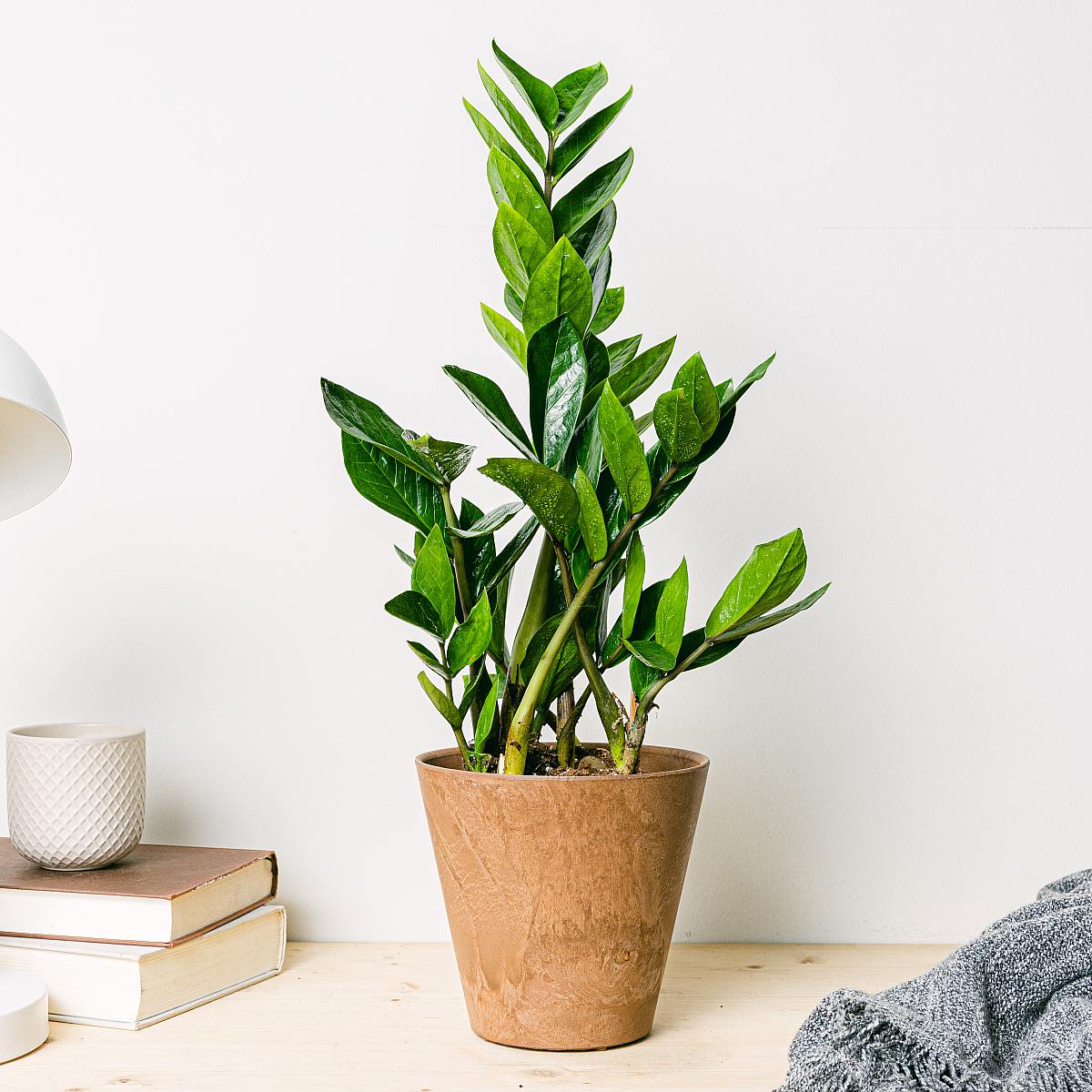
Zamioculcas zamicifolia, also known as ZZ plant after the initials of its scientific name.
Recommendations
Care
Benefits
It stores water and nutrients in large underground tubers, allowing it to survive months without watering. Its leaves have a waxy cuticle that hugely cuts water loss. It tolerates low light, dry air, lack of fertilization and prolonged neglect better than almost any other indoor plant.
Yes. The whole plant contains calcium oxalate crystals that irritate mouth, tongue and digestive tract on chewing. It causes drooling, vomiting and difficulty swallowing in dogs and cats. Toxicity is mild to moderate, rarely needing veterinary treatment unless ingestion is large.
No. The myth comes from a Polish study in the 2000s that detected trace amounts of a compound present in many plants and was misinterpreted. The Zamioculcas is no more dangerous than any other Araceae plant. Just keep out of reach of pets and small children.
They are reserve organs: they store water, starch and nutrients that the plant uses when it cannot get them externally. In its natural habitat — areas with long dry seasons — they are what allow the Zamioculcas to resprout after months without rain. They grow yearly when the plant has space.
Yes, but rarely indoors. When it does it produces a creamy spadix surrounded by a green spathe, similar to a small Spathiphyllum, near the soil and half-hidden among the leaves. It usually appears on mature plants several years old.
It is native to East Africa, especially Kenya, Tanzania and South Africa, where it grows in rocky soils and dry forests. Although it became popular as an indoor plant only in the 1990s (thanks to Dutch growers), it had been known locally for centuries.