Free delivery
44.00 €
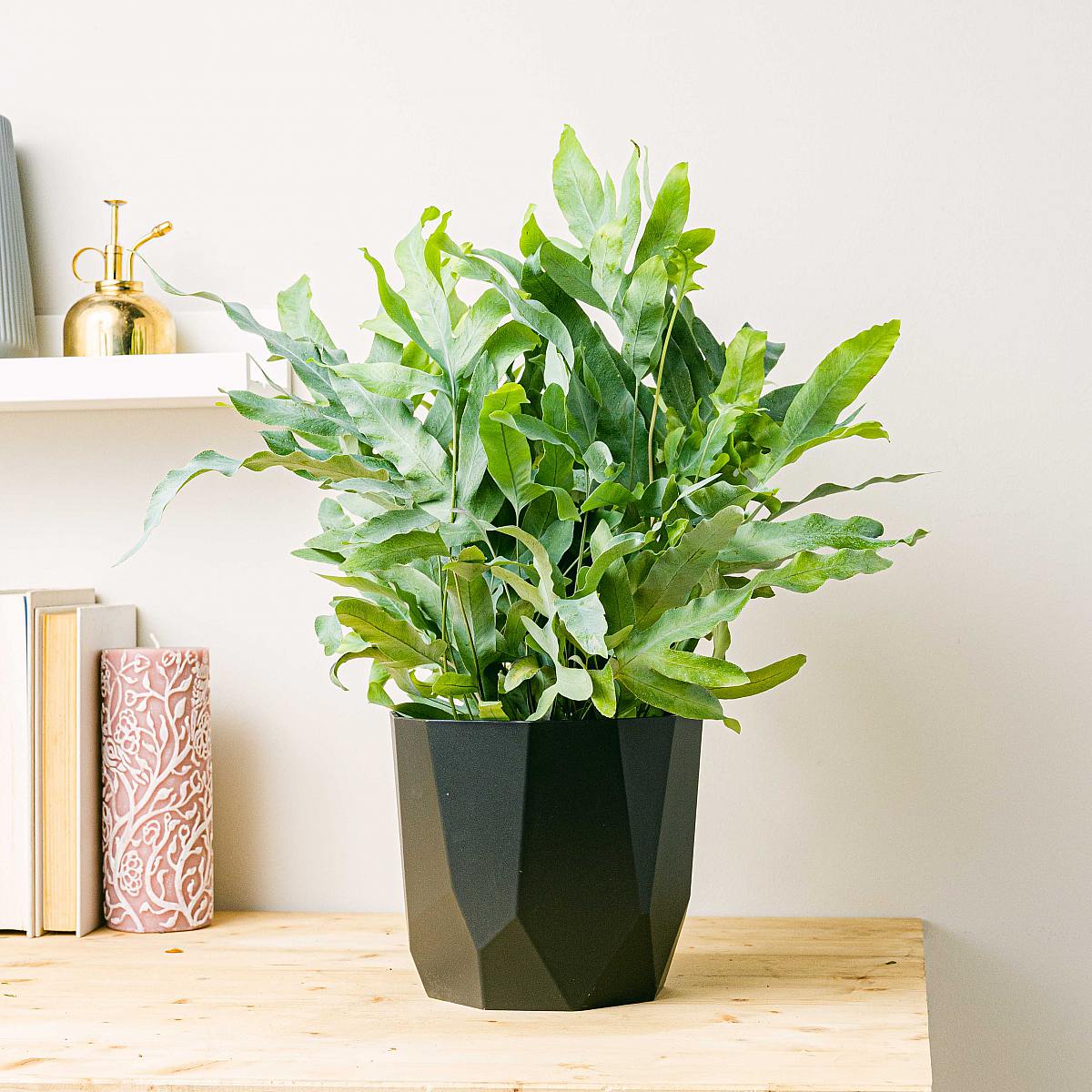
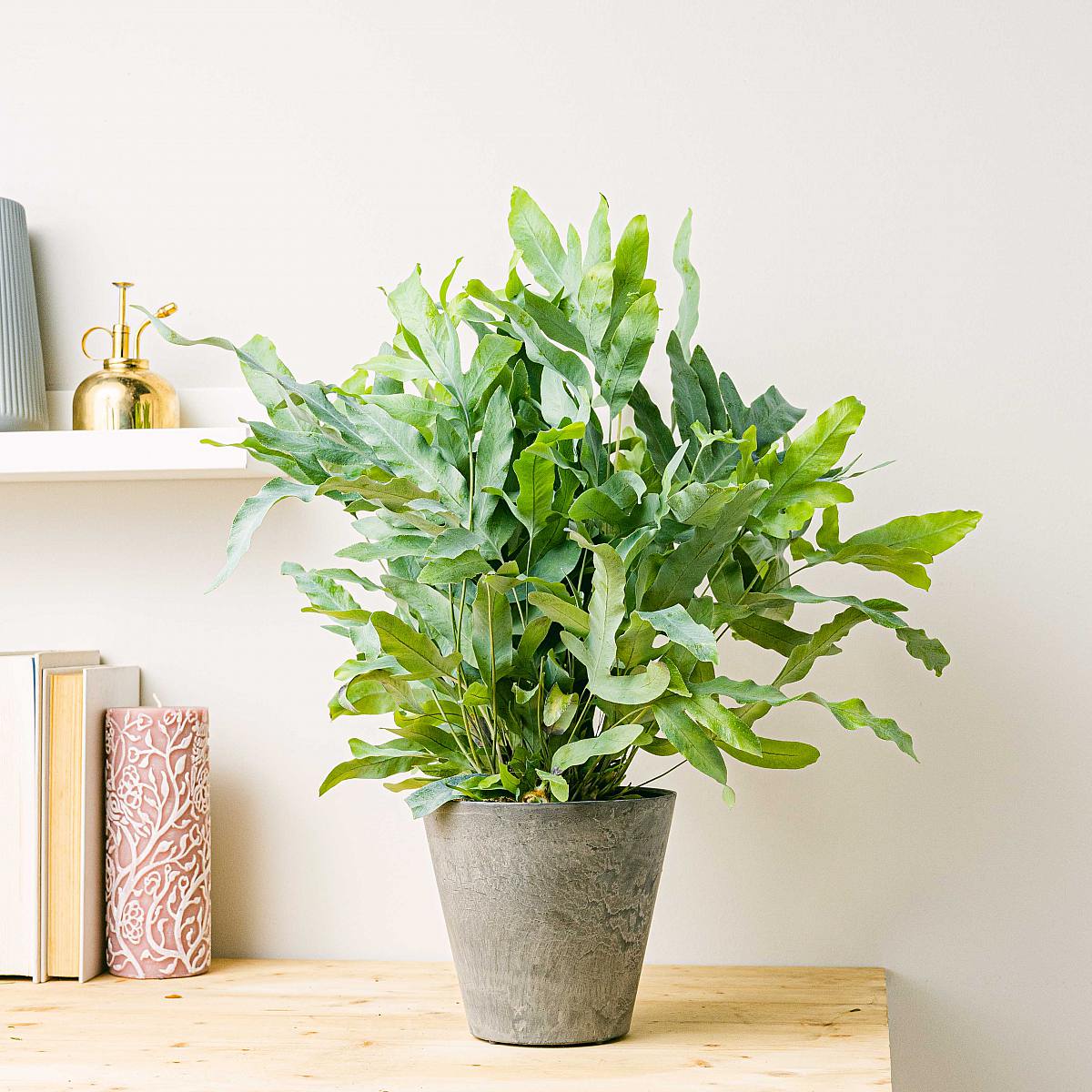
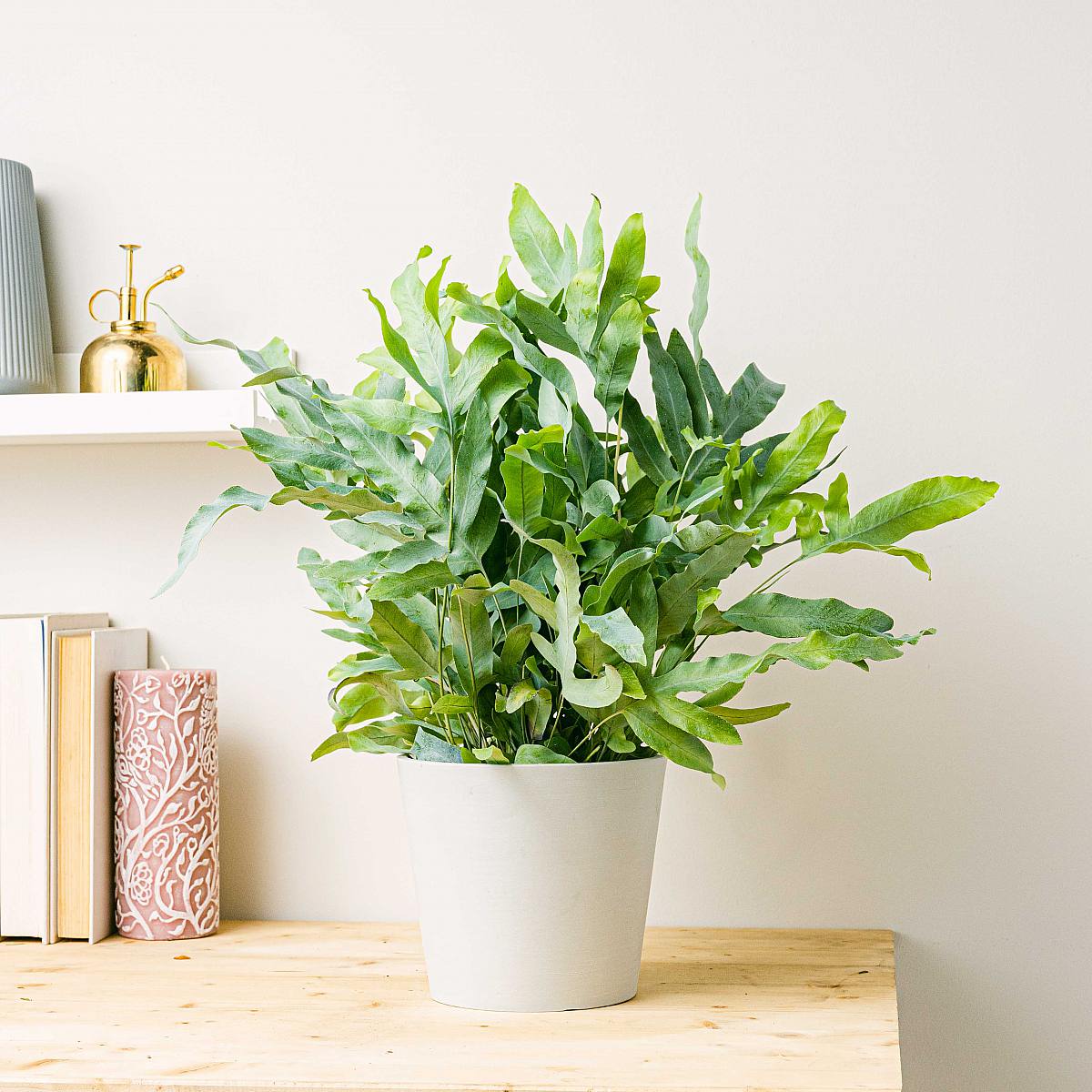
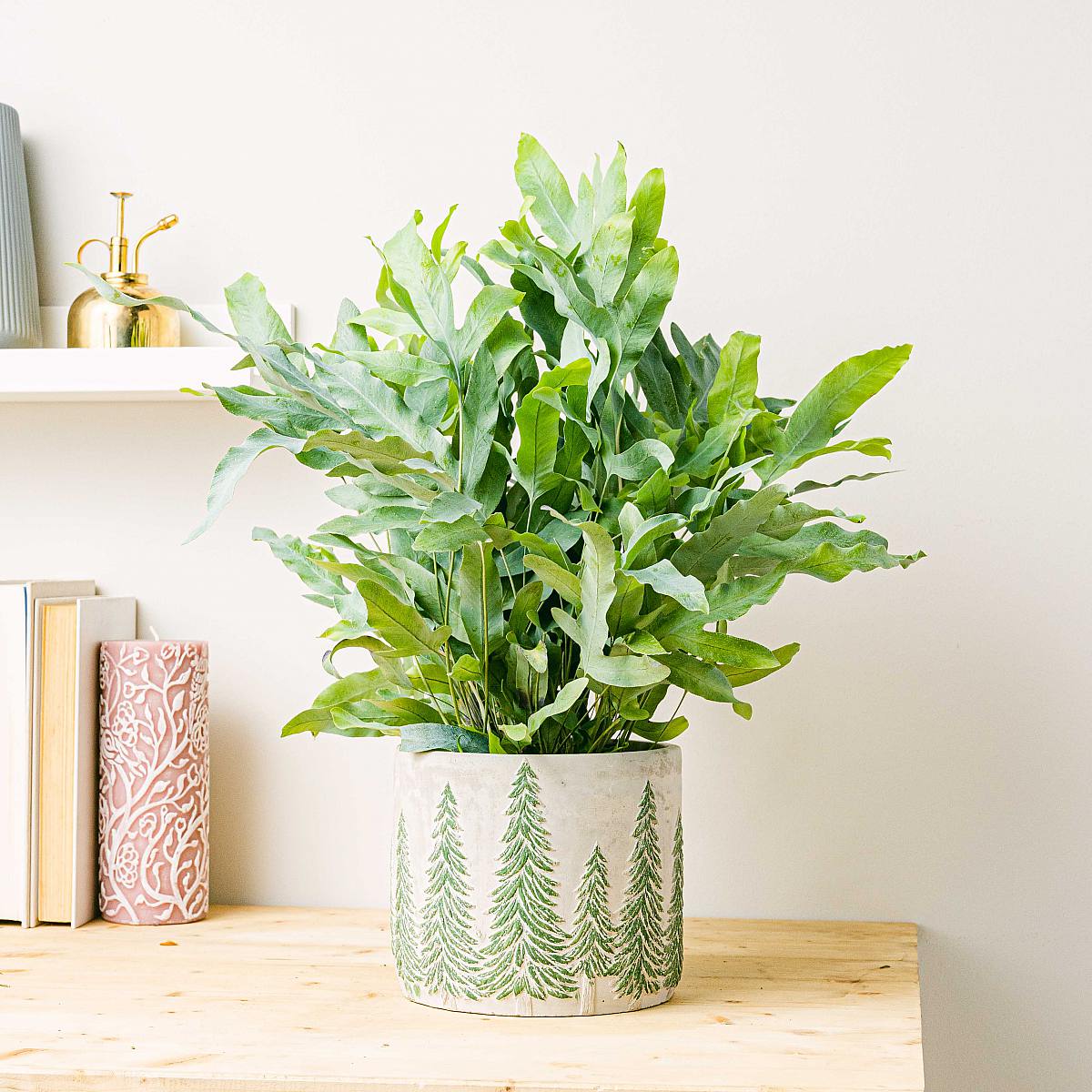
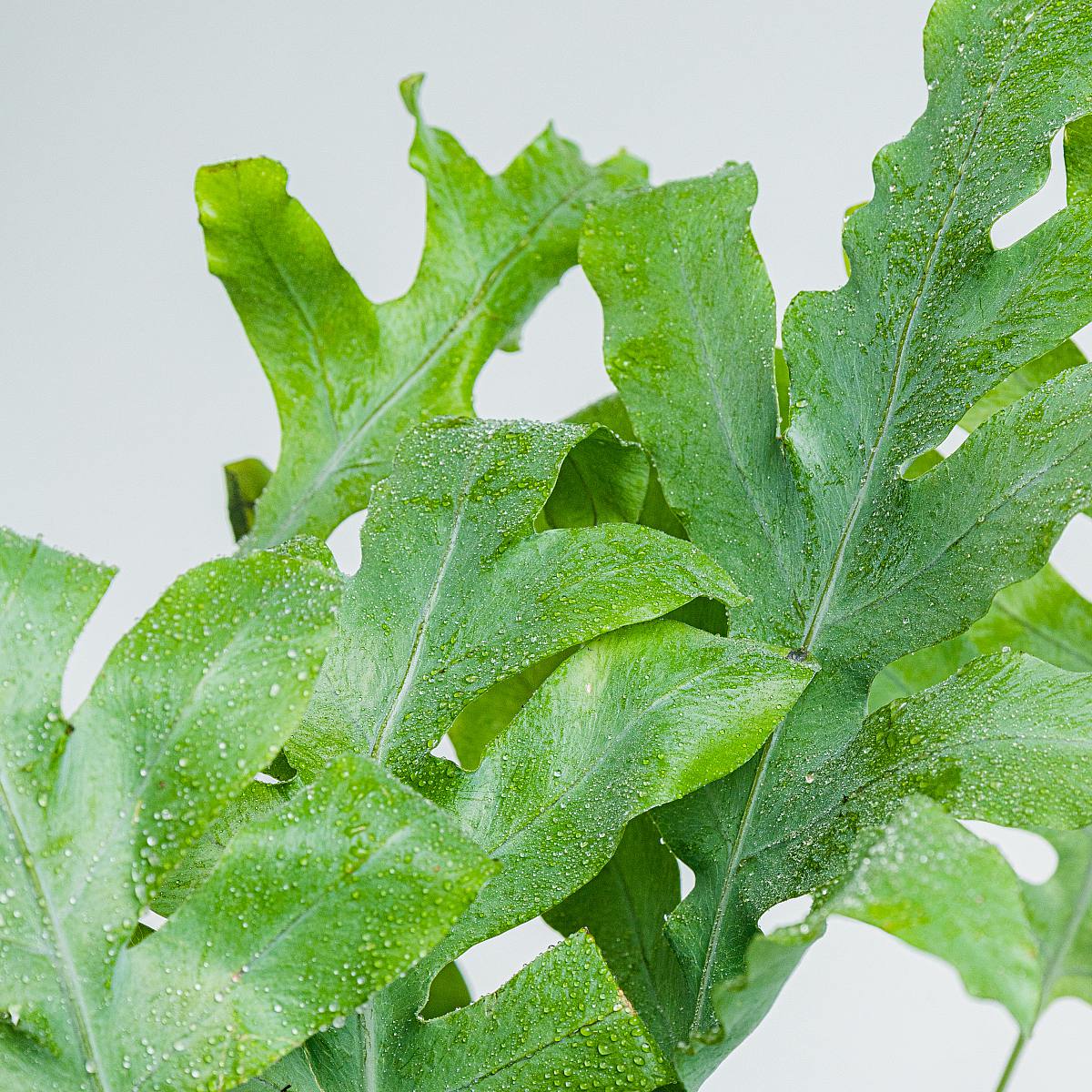






The fronds are palmate with deep lobes that give the whole plant a star-like outline. Unlike feathery ferns, 'Blue Star' has wide leaves with few large lobes, recalling stars or open hands.
No. As with other Polypodiaceae ferns, it is considered non-toxic to dogs and cats. Safe for households where pets nibble plants.
Both are cultivars of Phlebodium aureum: 'Blue Star' has wider fronds with star-shaped lobes; 'Blue Bell' has more wavy fronds with curly edges. They share the blue-green tone from the waxy coating.
Considerably. Phlebodium tolerates dry air and irregular watering better than Nephrolepis (Boston). It is among the easiest ferns for indoor beginners, with less demand for constant ambient humidity.
Phlebodium creeping rhizomes are covered with golden scales (aureum means 'golden' in Latin). The scales protect the rhizome from moisture loss and herbivores. In the wild they suit epiphytic life; in pots they look decorative.
Individual fronds reach 30–60 cm. The whole plant forms a 60–90 cm clump. Growth is moderate: 3–5 new fronds a year under good conditions. More compact than the Boston fern, ideal for medium spaces.
The Blue Star Fern, also known as the "Elkhorn Fern".
The fronds are palmate with deep lobes that give the whole plant a star-like outline. Unlike feathery ferns, 'Blue Star' has wide leaves with few large lobes, recalling stars or open hands.
No. As with other Polypodiaceae ferns, it is considered non-toxic to dogs and cats. Safe for households where pets nibble plants.
Both are cultivars of Phlebodium aureum: 'Blue Star' has wider fronds with star-shaped lobes; 'Blue Bell' has more wavy fronds with curly edges. They share the blue-green tone from the waxy coating.
Considerably. Phlebodium tolerates dry air and irregular watering better than Nephrolepis (Boston). It is among the easiest ferns for indoor beginners, with less demand for constant ambient humidity.
Phlebodium creeping rhizomes are covered with golden scales (aureum means 'golden' in Latin). The scales protect the rhizome from moisture loss and herbivores. In the wild they suit epiphytic life; in pots they look decorative.
Individual fronds reach 30–60 cm. The whole plant forms a 60–90 cm clump. Growth is moderate: 3–5 new fronds a year under good conditions. More compact than the Boston fern, ideal for medium spaces.