Free delivery
39.00 €






Recommendations
To fertilize only once a year in order not to burn his roots. Care
Light: He likes the indirect abundant light.
Top Tip: It is a slow grower, so we recommend repotting only every 3 years. A well-drained substrate is ideal. Benefits
It is a very grateful and long-lasting tropical plant. Ideal for all types of spaces, with a lot or little light.
The 'Tropicana' cultivar can fruit indoors with plenty of light, space and humidity. Bananas are edible — sweeter and smaller than commercial ones. The plant dies after fruiting (it is monocarpic) but leaves offsets that replace the original.
No. The banana plant is fully non-toxic to dogs and cats according to the ASPCA. Fruits, leaves and stems can be ingested without risk. It is one of the safest large indoor plants in pet households.
Bananas have no real trunk: what looks like a stem is a pseudostem made of overlapping leaf bases. The actual stem is underground (the rhizome). That is why a banana 'trunk' can be cut with a knife: it is not woody, just fibrous and watery.
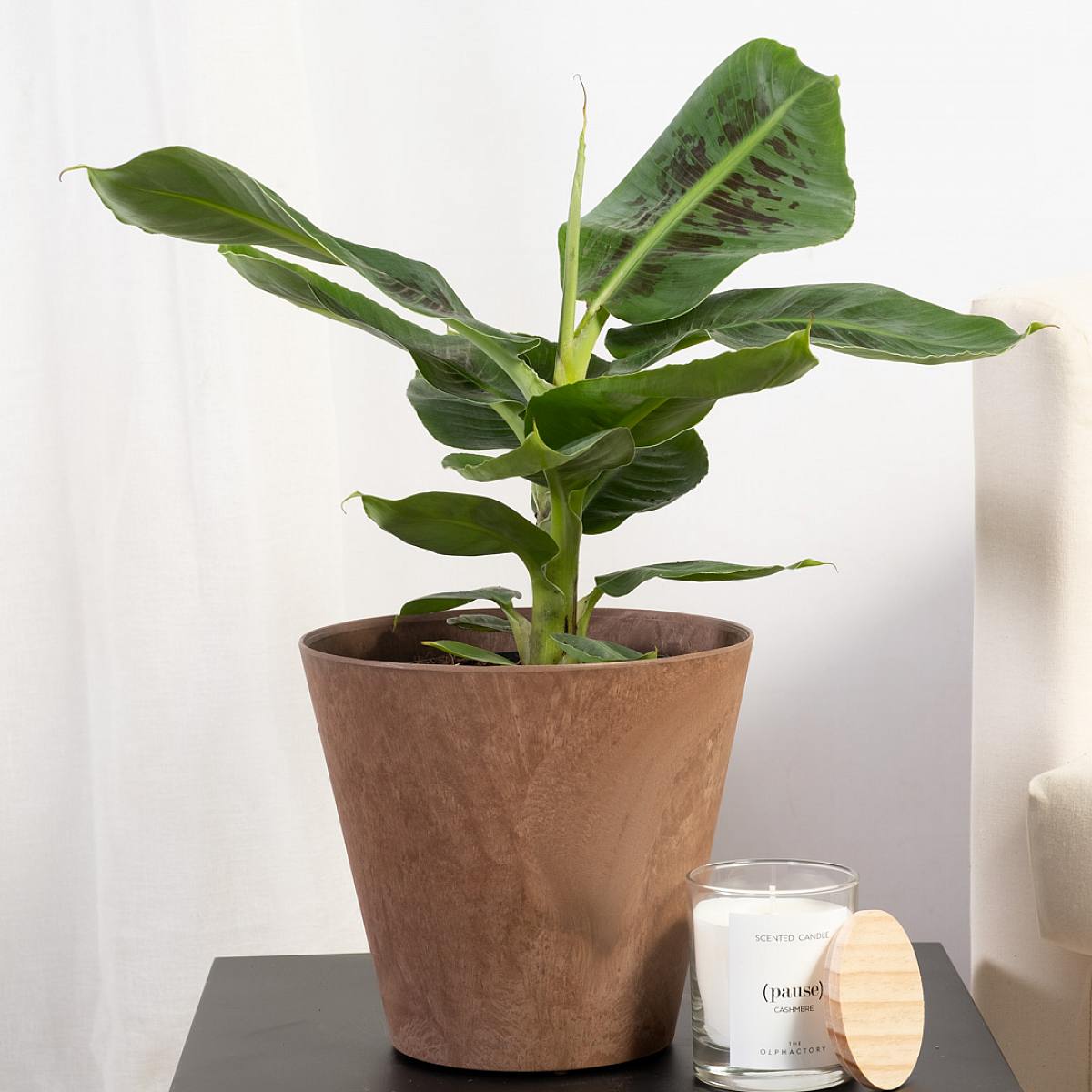
The Tropicana cultivar is dwarf: it reaches 1.5–2 m with large 60–90 cm leaves. The dwarf Cavendish can pass 2.5 m. It grows very fast under good conditions, reaching its maximum within 1–2 years from a young plant.
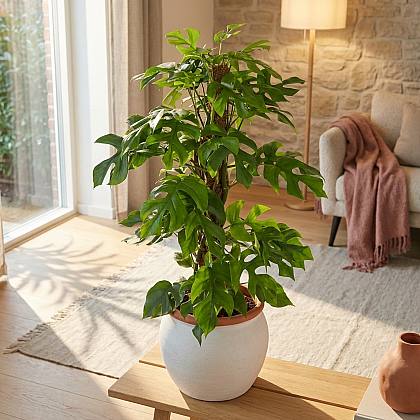
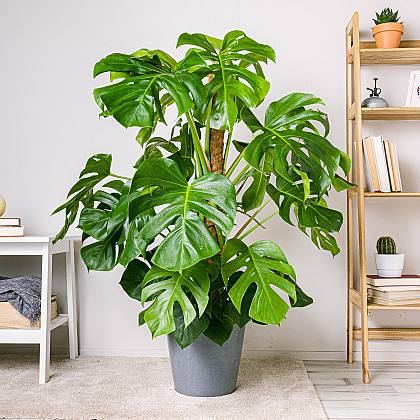
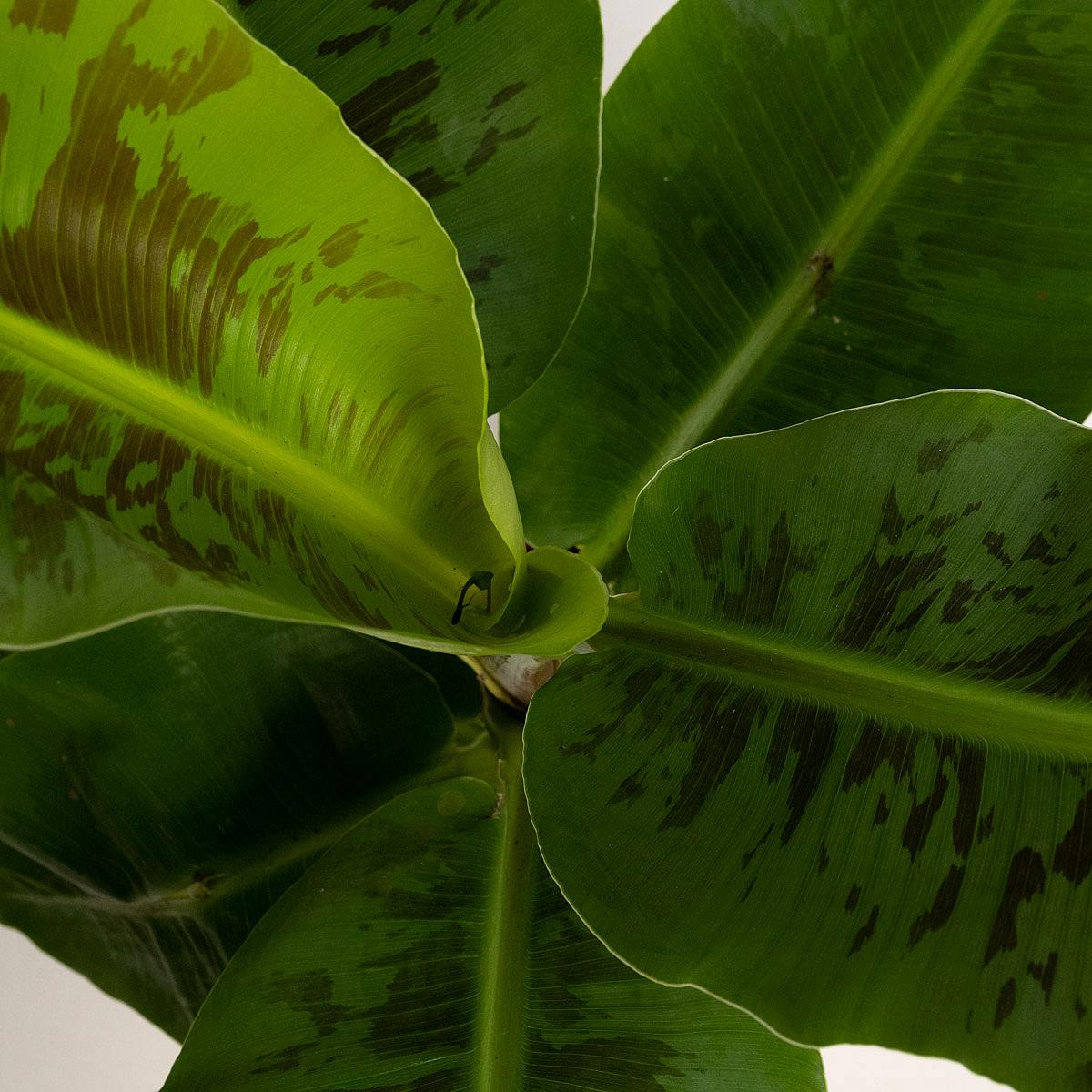
It is a natural adaptation, not a problem. Large leaves split deliberately along the veins to let wind pass through without tearing — like Strelitzia and Monstera. Indoors with still air it happens less, but it is a sign of a healthy plant.
Musa is native to Southeast Asia and the western Pacific (Indonesia, the Philippines, Papua New Guinea). It was domesticated some 7,000 years ago and spread to Africa and India millennia ago. Dwarf indoor cultivars are modern 20th-century selections.
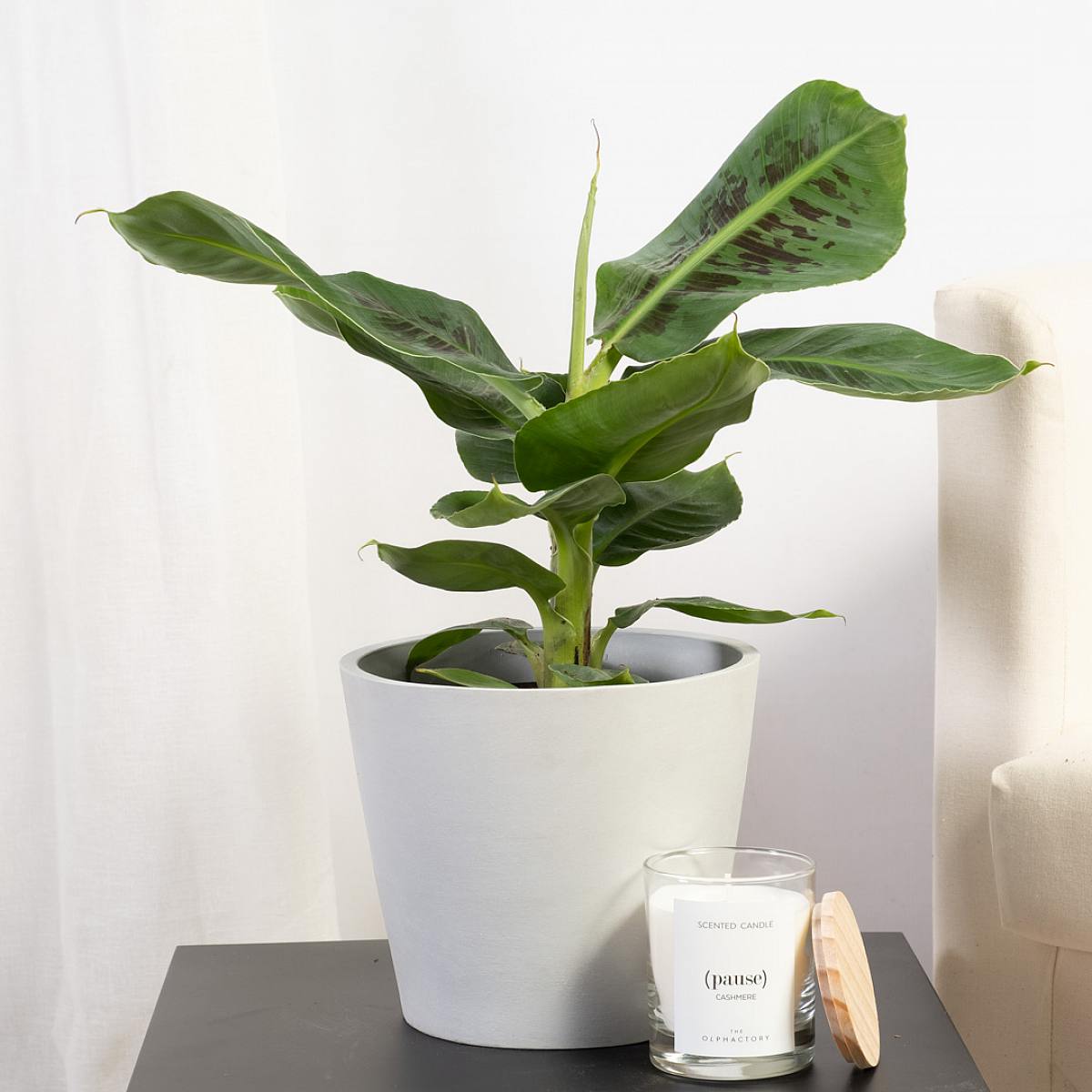
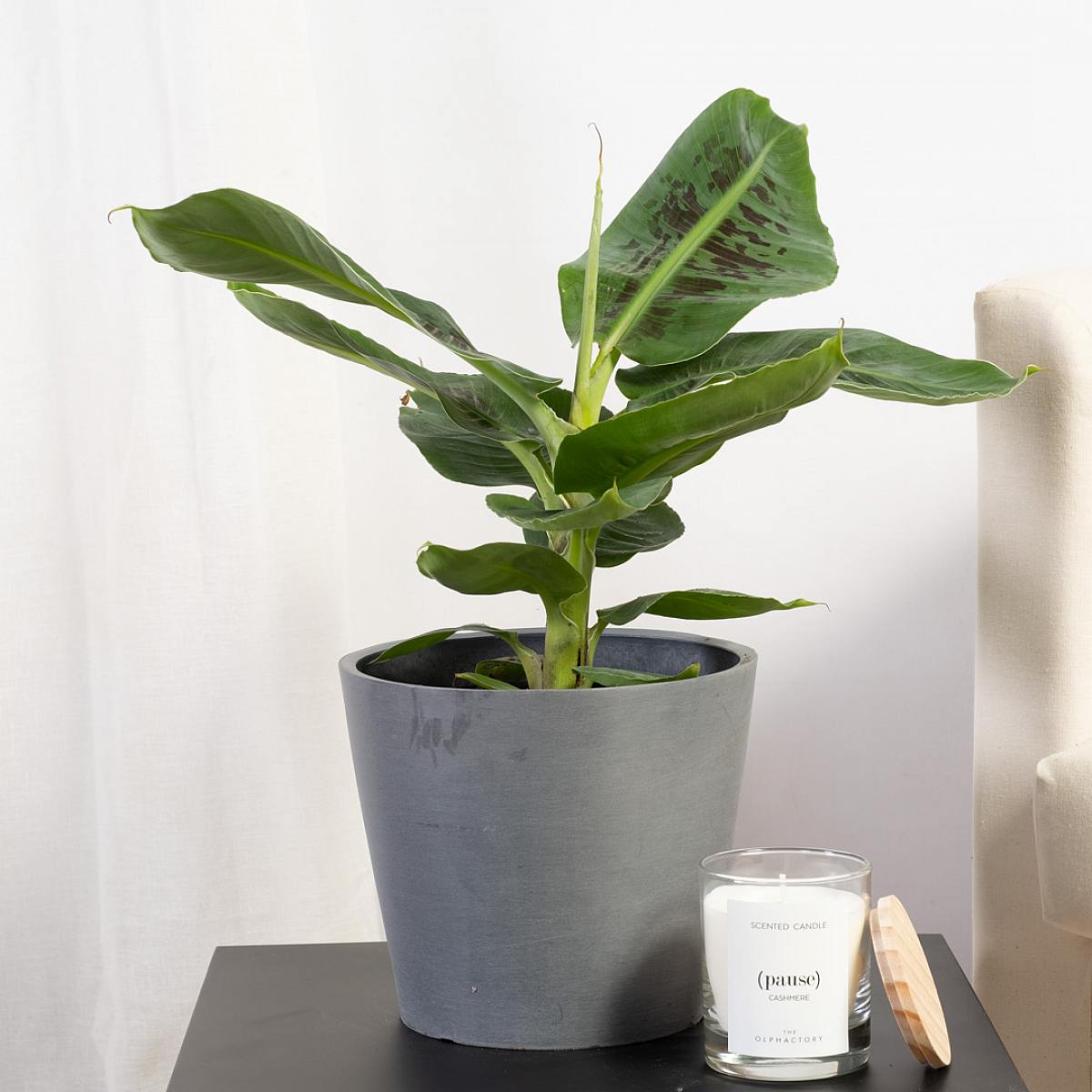
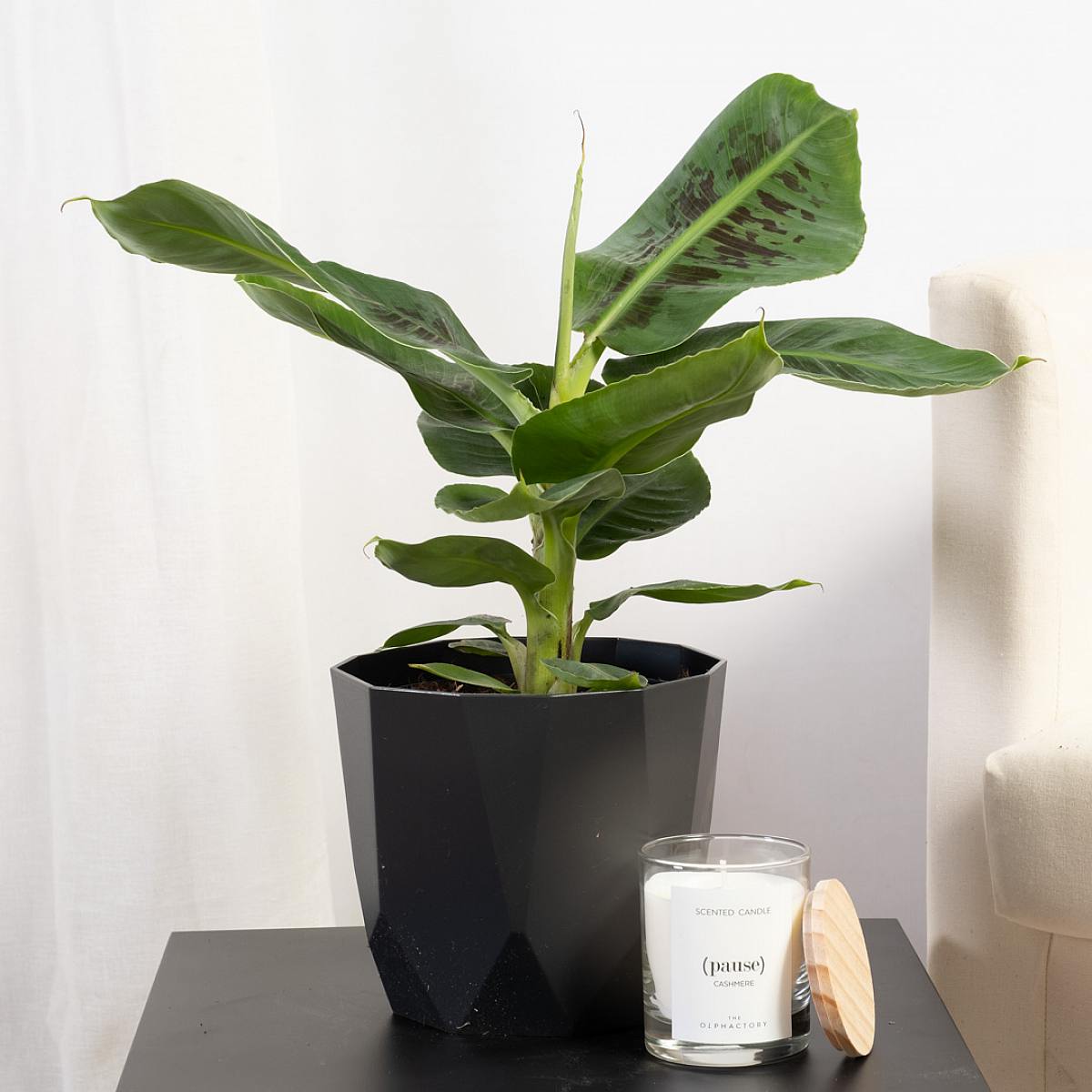
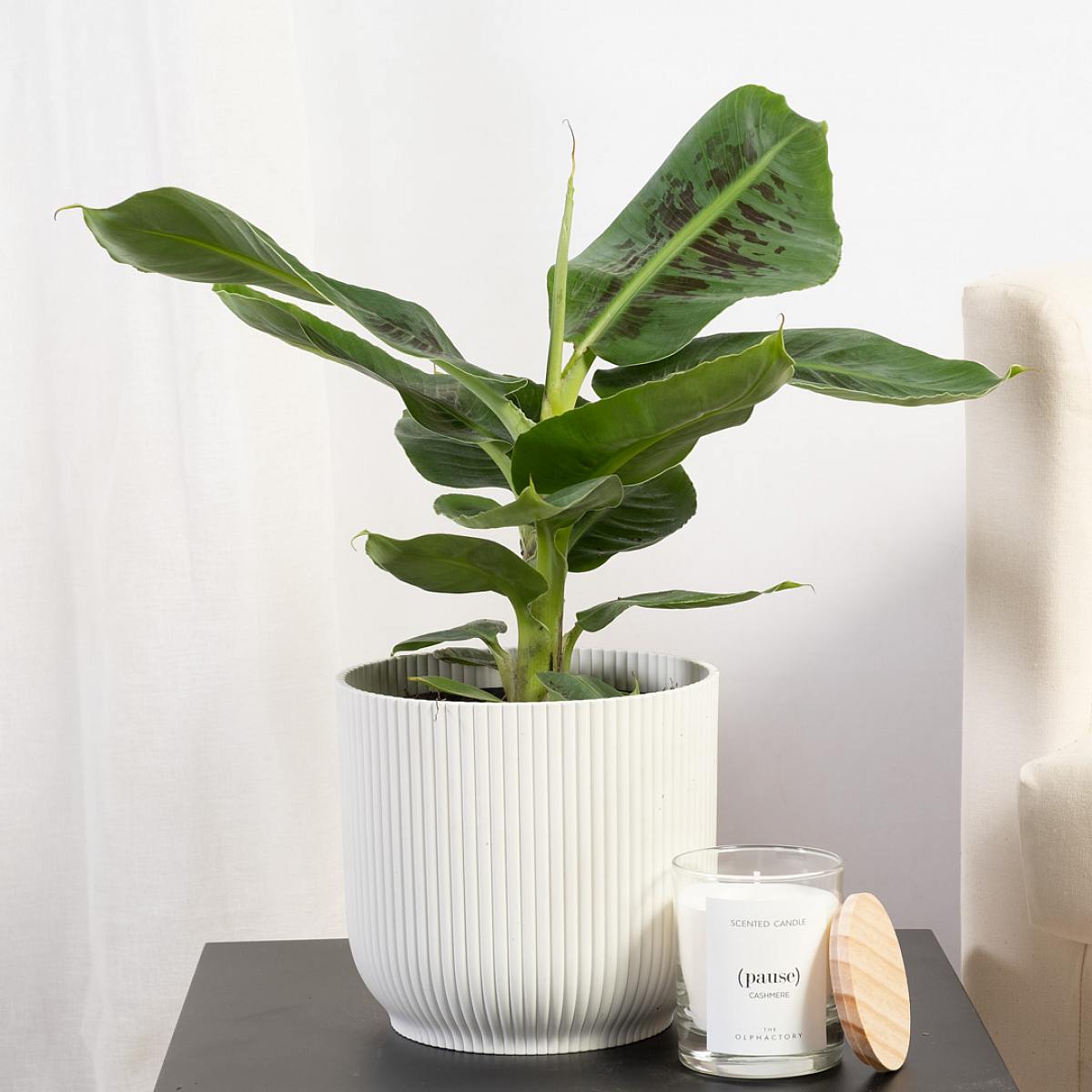
Musa Tropicana or "Banana tree", is a plant that originated in Australia.
Recommendations
To fertilize only once a year in order not to burn his roots. Care
Light: He likes the indirect abundant light.
Top Tip: It is a slow grower, so we recommend repotting only every 3 years. A well-drained substrate is ideal. Benefits
It is a very grateful and long-lasting tropical plant. Ideal for all types of spaces, with a lot or little light.
The 'Tropicana' cultivar can fruit indoors with plenty of light, space and humidity. Bananas are edible — sweeter and smaller than commercial ones. The plant dies after fruiting (it is monocarpic) but leaves offsets that replace the original.
No. The banana plant is fully non-toxic to dogs and cats according to the ASPCA. Fruits, leaves and stems can be ingested without risk. It is one of the safest large indoor plants in pet households.
Bananas have no real trunk: what looks like a stem is a pseudostem made of overlapping leaf bases. The actual stem is underground (the rhizome). That is why a banana 'trunk' can be cut with a knife: it is not woody, just fibrous and watery.
The Tropicana cultivar is dwarf: it reaches 1.5–2 m with large 60–90 cm leaves. The dwarf Cavendish can pass 2.5 m. It grows very fast under good conditions, reaching its maximum within 1–2 years from a young plant.
It is a natural adaptation, not a problem. Large leaves split deliberately along the veins to let wind pass through without tearing — like Strelitzia and Monstera. Indoors with still air it happens less, but it is a sign of a healthy plant.
Musa is native to Southeast Asia and the western Pacific (Indonesia, the Philippines, Papua New Guinea). It was domesticated some 7,000 years ago and spread to Africa and India millennia ago. Dwarf indoor cultivars are modern 20th-century selections.