From
Free delivery
49.00 €




Recommendations
Benefits
It is a popular mistake: the true Areca is Areca catechu (the betel-nut palm), an entirely different plant. The household 'areca' is Dypsis lutescens, originally classified as Chrysalidocarpus. The mistaken trade name stuck worldwide.
No. Dypsis lutescens is considered non-toxic to dogs and cats according to the ASPCA. One of the safest indoor palms for pet households, alongside the parlour palm and the kentia.
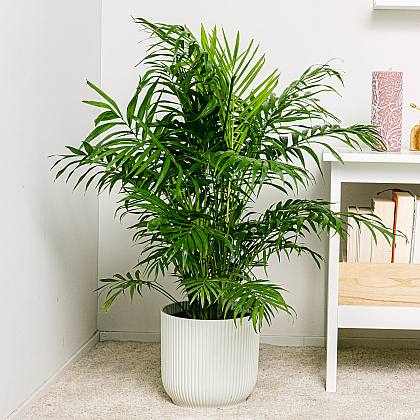
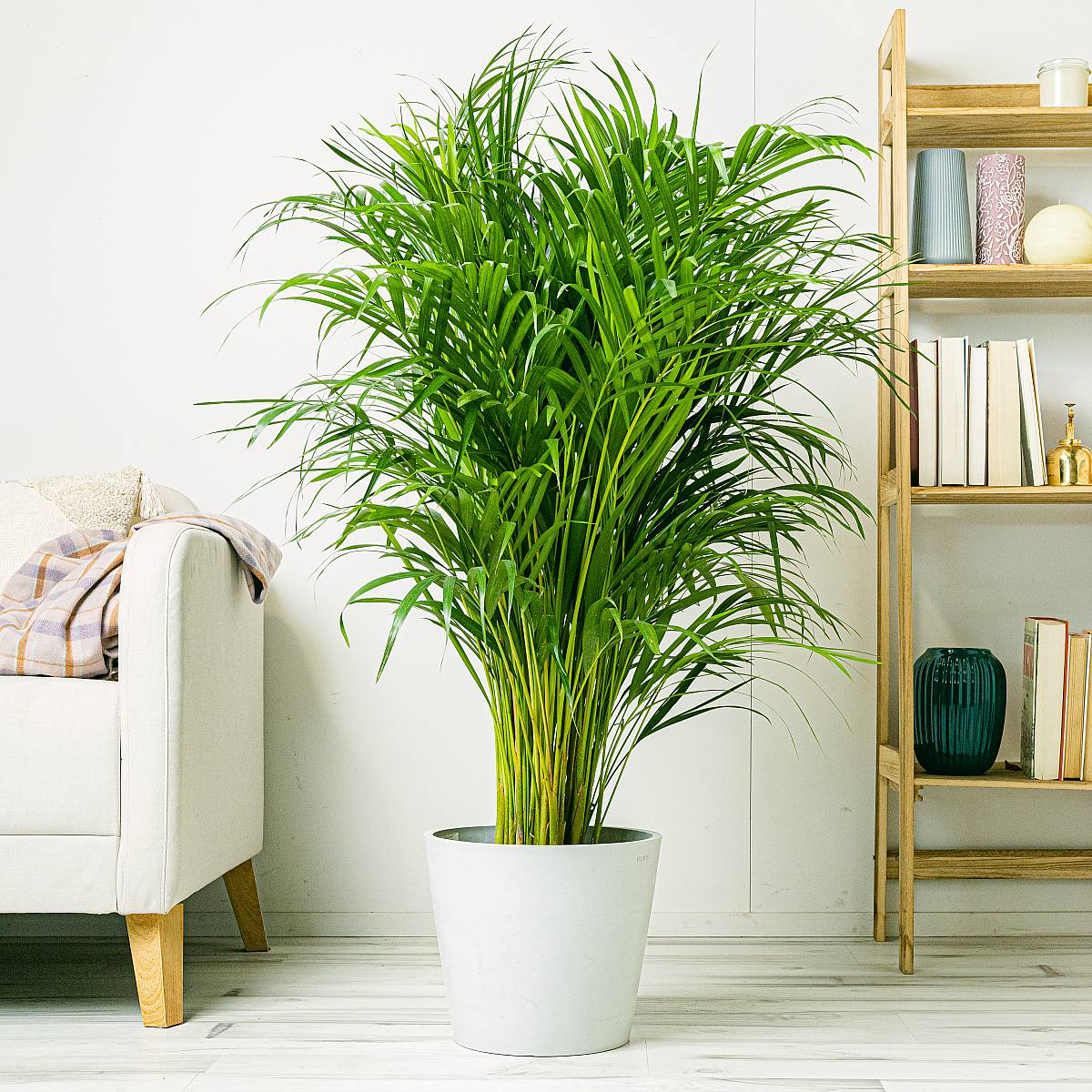
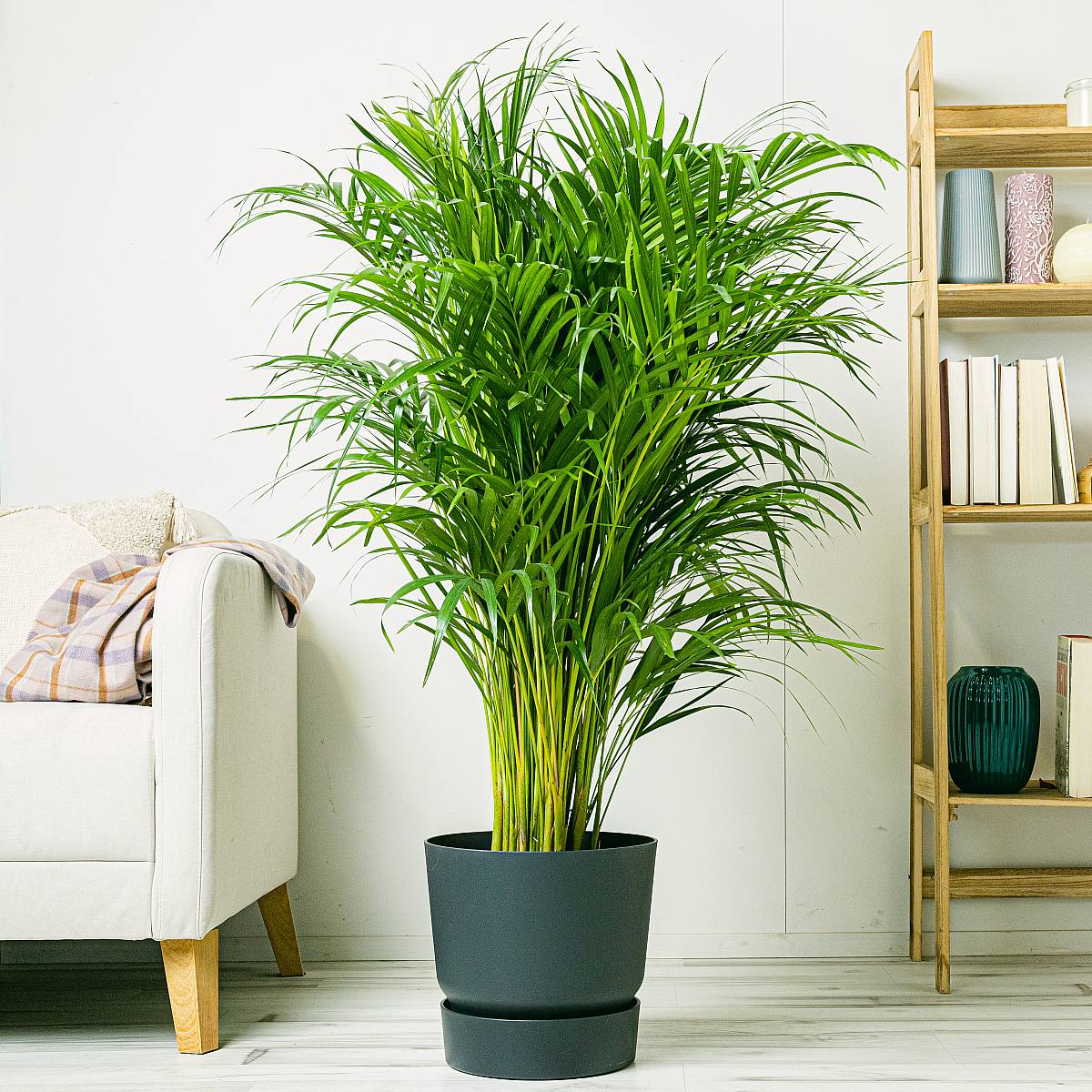
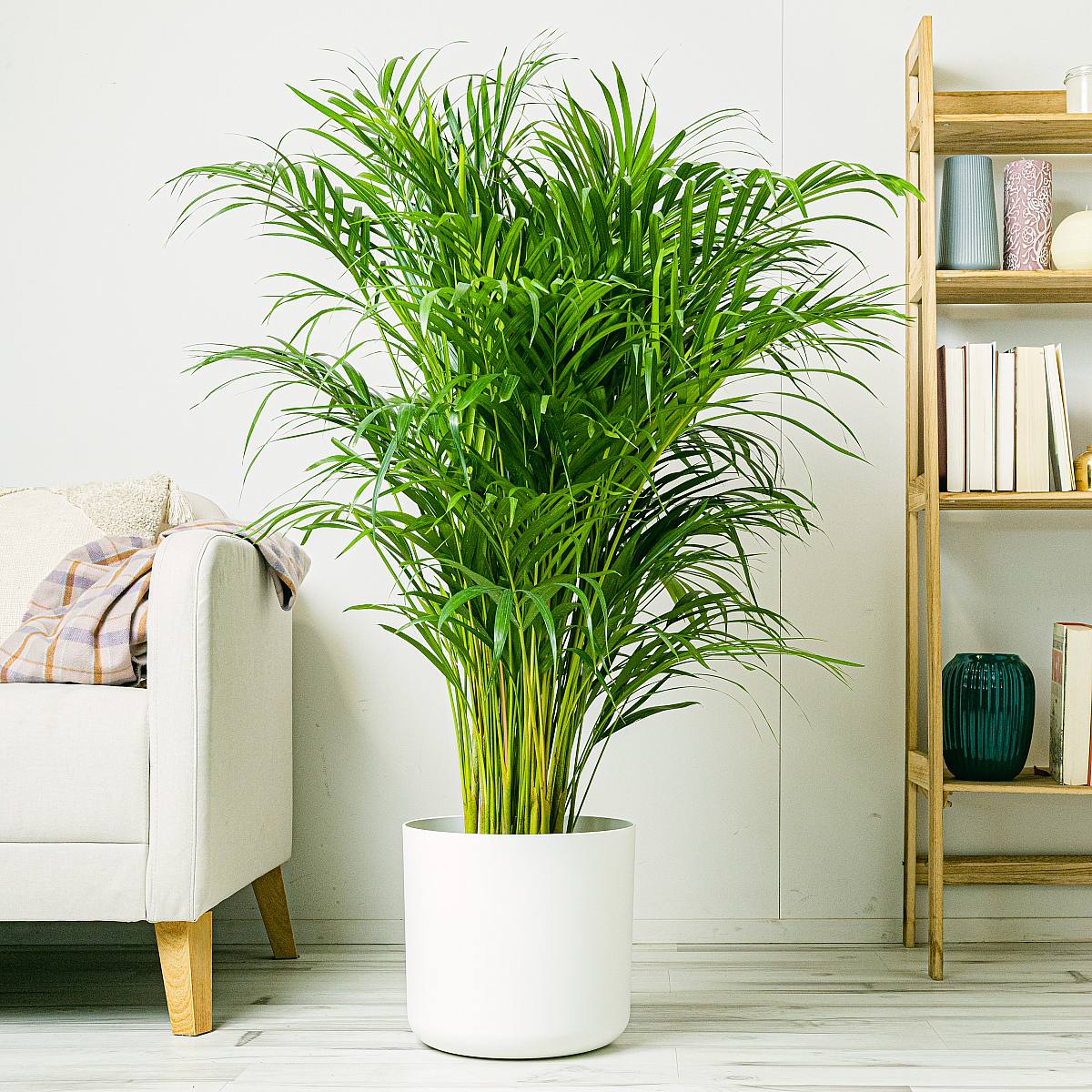
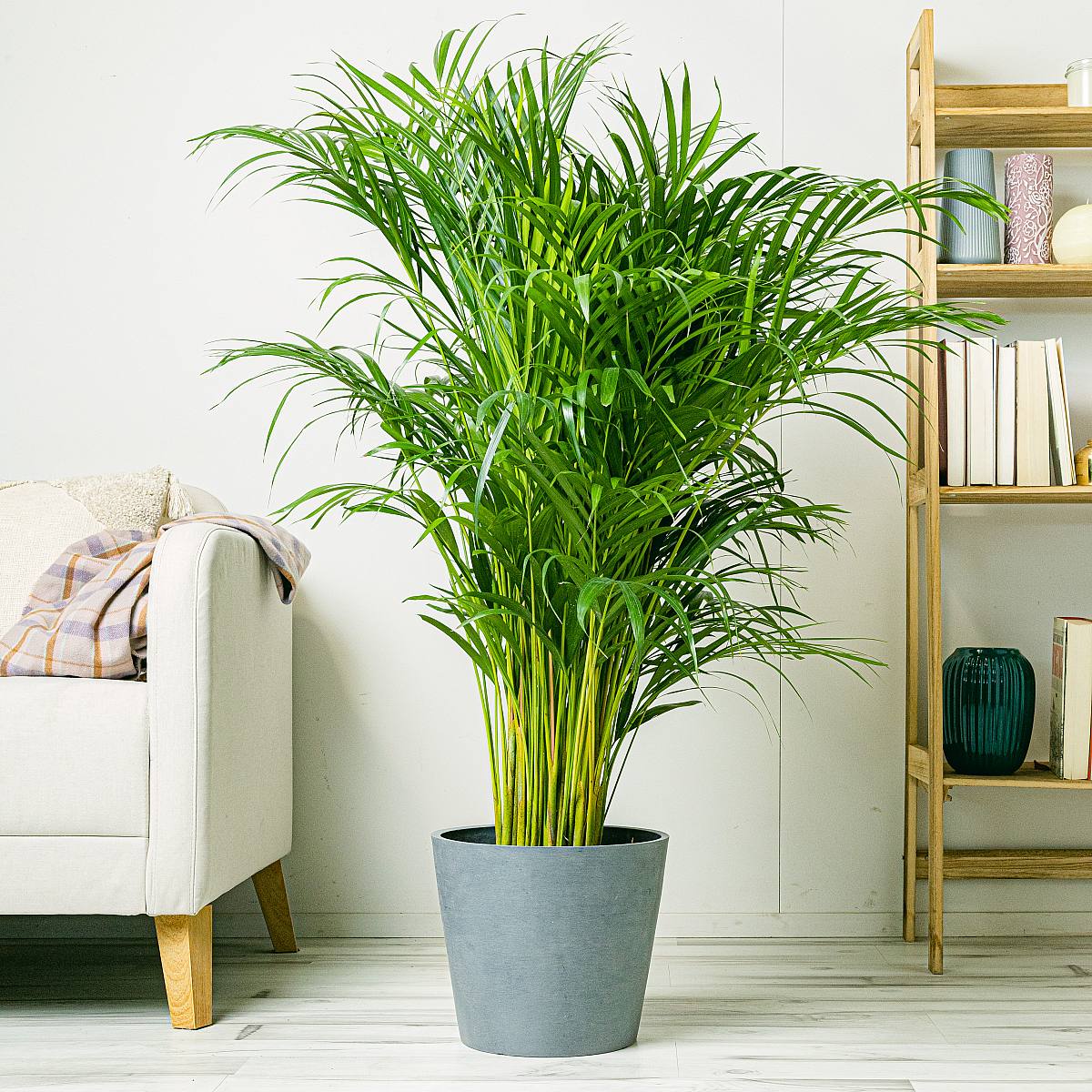
Indoors it reaches 2–3 m with several canes. In the wild it grows to 6–10 m forming clumps with multiple stems. Growth is moderate (15–25 cm a year) and it produces new shoots from the base, giving a lush multi-stem look.
Yes. NASA's 1989 clean-air study highlighted it as one of the most effective plants for removing formaldehyde, xylene and toluene from indoor air. Its large foliar surface (many feathery leaves) gives it purifying capacity above most indoor plants.
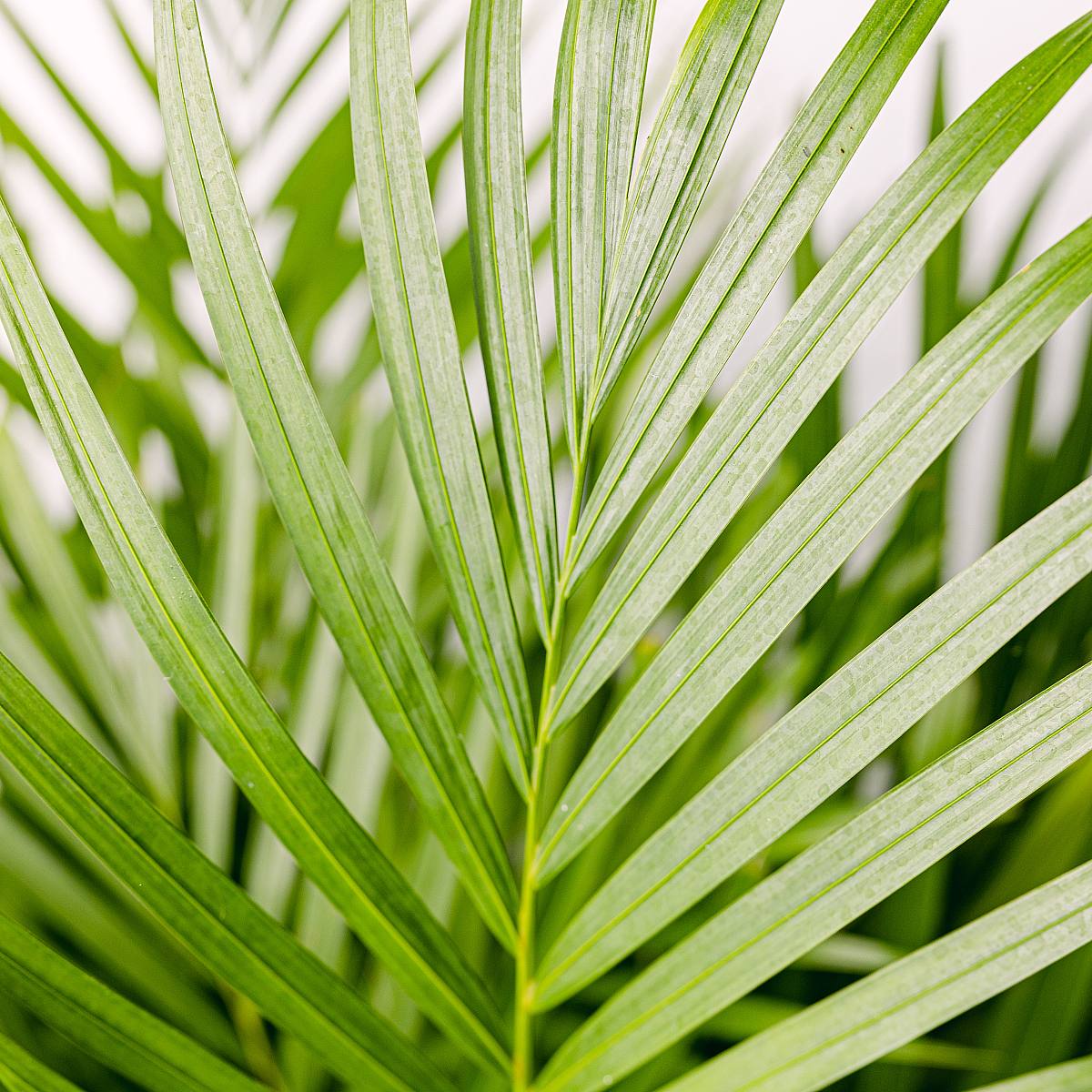
Young trunks and petioles are yellow-green, hence the trade name 'yellow palm'. With age they darken and become woody. The Latin epithet 'lutescens' literally means 'turning yellow'. This sets it apart visually from other palms.
Yes, paradoxically. While millions are grown as houseplants worldwide, in the wild in Madagascar it is critically endangered due to habitat destruction. The wild population has dropped sharply, although the species is not at risk of extinction thanks to its mass cultivation.
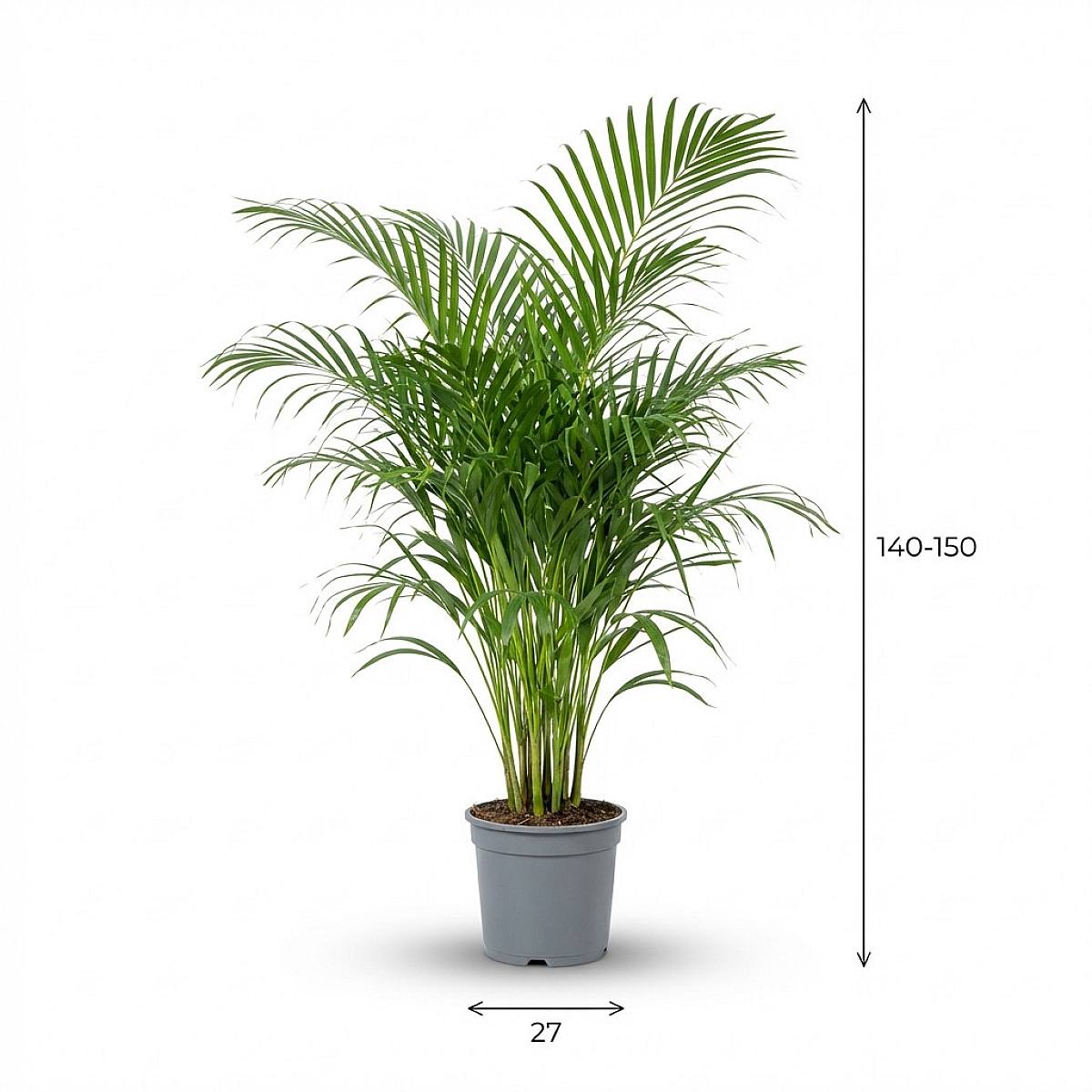
Dypsis lutescens, also known as "Areca palm".
Recommendations
Benefits
It is a popular mistake: the true Areca is Areca catechu (the betel-nut palm), an entirely different plant. The household 'areca' is Dypsis lutescens, originally classified as Chrysalidocarpus. The mistaken trade name stuck worldwide.
No. Dypsis lutescens is considered non-toxic to dogs and cats according to the ASPCA. One of the safest indoor palms for pet households, alongside the parlour palm and the kentia.
Indoors it reaches 2–3 m with several canes. In the wild it grows to 6–10 m forming clumps with multiple stems. Growth is moderate (15–25 cm a year) and it produces new shoots from the base, giving a lush multi-stem look.
Yes. NASA's 1989 clean-air study highlighted it as one of the most effective plants for removing formaldehyde, xylene and toluene from indoor air. Its large foliar surface (many feathery leaves) gives it purifying capacity above most indoor plants.
Young trunks and petioles are yellow-green, hence the trade name 'yellow palm'. With age they darken and become woody. The Latin epithet 'lutescens' literally means 'turning yellow'. This sets it apart visually from other palms.
Yes, paradoxically. While millions are grown as houseplants worldwide, in the wild in Madagascar it is critically endangered due to habitat destruction. The wild population has dropped sharply, although the species is not at risk of extinction thanks to its mass cultivation.