Free delivery
50.00 €
55.00 €
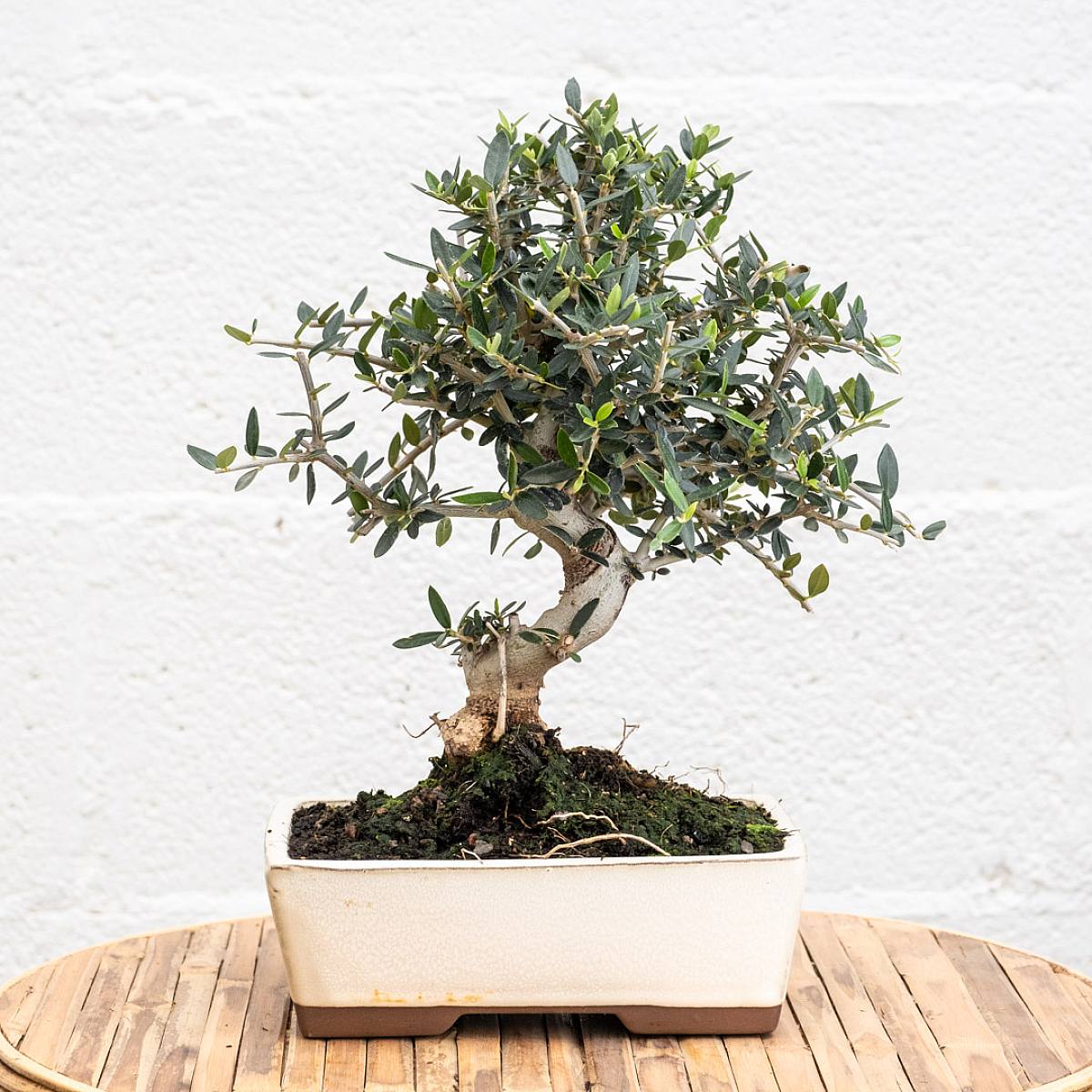
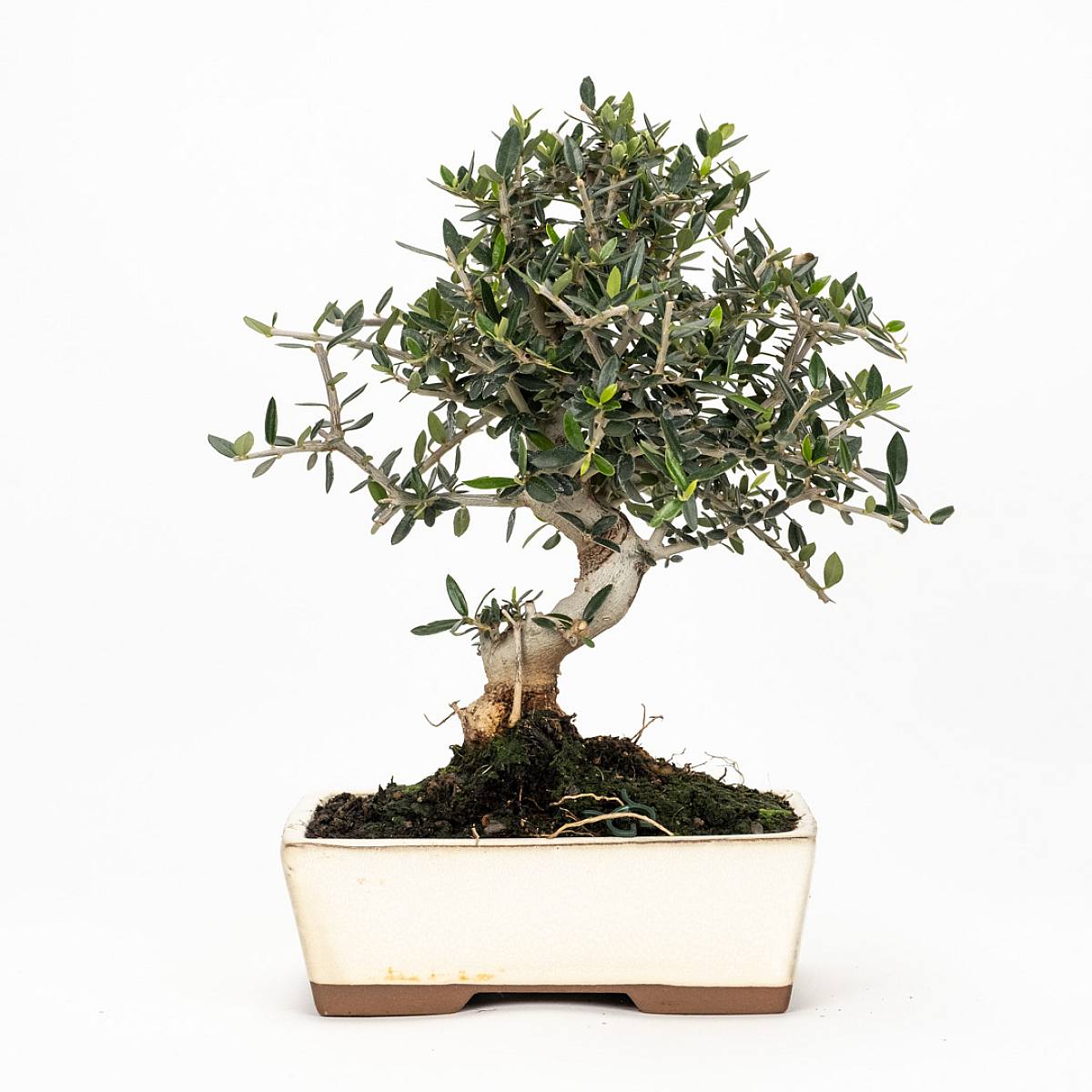




Approximate measurements in cm (width x depth x height): 24 x 20 x 32cm.
Recommendations
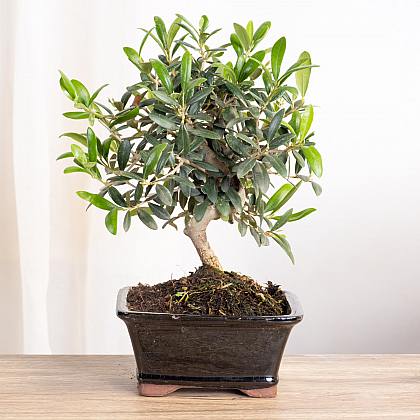
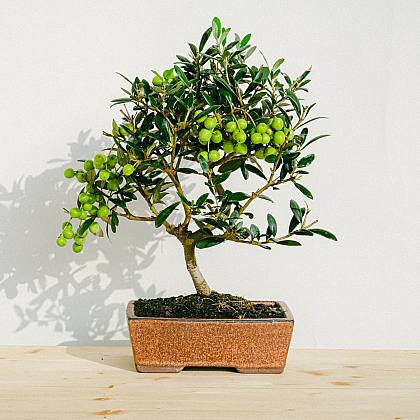
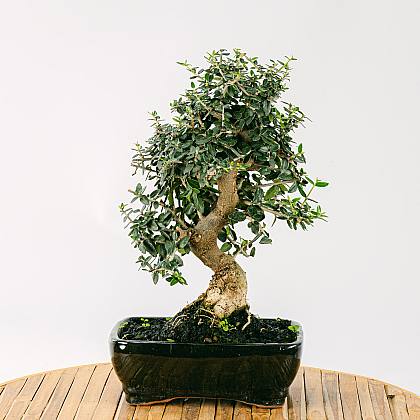
It is a common olive (Olea europaea) or wild olive (sylvestris) grown with bonsai techniques: root pruning, structural pruning and pot restriction. The species is the same as in olive groves; the 'dwarfism' is artificial and entirely from training, not genetics.
Yes, but rarely indoors due to lack of pollination. If it flowers and pollinates (it needs another olive nearby or hand pollination), it will produce small but edible olives. They are very bitter raw and need brining.
No. Olive is considered non-toxic to dogs and cats. The fruits can cause mild digestive upset if eaten in quantity due to phenolic content, and pits are a choking hazard, but accidental nibbling is not dangerous.
No, it should not. The olive needs a cold winter rest (10–15 °C minimum) and direct sun. Indoors year-round it weakens progressively and dies within 1–2 years. Ideal placement is sheltered outdoors or with seasonal rotation.
It is one of the most long-lived bonsai species: with proper care it can live well over 100 years. Centennial specimens are documented in Japanese and European collections. In the wild olives can live more than 1,000 years.
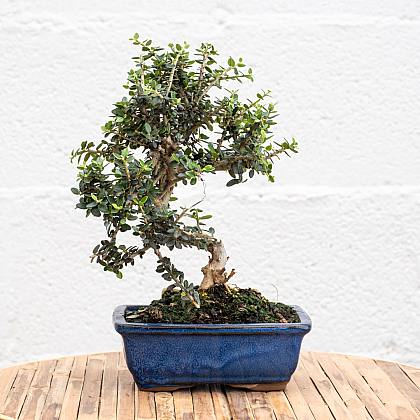
Old olives naturally develop twisted, hollowed, knobby trunks. Bonsai growers select specimens with this character — collected from groves where they were discarded for being too old — and shape them while preserving the aesthetics of an aged Mediterranean olive.
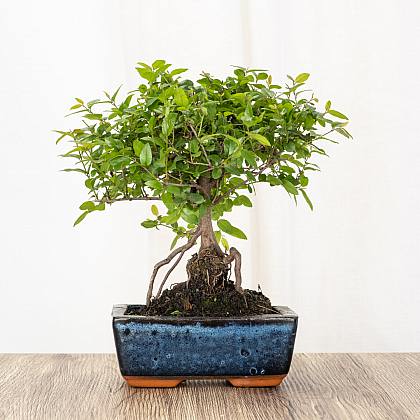
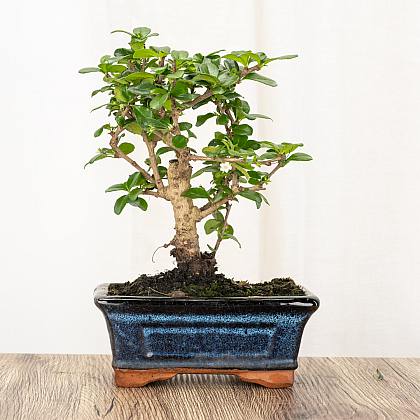
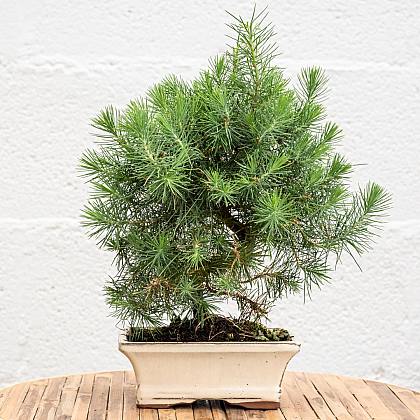
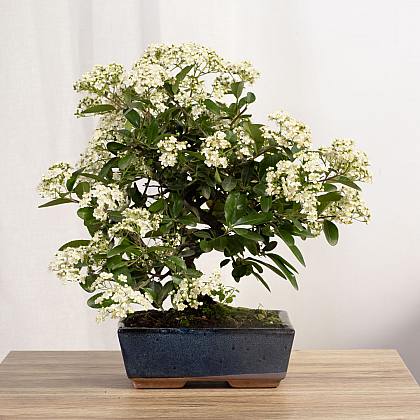
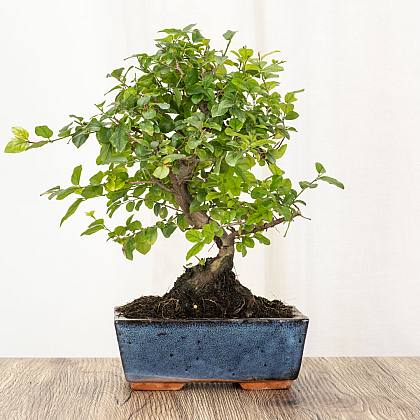
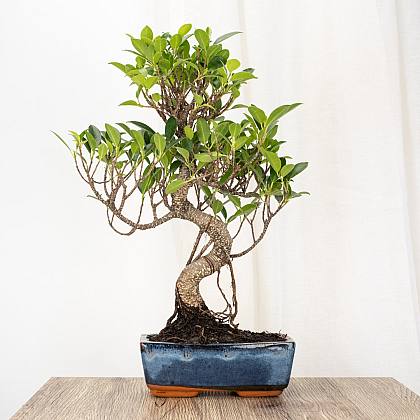
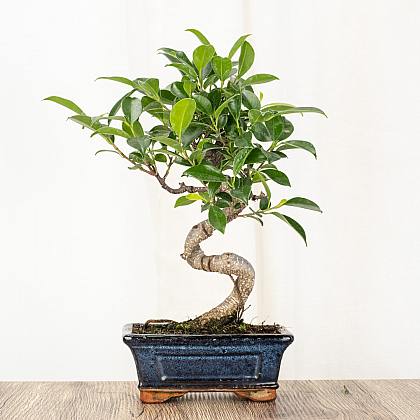
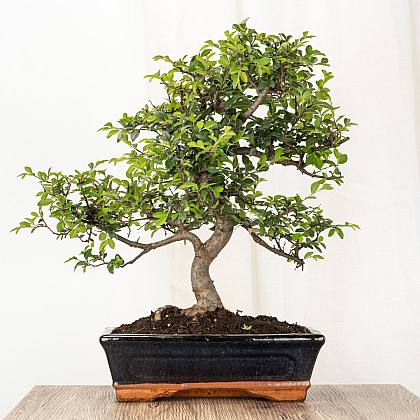
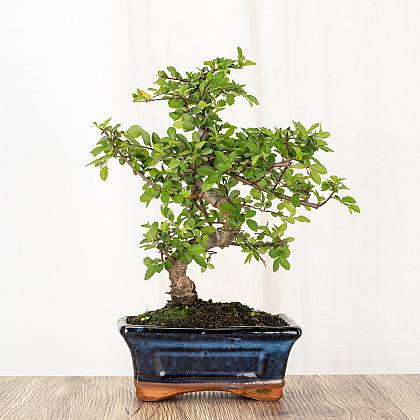
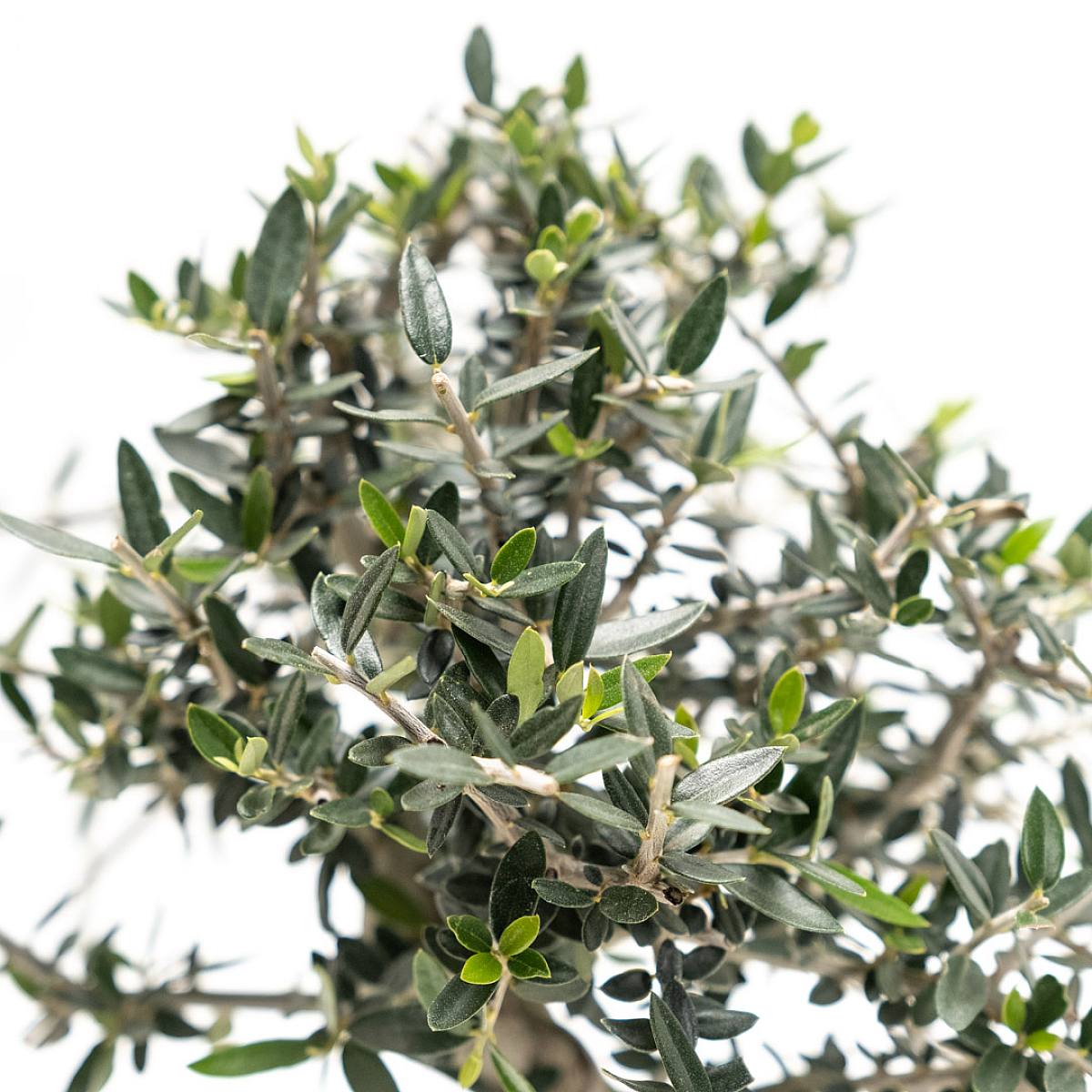
Olea Europaea, this Bonsai with Mediterranean origins is a miniature olive tree capable of brightening any space.
Approximate measurements in cm (width x depth x height): 24 x 20 x 32cm.
Recommendations
According to botanical mythology, having a bonsai at home attracts purity and goodness.
According to botanical mythology, having a bonsai at home attracts purity and goodness.
It is a common olive (Olea europaea) or wild olive (sylvestris) grown with bonsai techniques: root pruning, structural pruning and pot restriction. The species is the same as in olive groves; the 'dwarfism' is artificial and entirely from training, not genetics.
Yes, but rarely indoors due to lack of pollination. If it flowers and pollinates (it needs another olive nearby or hand pollination), it will produce small but edible olives. They are very bitter raw and need brining.
No. Olive is considered non-toxic to dogs and cats. The fruits can cause mild digestive upset if eaten in quantity due to phenolic content, and pits are a choking hazard, but accidental nibbling is not dangerous.
No, it should not. The olive needs a cold winter rest (10–15 °C minimum) and direct sun. Indoors year-round it weakens progressively and dies within 1–2 years. Ideal placement is sheltered outdoors or with seasonal rotation.
It is one of the most long-lived bonsai species: with proper care it can live well over 100 years. Centennial specimens are documented in Japanese and European collections. In the wild olives can live more than 1,000 years.
Old olives naturally develop twisted, hollowed, knobby trunks. Bonsai growers select specimens with this character — collected from groves where they were discarded for being too old — and shape them while preserving the aesthetics of an aged Mediterranean olive.