Free delivery
39.00 €






Recommendations
Care
Benefits
The leaves rise and fold upward at dusk, recalling hands joined in prayer. This is nictinasty, controlled by a specialized organ (pulvinus) at the base of the petiole. At dawn the leaves open again. The movement is real and visible every night.
No. Maranta — and all Marantaceae — are considered non-toxic to dogs and cats. One of the most recommended choices for pet households, alongside Pilea, palms and Calathea (its close cousin).
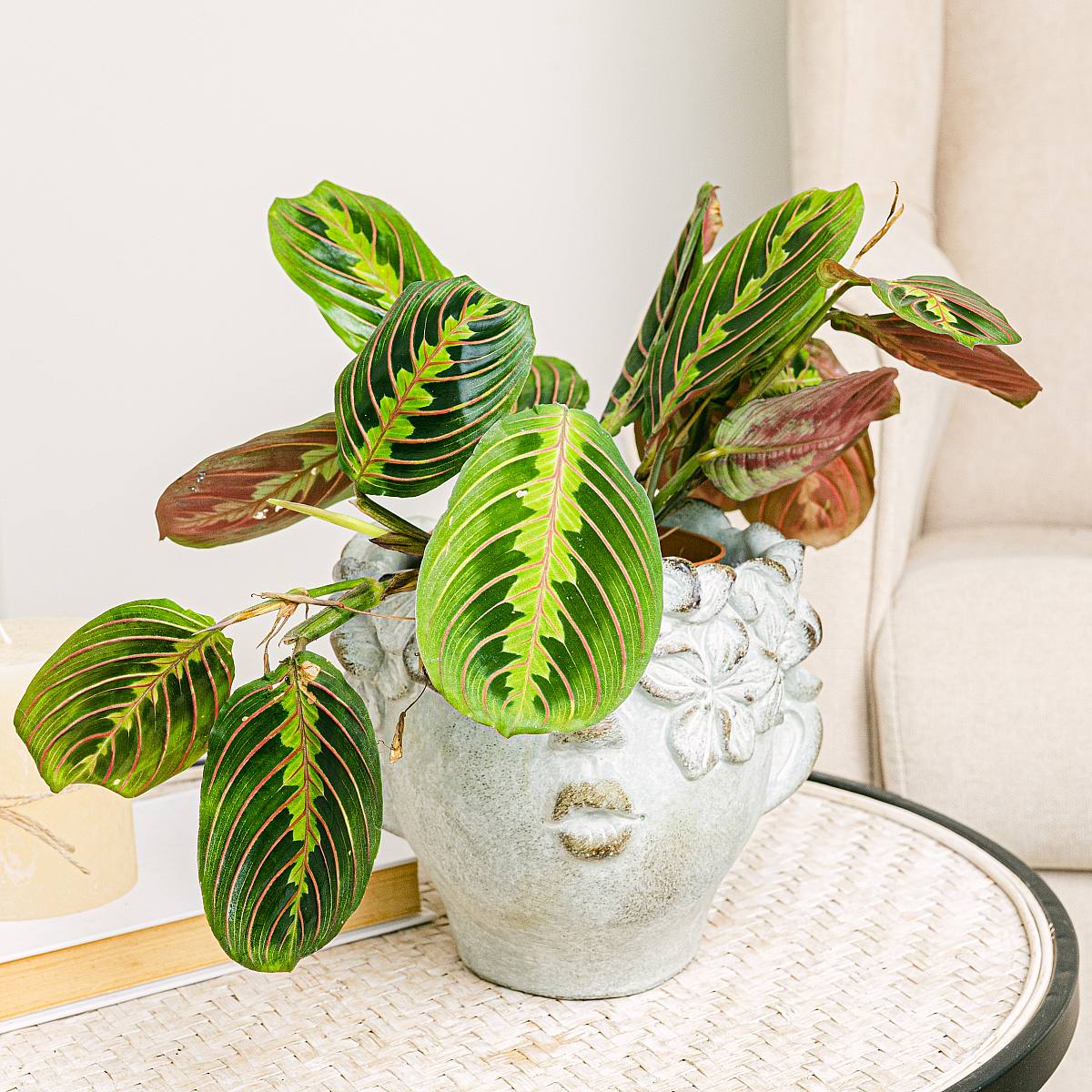
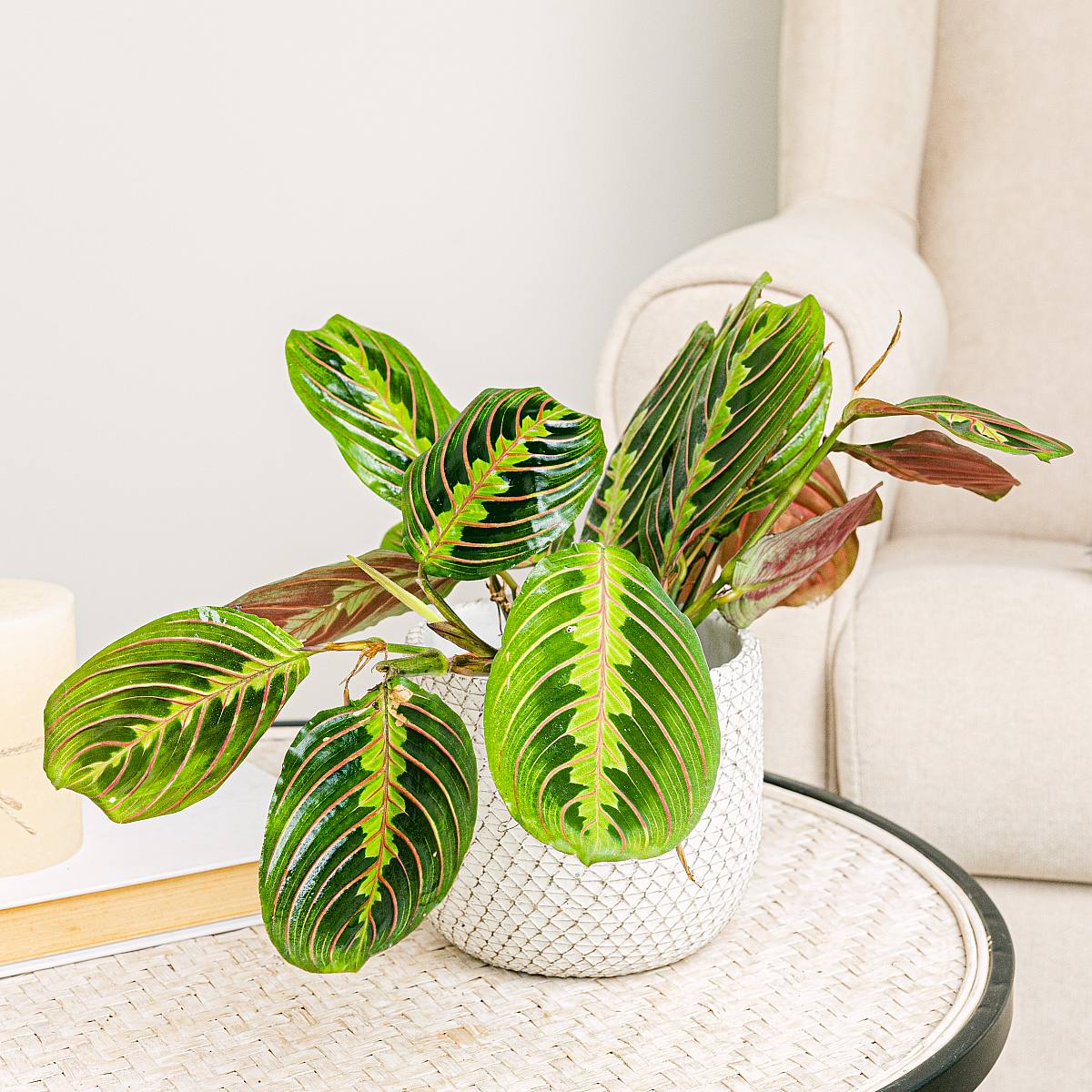
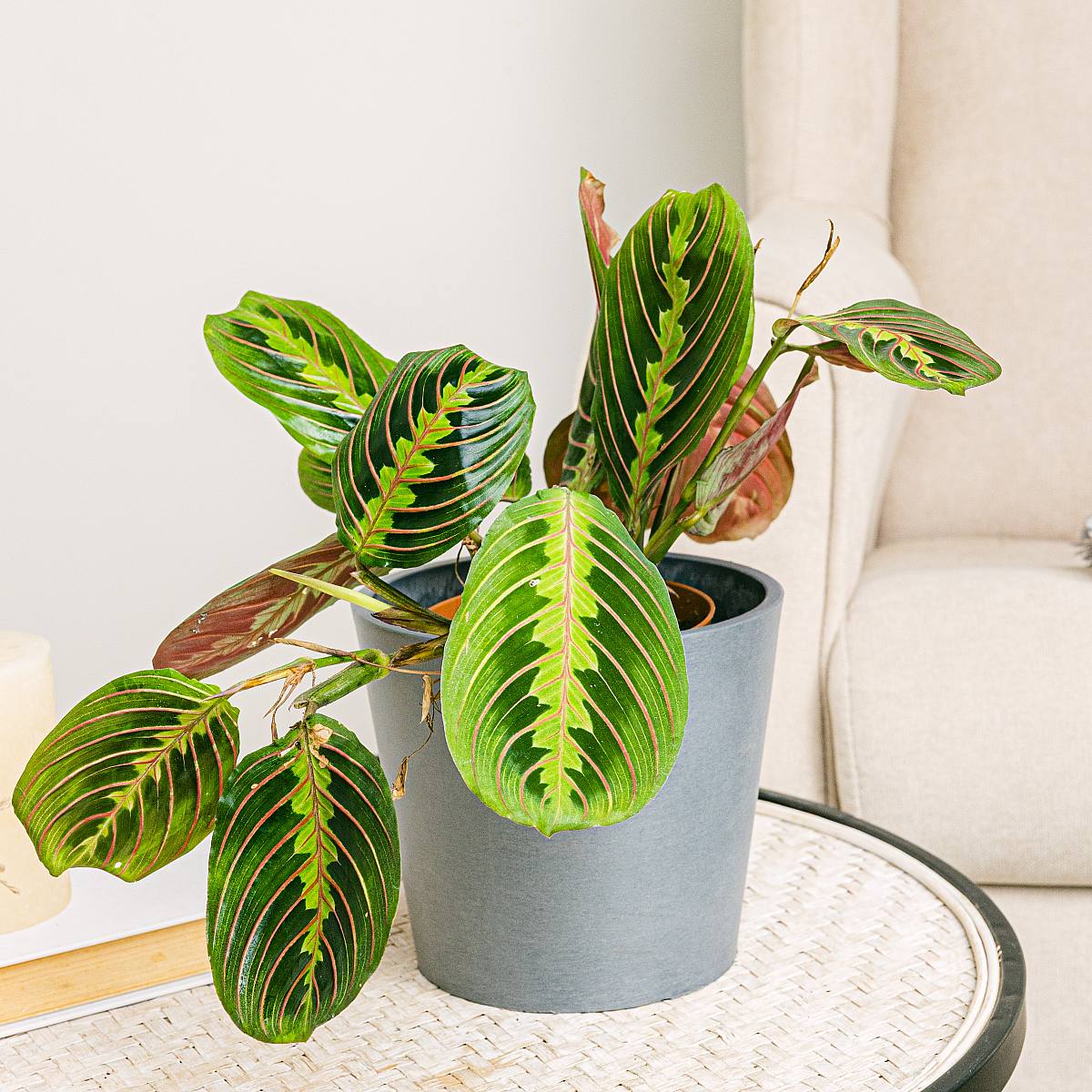
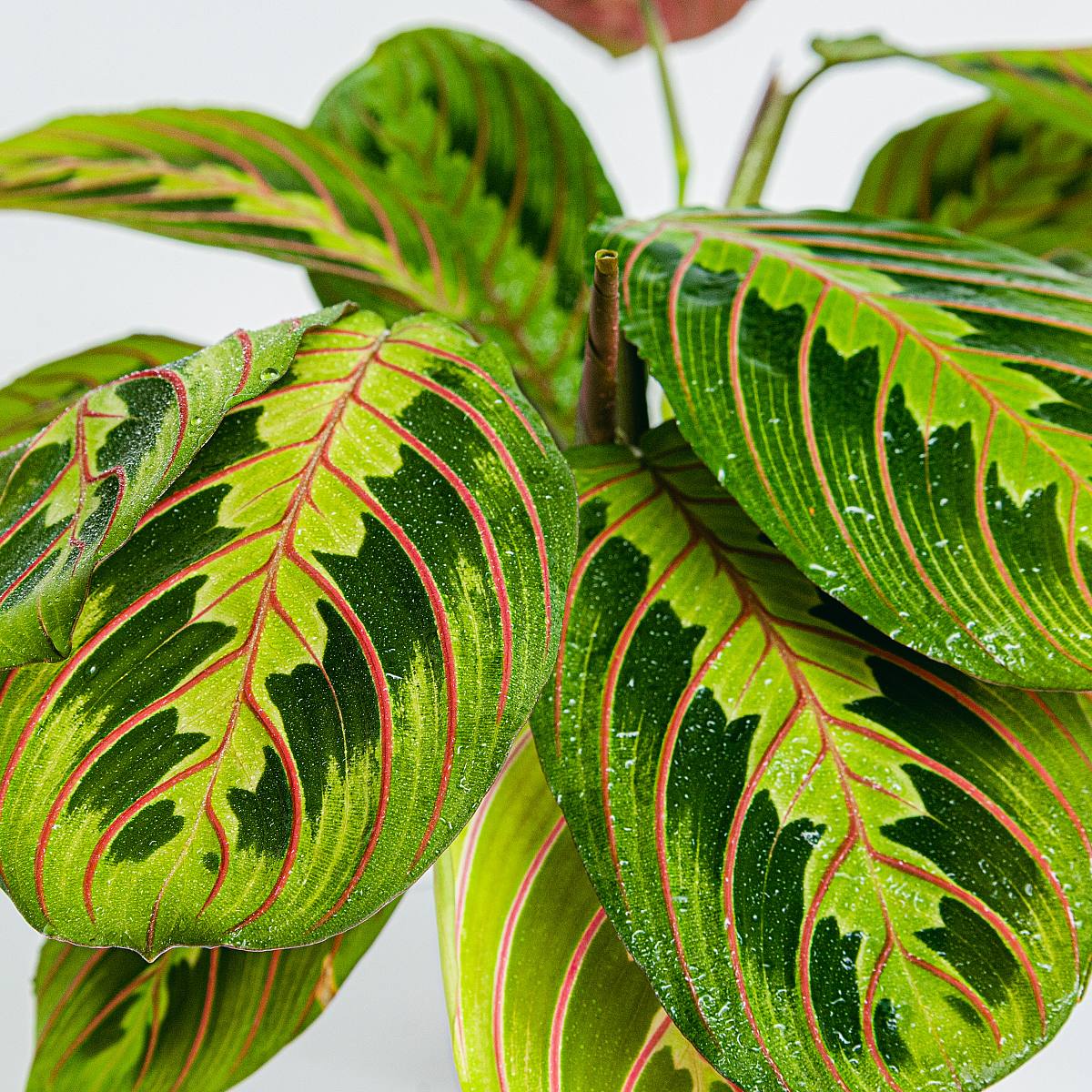
The Tricolor cultivar (also called Erythroneura) combines dark green between veins, lighter green in the central area and bright pink-red veins. The combination is genetically stable and unique within the genus. The purplish-red underside adds a fourth colour visible as the leaves move.
They share the family (Marantaceae) and the prayer-like movement, but: Maranta has smaller, oval leaves that tend to trail and prefers high humidity. Calathea has larger, elongated, upright leaves with many varieties of silvery patterns.
Maranta is very sensitive to water quality and low humidity. Chlorine, fluoride and tap water minerals cause edge necrosis within weeks. Filtered or rainwater plus humidity above 50 % avoids the problem.
Native to tropical forests of Brazil where it grows in the humid understorey. The genus Maranta is named for Bartolomeo Maranta, a 16th-century Italian physician and botanist who studied the American flora arriving in Europe after the discoveries.
The Maranta leuconeura s also known as "Prayer plant" because of its nightly ritual of folding and gathering its leaves in an upright position every night.
Recommendations
Care
Benefits
The leaves rise and fold upward at dusk, recalling hands joined in prayer. This is nictinasty, controlled by a specialized organ (pulvinus) at the base of the petiole. At dawn the leaves open again. The movement is real and visible every night.
No. Maranta — and all Marantaceae — are considered non-toxic to dogs and cats. One of the most recommended choices for pet households, alongside Pilea, palms and Calathea (its close cousin).
The Tricolor cultivar (also called Erythroneura) combines dark green between veins, lighter green in the central area and bright pink-red veins. The combination is genetically stable and unique within the genus. The purplish-red underside adds a fourth colour visible as the leaves move.
They share the family (Marantaceae) and the prayer-like movement, but: Maranta has smaller, oval leaves that tend to trail and prefers high humidity. Calathea has larger, elongated, upright leaves with many varieties of silvery patterns.
Maranta is very sensitive to water quality and low humidity. Chlorine, fluoride and tap water minerals cause edge necrosis within weeks. Filtered or rainwater plus humidity above 50 % avoids the problem.
Native to tropical forests of Brazil where it grows in the humid understorey. The genus Maranta is named for Bartolomeo Maranta, a 16th-century Italian physician and botanist who studied the American flora arriving in Europe after the discoveries.