Free delivery
47.00 €
55.00 €
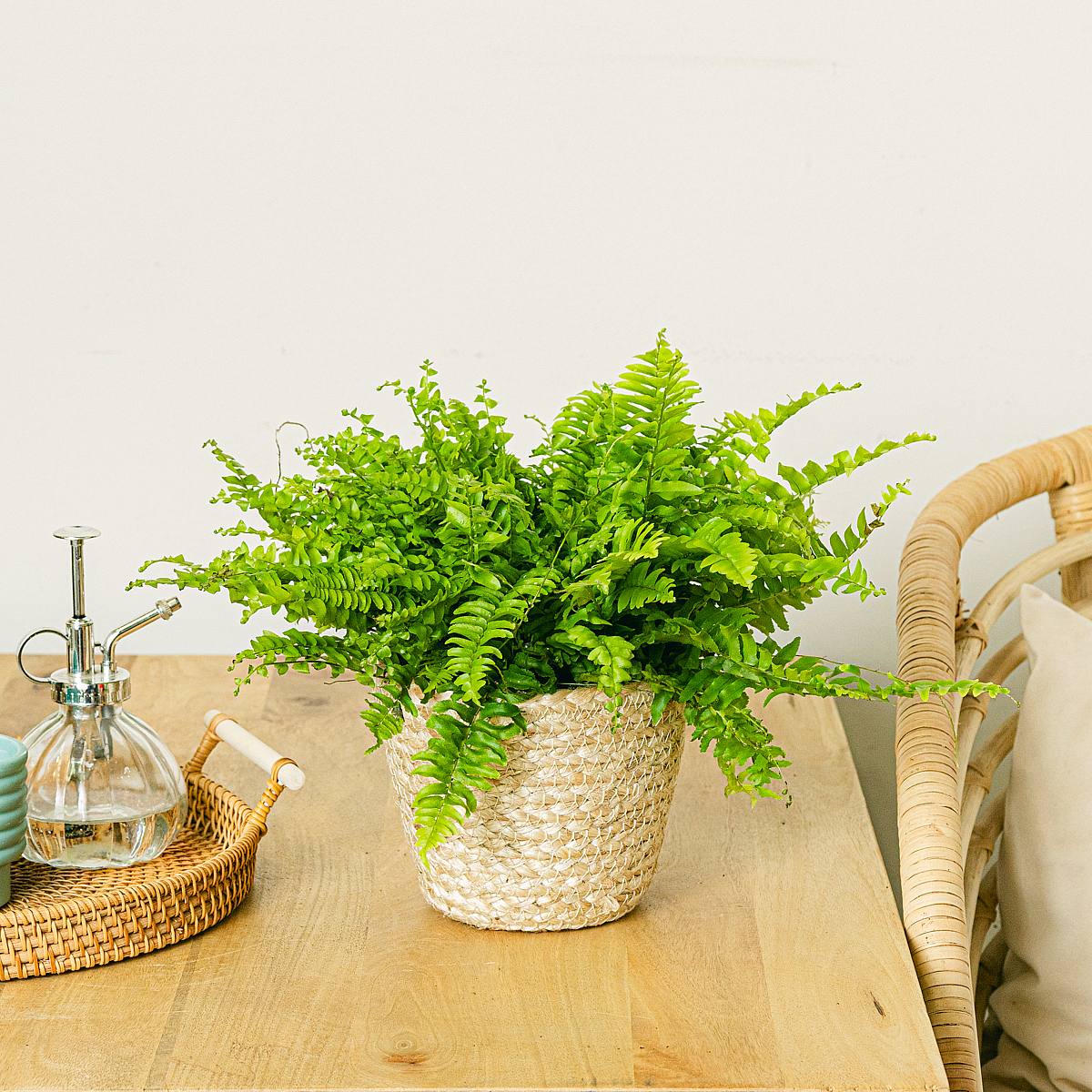
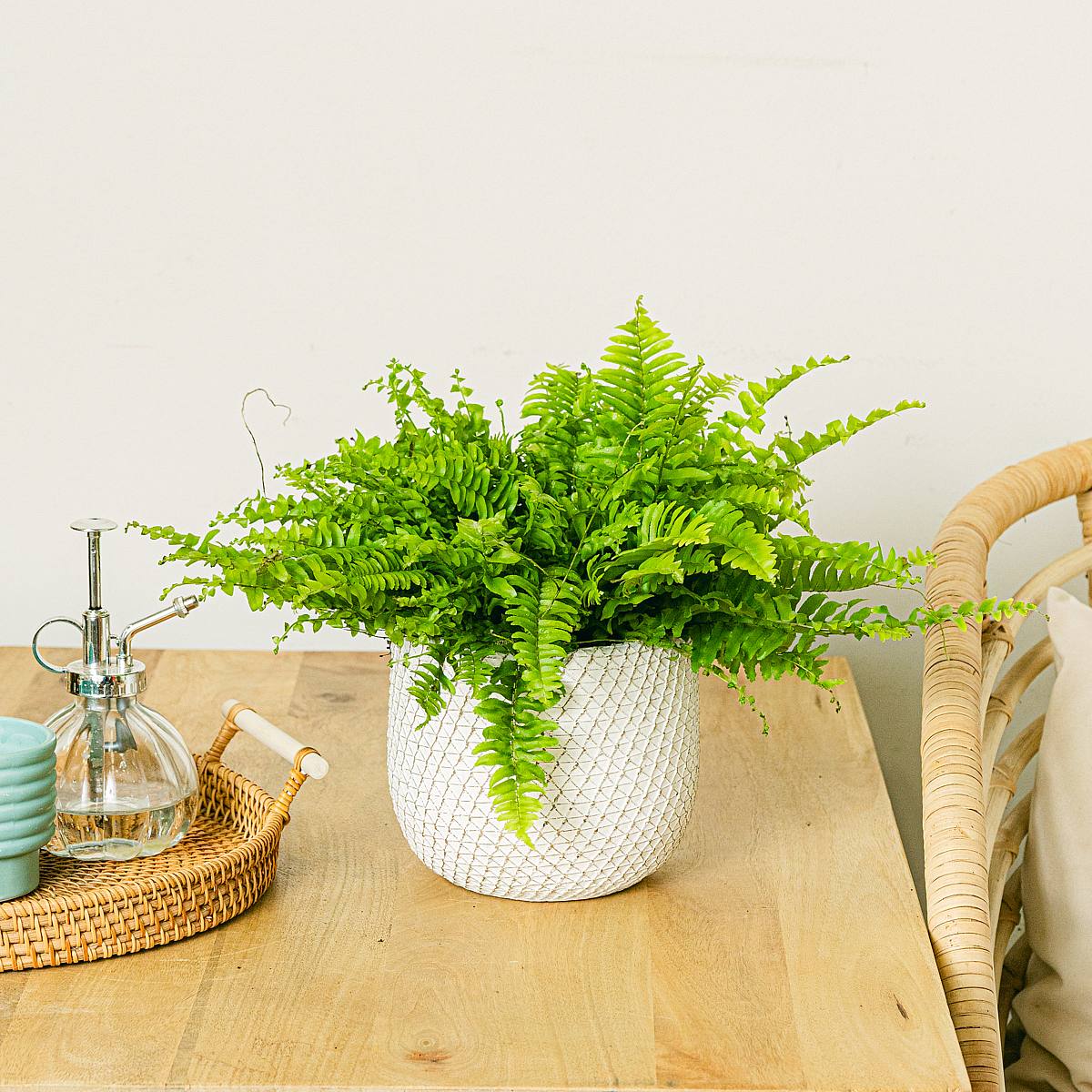
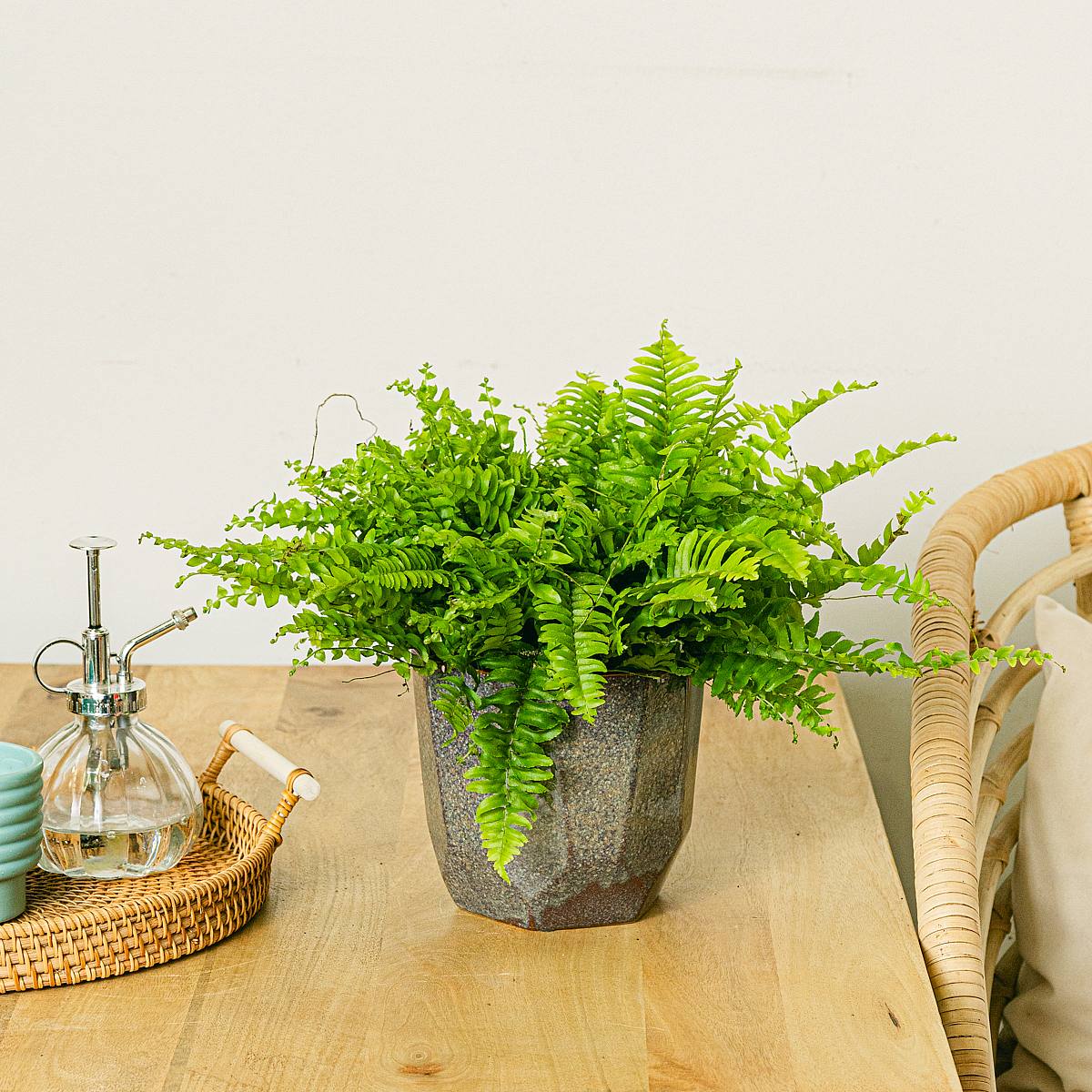
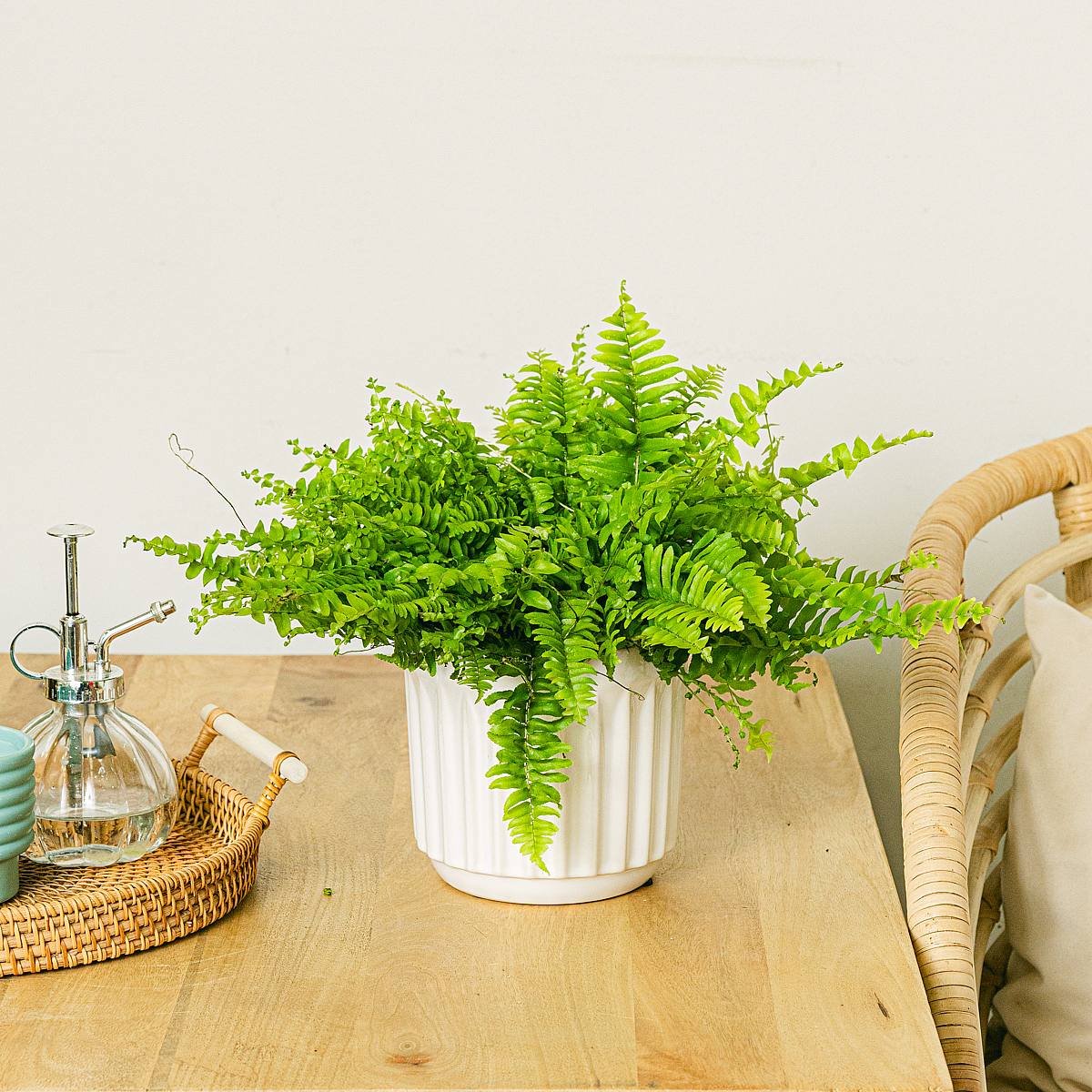
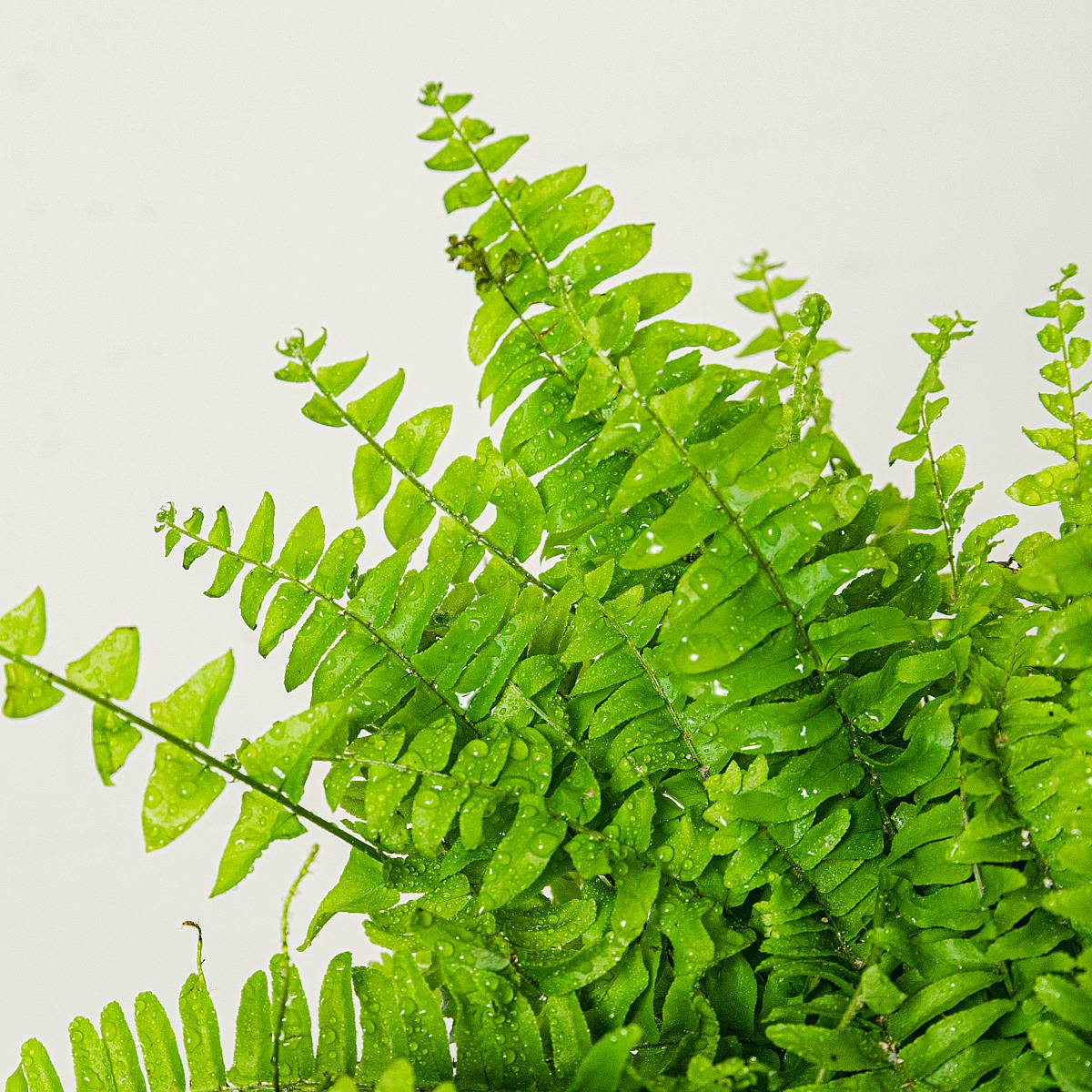






Height: 30cm Recommendations
Suitable for children and pets, non-toxic and safe for pets.
Avoid excessively dry, hot areas or direct sunlight. Care
Light: Loves indirect light.
Top tip: Although it is irresistible to stroke these leaves, it is best not to do so because it does not like it and they will turn brown in protest. Benefits
Regulates the humidity in the room.
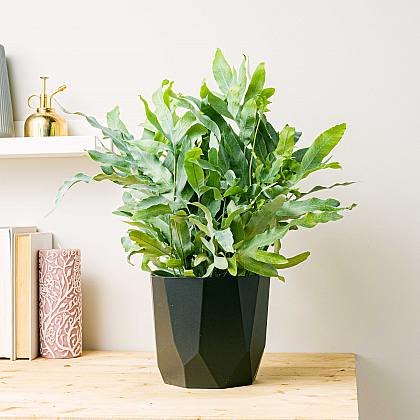
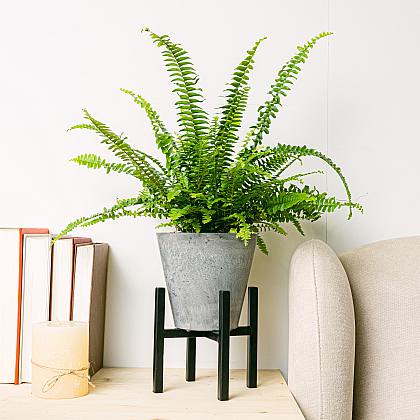
The 'Blue Bell' cultivar has an especially dense waxy coating on the fronds that reflects light with a blue-green tinge. It is a selected variation of the common Phlebodium aureum, which already has a slight blueish tone but less intense. The wax is best preserved by not handling the leaves.
No. Like other ferns in Polypodiaceae, it is considered non-toxic to dogs and cats. Safe for pet households alongside the Boston fern, Pilea and indoor palms.
The creeping rhizomes of Phlebodium are covered with golden-brown scales (hence 'aureum'). In the wild they climb tree trunks in tropical forests. In cultivation they emerge from the substrate decoratively, recalling furry animal feet.
It is a subtle blue-green, not vivid blue. Under bright light the tone is appreciable; in shade it just looks grey-green. Marketing photos often exaggerate the blue. The plant's real charm comes from its wavy leaf texture and furry rhizomes more than extreme colour.
In the wild it is epiphytic or semi-epiphytic: it grows on trees or rocks in American tropical forests. In cultivation it is potted, but it appreciates very airy substrates (mix of bark, perlite, sphagnum) similar to those used for orchids. Compact substrate is poorly tolerated.
Phlebodium aureum is native from southern Florida to Argentina, in tropical and subtropical forests. It is one of the most common and resilient American ferns, with many ornamental cultivars. 'Blue Bell' was developed in Dutch nurseries by selecting natural mutations.
Blue Bell fern, a plant that regulates humidity.
Height: 30cm Recommendations
Suitable for children and pets, non-toxic and safe for pets.
Avoid excessively dry, hot areas or direct sunlight. Care
Light: Loves indirect light.
Top tip: Although it is irresistible to stroke these leaves, it is best not to do so because it does not like it and they will turn brown in protest. Benefits
Regulates the humidity in the room.
The 'Blue Bell' cultivar has an especially dense waxy coating on the fronds that reflects light with a blue-green tinge. It is a selected variation of the common Phlebodium aureum, which already has a slight blueish tone but less intense. The wax is best preserved by not handling the leaves.
No. Like other ferns in Polypodiaceae, it is considered non-toxic to dogs and cats. Safe for pet households alongside the Boston fern, Pilea and indoor palms.
The creeping rhizomes of Phlebodium are covered with golden-brown scales (hence 'aureum'). In the wild they climb tree trunks in tropical forests. In cultivation they emerge from the substrate decoratively, recalling furry animal feet.
It is a subtle blue-green, not vivid blue. Under bright light the tone is appreciable; in shade it just looks grey-green. Marketing photos often exaggerate the blue. The plant's real charm comes from its wavy leaf texture and furry rhizomes more than extreme colour.
In the wild it is epiphytic or semi-epiphytic: it grows on trees or rocks in American tropical forests. In cultivation it is potted, but it appreciates very airy substrates (mix of bark, perlite, sphagnum) similar to those used for orchids. Compact substrate is poorly tolerated.
Phlebodium aureum is native from southern Florida to Argentina, in tropical and subtropical forests. It is one of the most common and resilient American ferns, with many ornamental cultivars. 'Blue Bell' was developed in Dutch nurseries by selecting natural mutations.