Free delivery
44.00 €

Recommendations
Care
Benefits
The Bostoniensis cultivar was discovered in 1894 in a shipment of ferns sent from Philadelphia to Boston. One plant stood out with more arching, voluminous fronds. It was propagated from Boston with that name and grew worldwide as one of the most cultivated indoor ferns.
No. The Boston fern is considered non-toxic to dogs and cats according to the ASPCA. One of the safest ferns for pet households (do not confuse it with Asparagus, which is toxic).
It is one of the most sensitive ferns to dry air: heating and air conditioning cause massive leaflet drop and green-brown dust on the floor. It needs ambient humidity above 50 % to stay healthy, which is high for a Mediterranean home in winter.
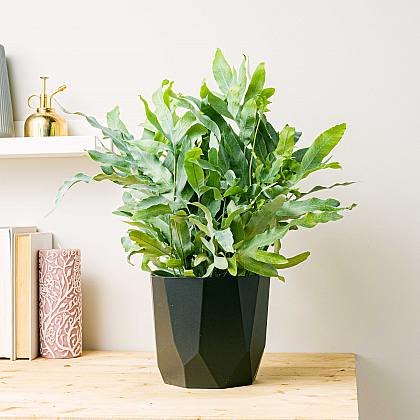
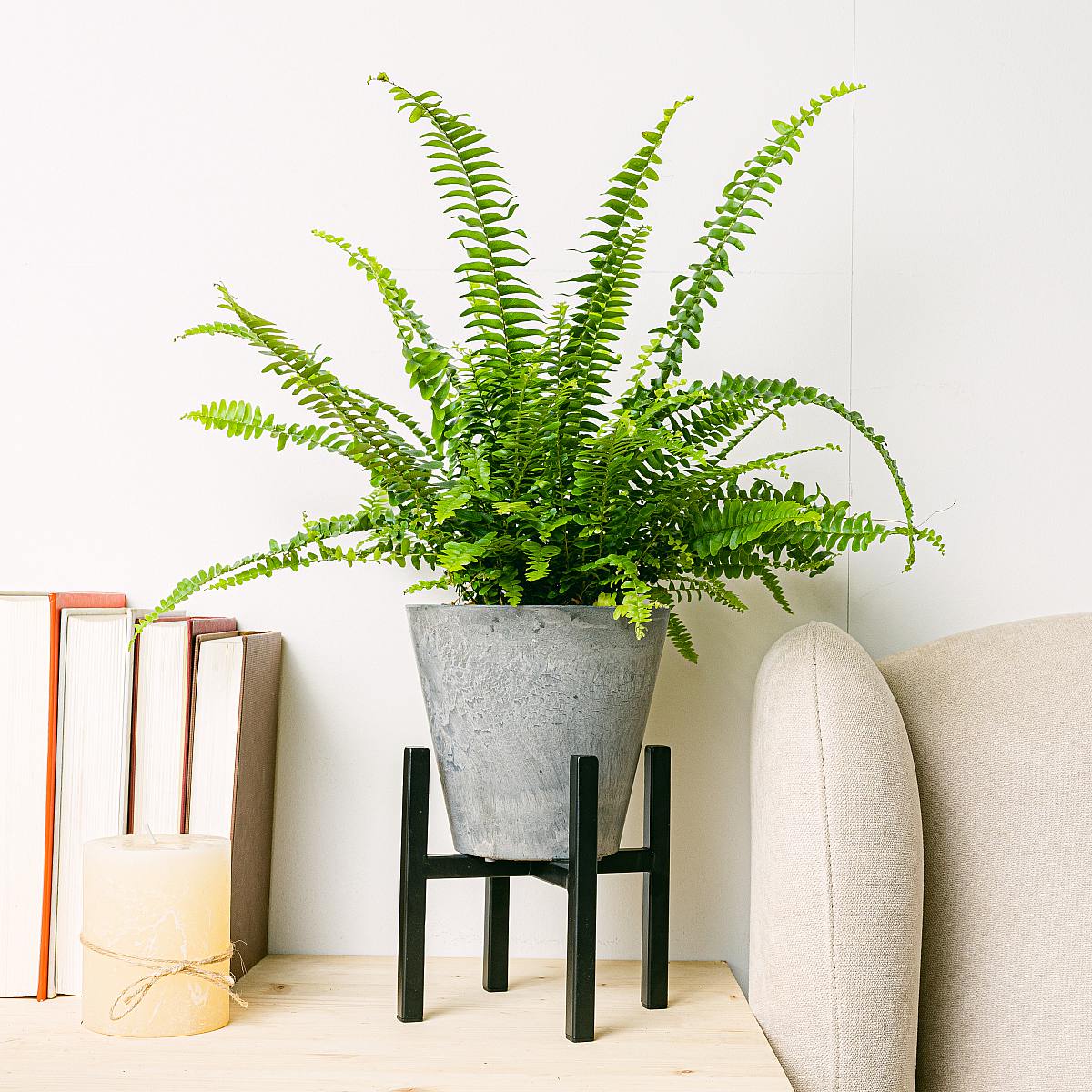
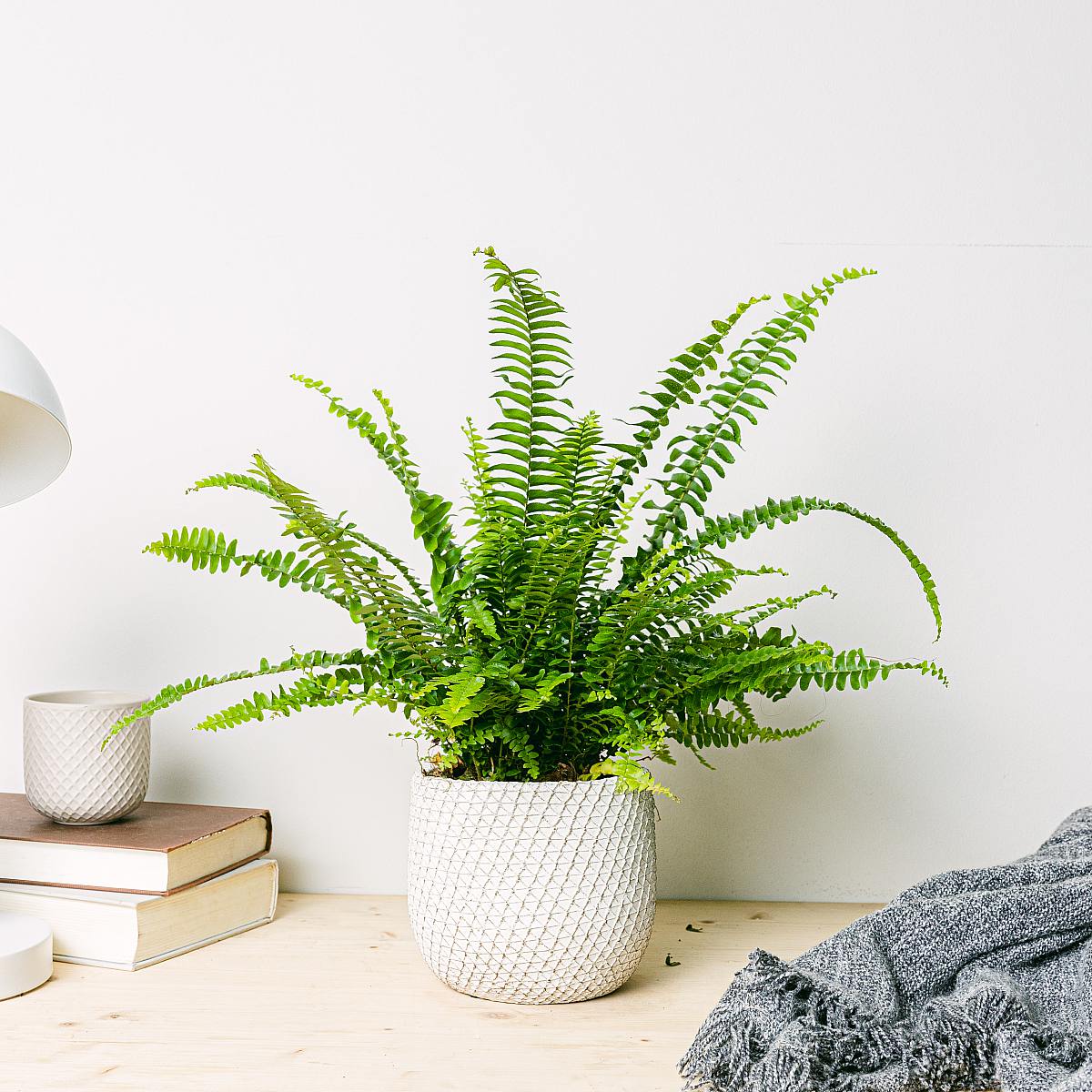
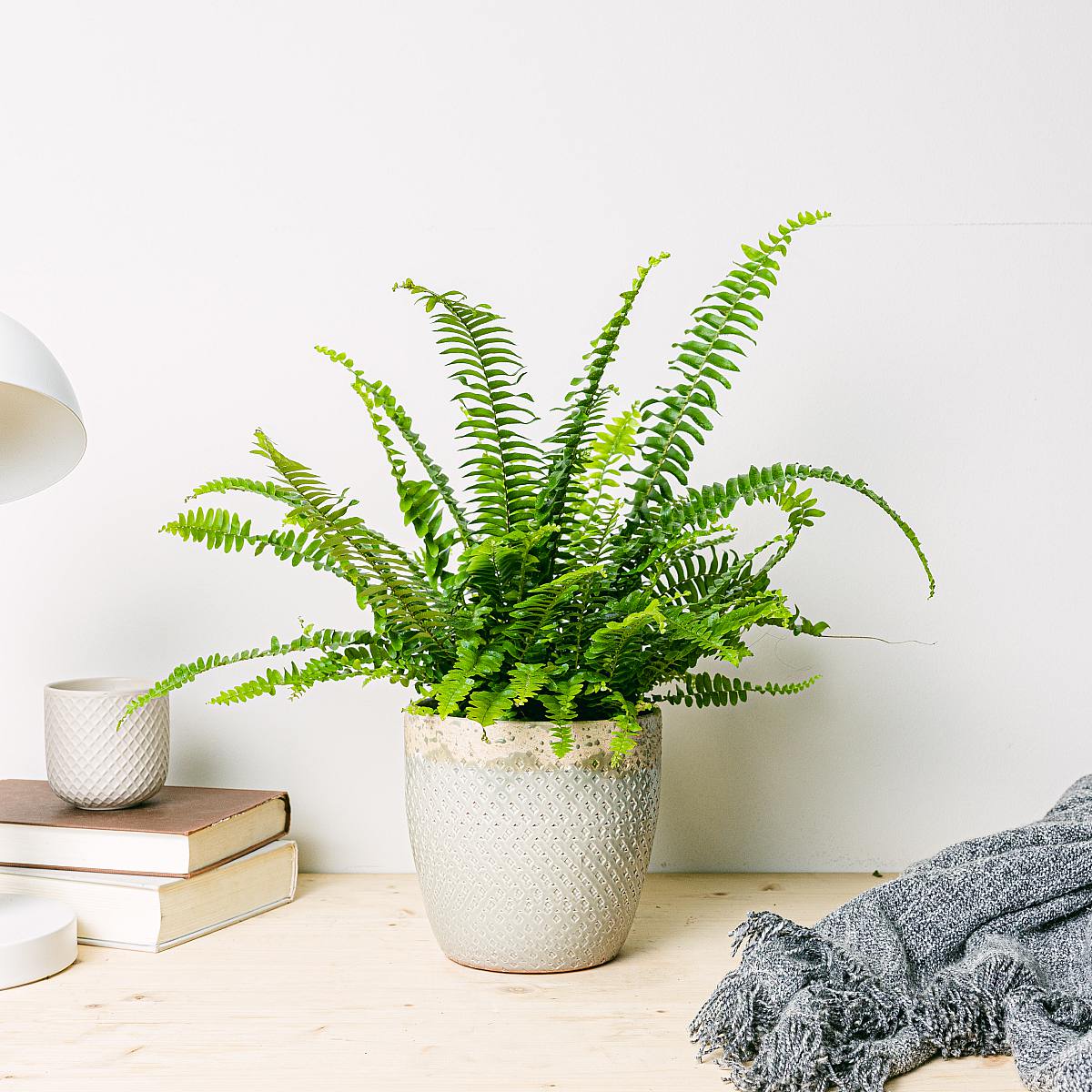
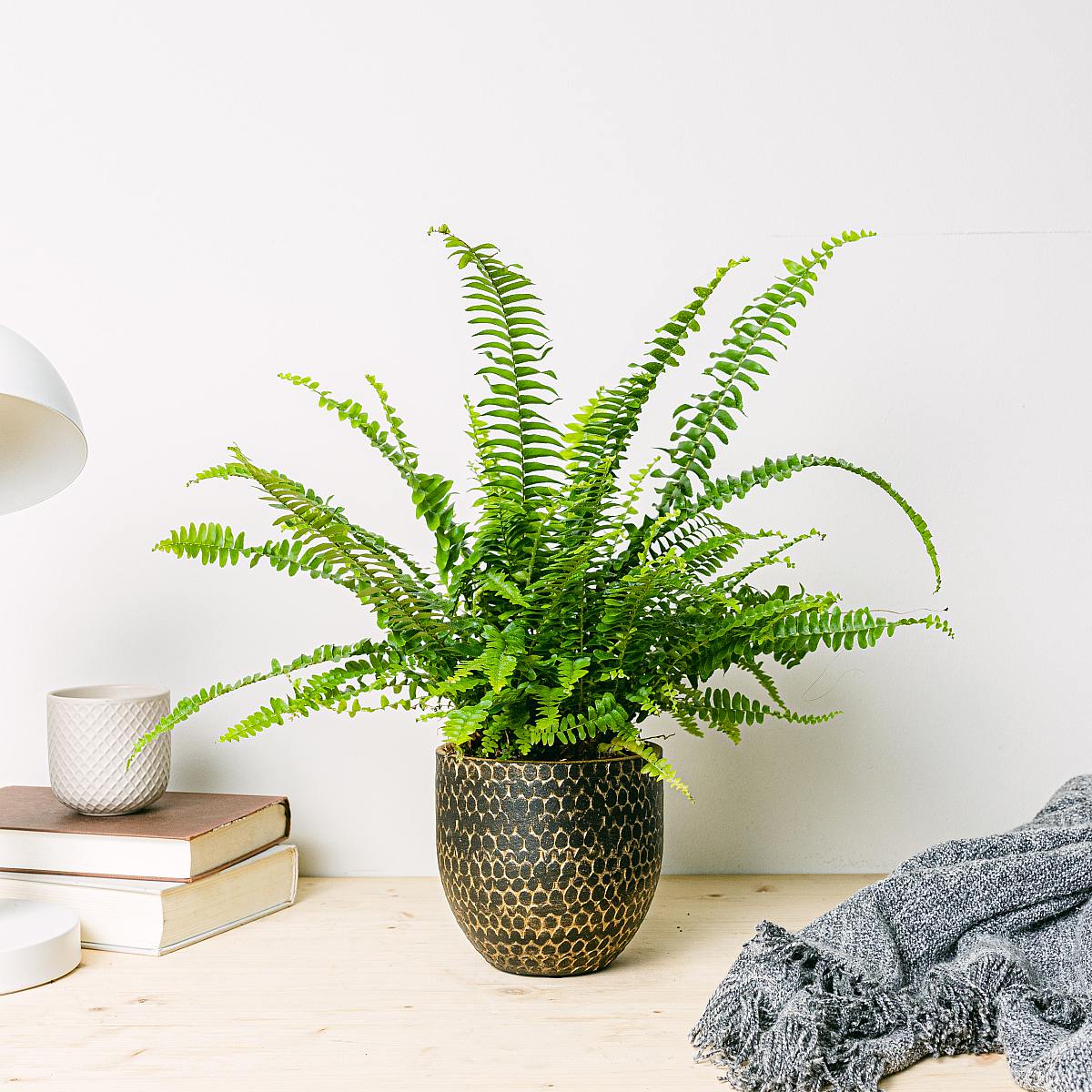
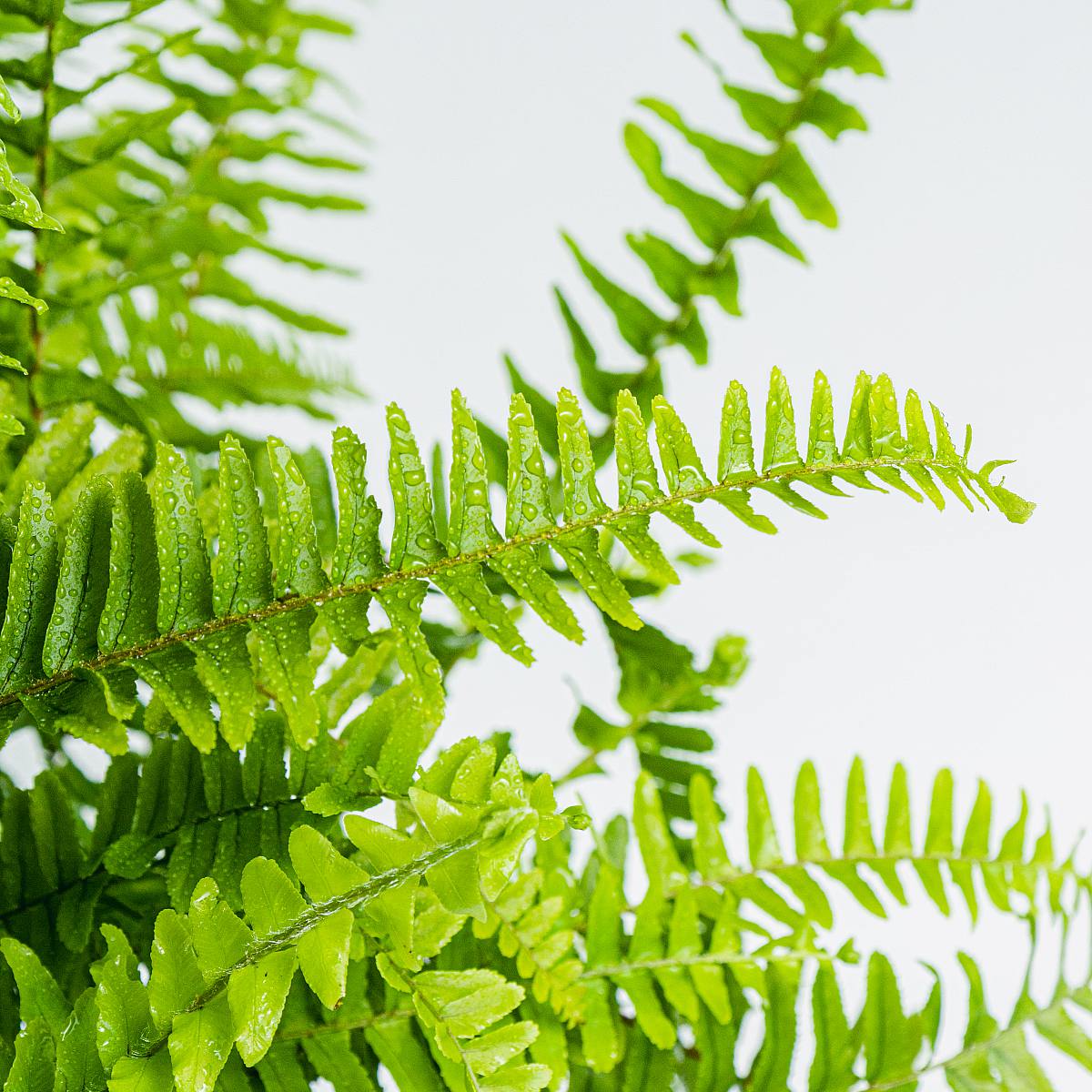
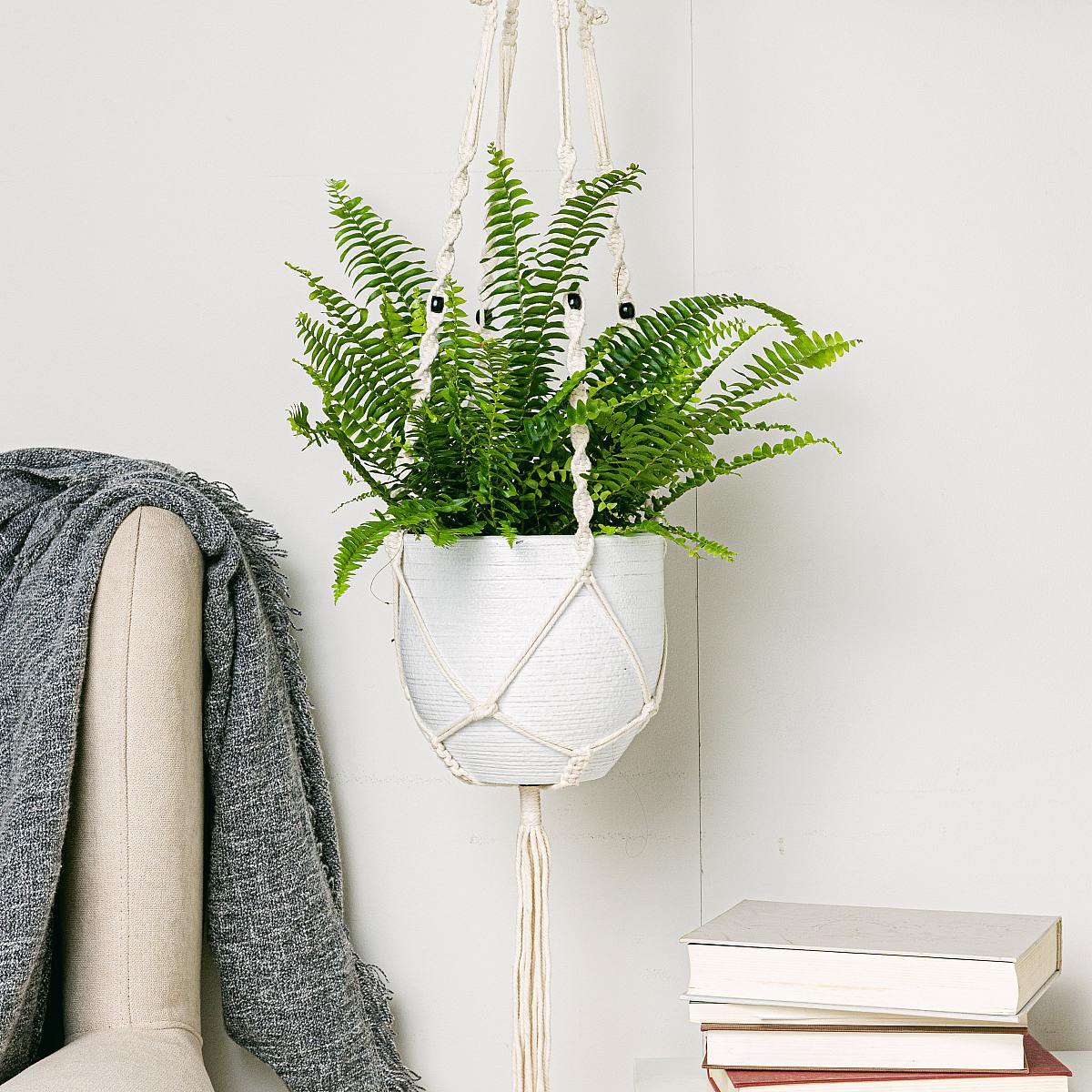
Individual fronds can reach 60–90 cm. The whole plant forms a dense clump up to a metre across in good conditions. It grows fairly fast and needs dividing every 2–3 years to maintain vigour and a compact form.
Yes. NASA's 1989 clean-air study confirmed the Boston fern as one of the most effective plants for removing formaldehyde from indoor air. Subsequent studies temper the effect in real homes, but its absorption capacity is well documented.
The parent species Nephrolepis exaltata is native to southern Florida, the Caribbean and Central America, where it grows as an epiphyte on tropical trees. Bostoniensis is a cultivar selected in cultivation. More than 50 derived cultivars exist with curlier, plumier or variegated fronds.
Nephrolepis exaltata, also known as common fern or house fern.
Recommendations
Care
Benefits
The Bostoniensis cultivar was discovered in 1894 in a shipment of ferns sent from Philadelphia to Boston. One plant stood out with more arching, voluminous fronds. It was propagated from Boston with that name and grew worldwide as one of the most cultivated indoor ferns.
No. The Boston fern is considered non-toxic to dogs and cats according to the ASPCA. One of the safest ferns for pet households (do not confuse it with Asparagus, which is toxic).
It is one of the most sensitive ferns to dry air: heating and air conditioning cause massive leaflet drop and green-brown dust on the floor. It needs ambient humidity above 50 % to stay healthy, which is high for a Mediterranean home in winter.
Individual fronds can reach 60–90 cm. The whole plant forms a dense clump up to a metre across in good conditions. It grows fairly fast and needs dividing every 2–3 years to maintain vigour and a compact form.
Yes. NASA's 1989 clean-air study confirmed the Boston fern as one of the most effective plants for removing formaldehyde from indoor air. Subsequent studies temper the effect in real homes, but its absorption capacity is well documented.
The parent species Nephrolepis exaltata is native to southern Florida, the Caribbean and Central America, where it grows as an epiphyte on tropical trees. Bostoniensis is a cultivar selected in cultivation. More than 50 derived cultivars exist with curlier, plumier or variegated fronds.