Free delivery
47.00 €
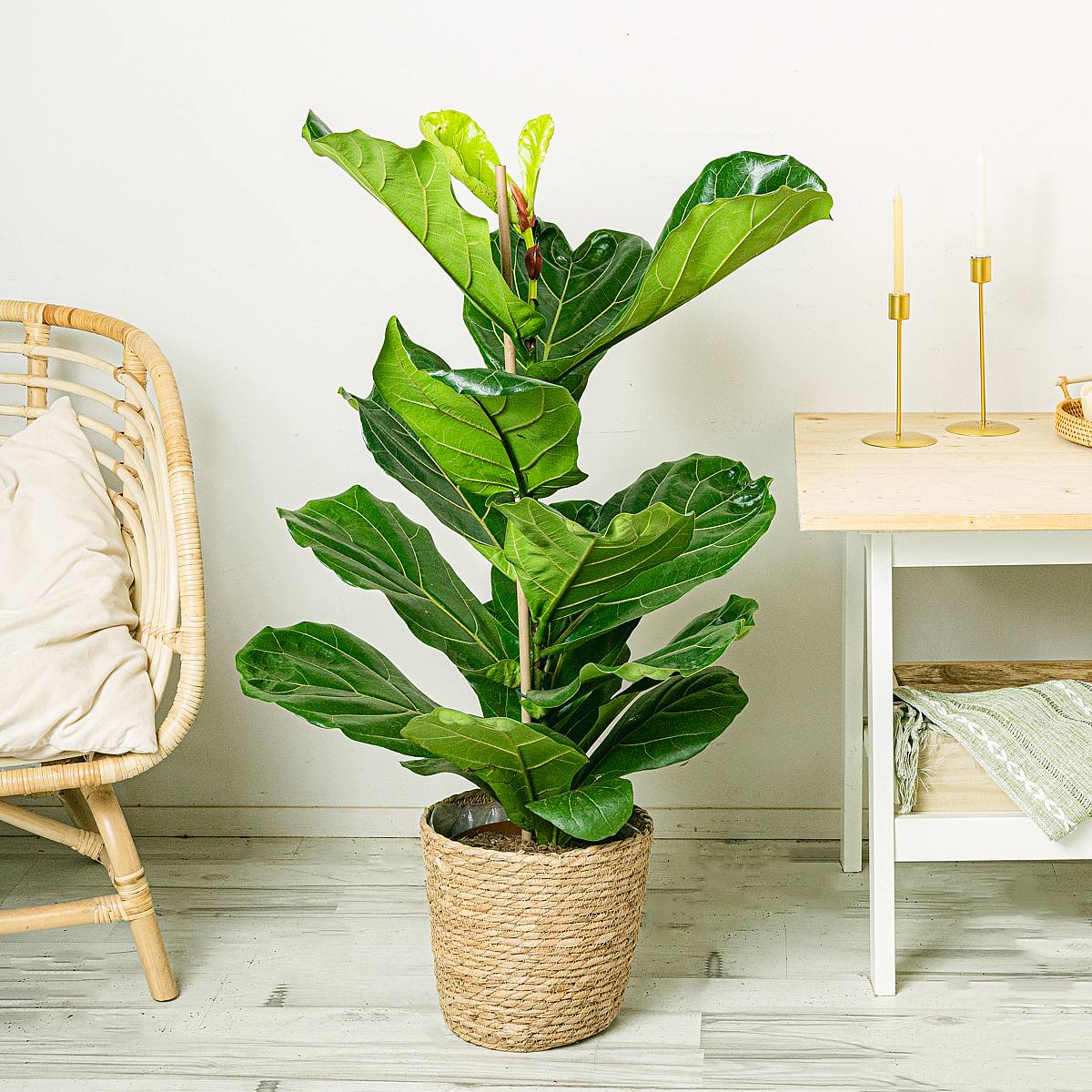
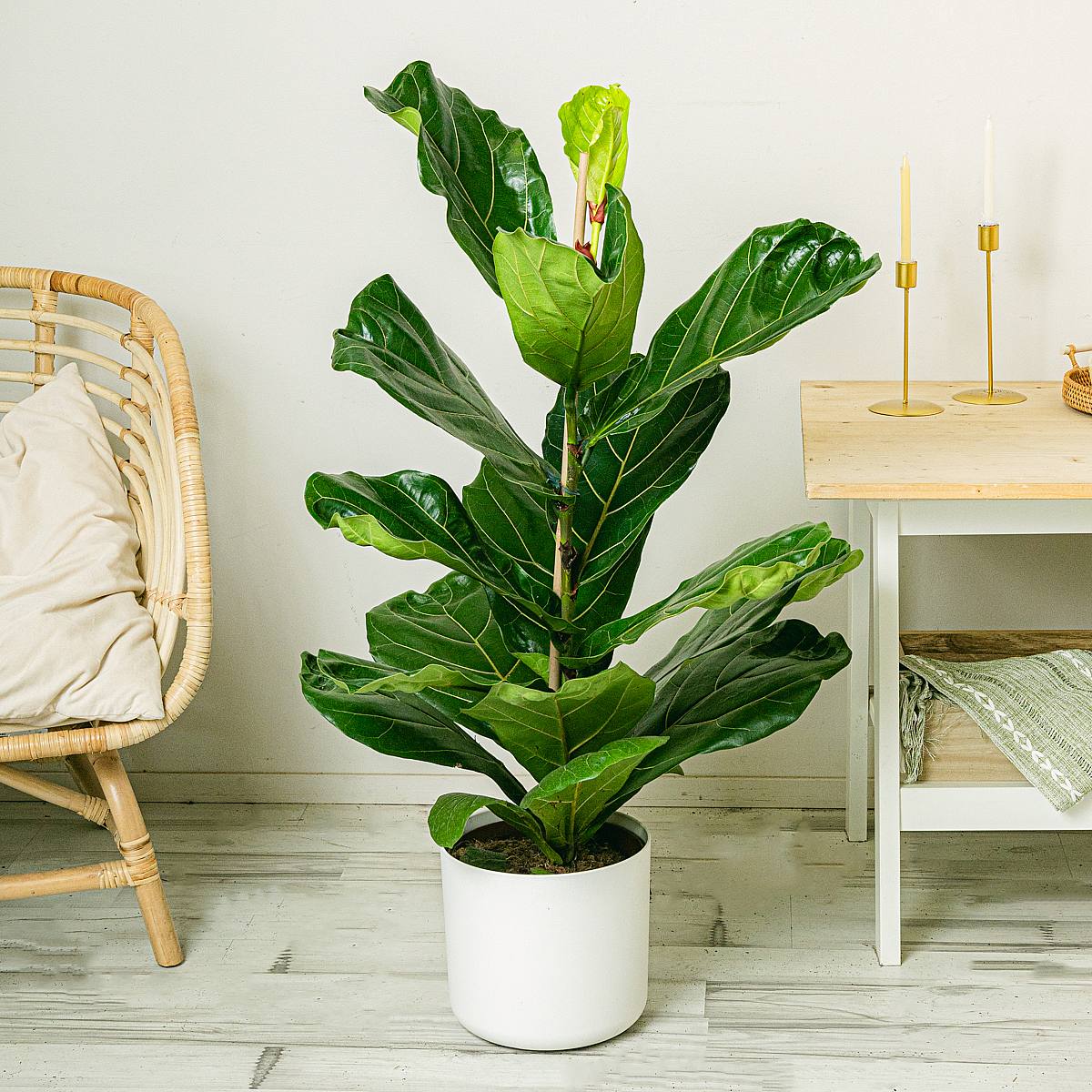
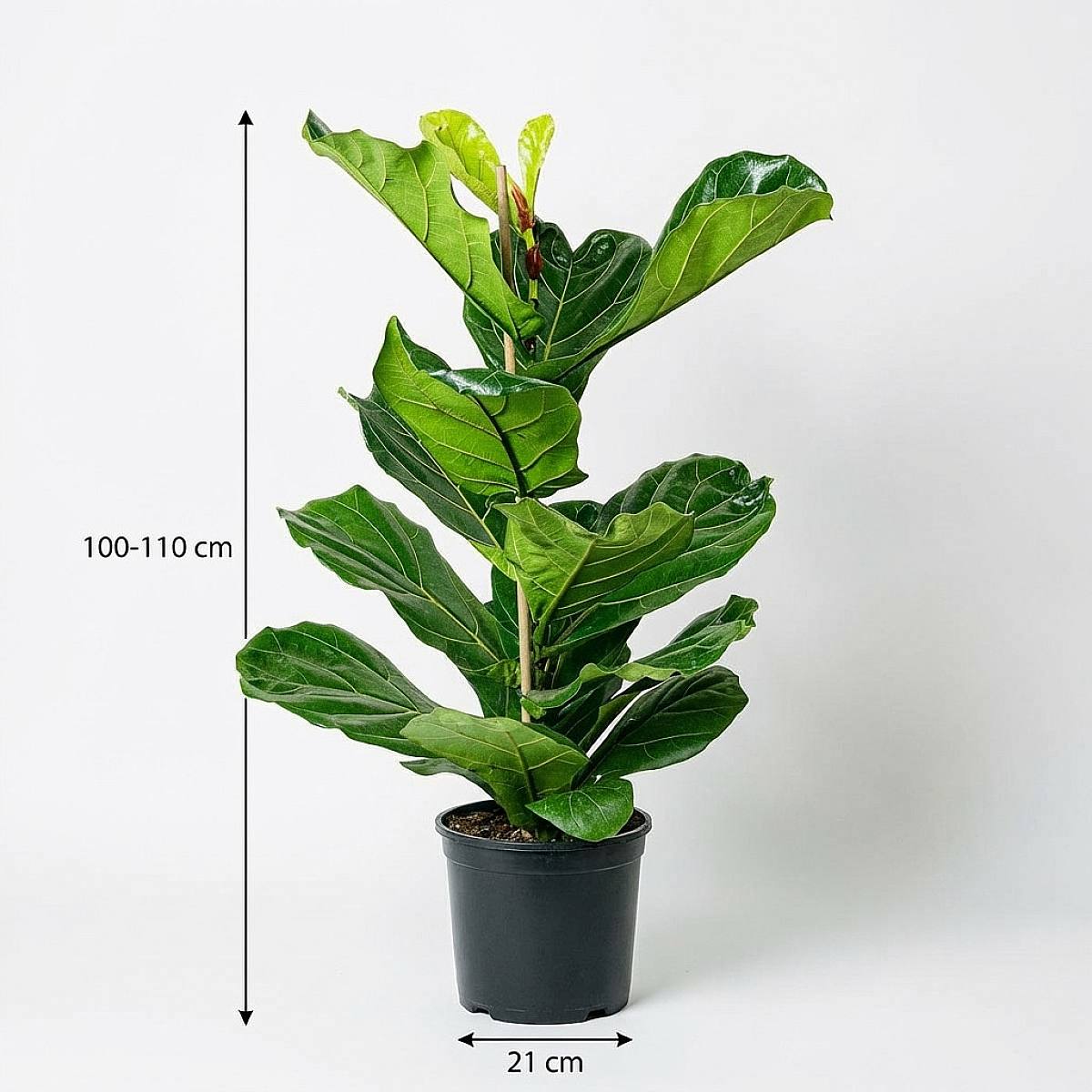
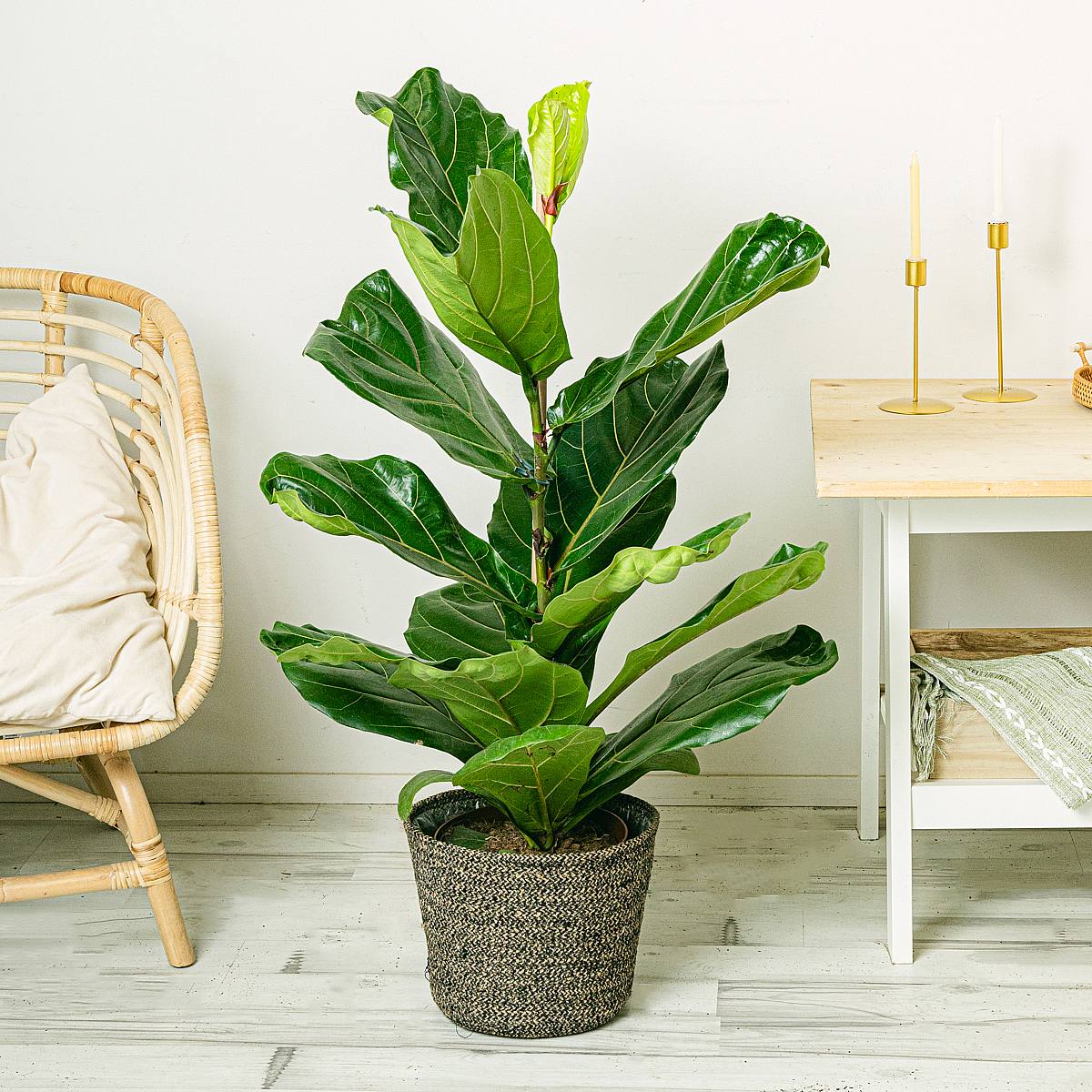







Ficuslyrata. Called "fiddle-leaf fig" because ofthe resemblance of its leaves to those of a fig, lyre or fiddle.
It is an exotic plant from West Africa. Itcan grow upto two metres high.
Recommendations
Care
What to avoid
Benefits
P.S. The plant may show brown spots on the foliage or drop its leaves. Both characteristics are natural and are part of normal maturation, as long as they do not occur in abundance.
Ficus lyrata is highly sensitive to change: it dislikes relocation, draughts, irregular watering and sudden light shifts. It is not delicate from fragility but from low tolerance to environmental stress. Once it finds a fixed, bright spot it is very stable for years.
It is its signature stress response: facing a change of light, temperature or humidity the plant goes defensive and sheds leaves to reduce its load. It usually recovers in a few weeks if the new spot is suitable. Best practice: stop moving it and wait.
Yes. Like all Ficus, it secretes a white latex when cut that is toxic to dogs, cats and horses. It causes oral irritation, vomiting and, on contact with sensitive skin, dermatitis. Keep away from pets that nibble plants.
Yes. In the wild it reaches 12–15 m and indoors can easily pass 3 m given light, space and a large pot. To control size, prune the main stem above a node: a side branch will shoot out, giving a wider shape.
The leaf shape — broad at the tip, narrow in the middle, slightly lobed at the base — recalls the body of a Greek lyre or a violin. Hence 'lyrata' in Latin and the common names 'fiddle-leaf fig' in English and 'higuera de hoja de violín' in Spanish.
It produces small green figs similar to those of common fig trees, but they are not edible for humans: very bitter and fibrous. They only appear on mature specimens in tropical climates; indoors fruiting is virtually impossible.
the beautiful leaves of this plant will brighten up any room! The Fig Tree is not only a stylish plant, it is also a super purifier that removes toxins from the environment.
Ficuslyrata. Called "fiddle-leaf fig" because ofthe resemblance of its leaves to those of a fig, lyre or fiddle.
It is an exotic plant from West Africa. Itcan grow upto two metres high.
Recommendations
Care
What to avoid
Benefits
P.S. The plant may show brown spots on the foliage or drop its leaves. Both characteristics are natural and are part of normal maturation, as long as they do not occur in abundance.
Ficus lyrata is highly sensitive to change: it dislikes relocation, draughts, irregular watering and sudden light shifts. It is not delicate from fragility but from low tolerance to environmental stress. Once it finds a fixed, bright spot it is very stable for years.
It is its signature stress response: facing a change of light, temperature or humidity the plant goes defensive and sheds leaves to reduce its load. It usually recovers in a few weeks if the new spot is suitable. Best practice: stop moving it and wait.
Yes. Like all Ficus, it secretes a white latex when cut that is toxic to dogs, cats and horses. It causes oral irritation, vomiting and, on contact with sensitive skin, dermatitis. Keep away from pets that nibble plants.
Yes. In the wild it reaches 12–15 m and indoors can easily pass 3 m given light, space and a large pot. To control size, prune the main stem above a node: a side branch will shoot out, giving a wider shape.
The leaf shape — broad at the tip, narrow in the middle, slightly lobed at the base — recalls the body of a Greek lyre or a violin. Hence 'lyrata' in Latin and the common names 'fiddle-leaf fig' in English and 'higuera de hoja de violín' in Spanish.
It produces small green figs similar to those of common fig trees, but they are not edible for humans: very bitter and fibrous. They only appear on mature specimens in tropical climates; indoors fruiting is virtually impossible.