From
Free delivery
46.00 €






Briefly and poorly. Eucalyptus needs direct sun, moving air and cool temperatures. In a heated home it weakens fast, losing its scent and getting sick. It is an outdoor plant or, at most, a temporarily-indoor one on a very bright balcony.
Yes, moderately. Eucalyptus essential oils (eucalyptol) are toxic to dogs, cats and horses: salivation, vomiting, depression and diarrhoea. Severe poisoning is rare except in large ingestions, but symptoms are noticeable.
Leaves carry oil glands packed with eucalyptol (1,8-cineole) and other volatile oils. They are antimicrobial, repel insects and produce the characteristic scent released when leaves are bruised. They are the same compounds as in essential oil bottles.
Koalas have a unique digestive system with specialized gut bacteria that detoxify eucalyptus compounds. They feed almost exclusively on eucalyptus and have co-evolved with the plant for millions of years.
In a Mediterranean garden the E. gunnii reaches 10–15 m, while E. globulus can pass 50–60 m (one of the world's tallest trees). Pot-grown versions are not viable long-term: eucalyptus needs huge root space.
The genus Eucalyptus is endemic to Australia, with more than 700 species adapted to every climate of the continent. It was introduced to Europe and the Americas in the 19th century, especially in Portugal, Galicia and California, where it has become invasive in some areas.
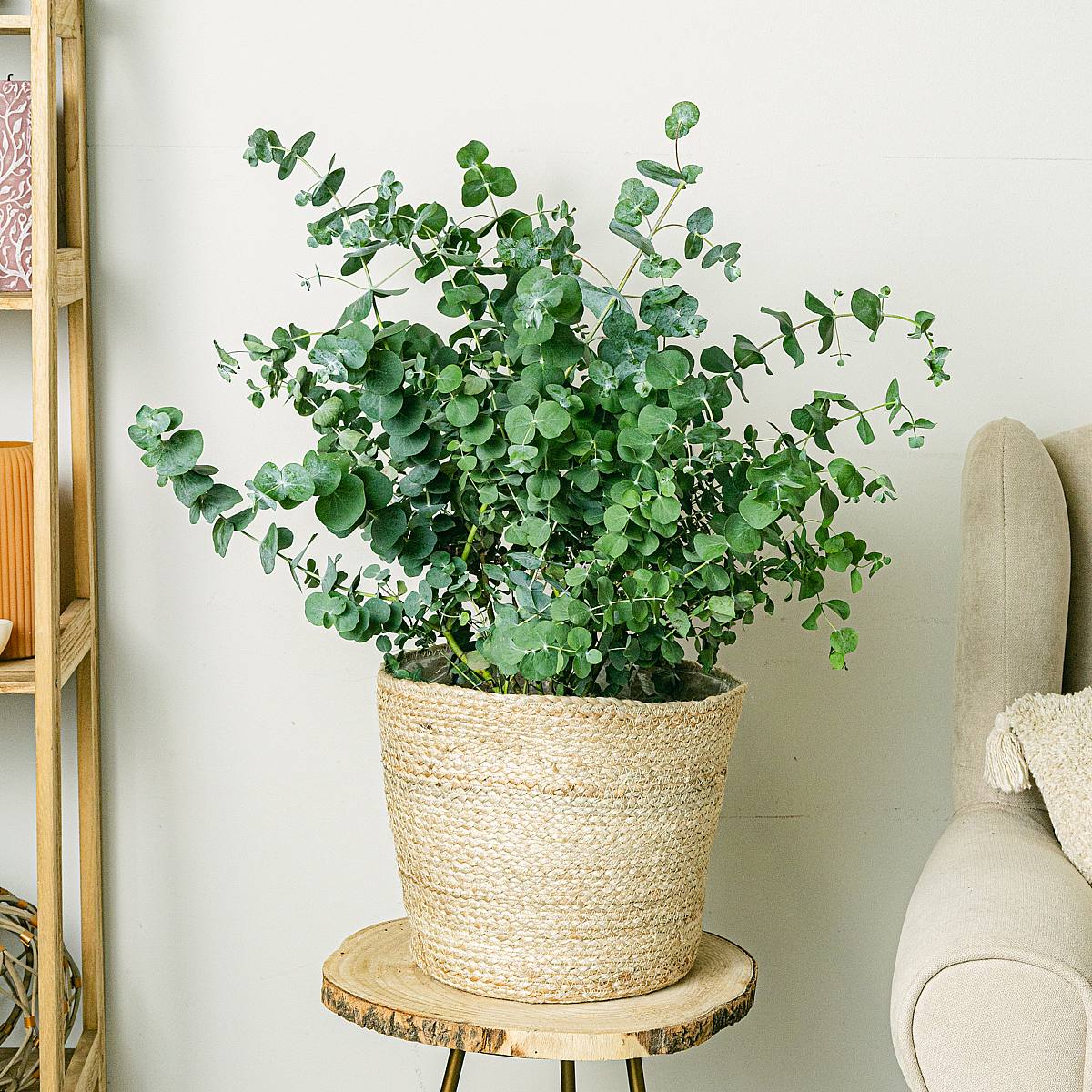
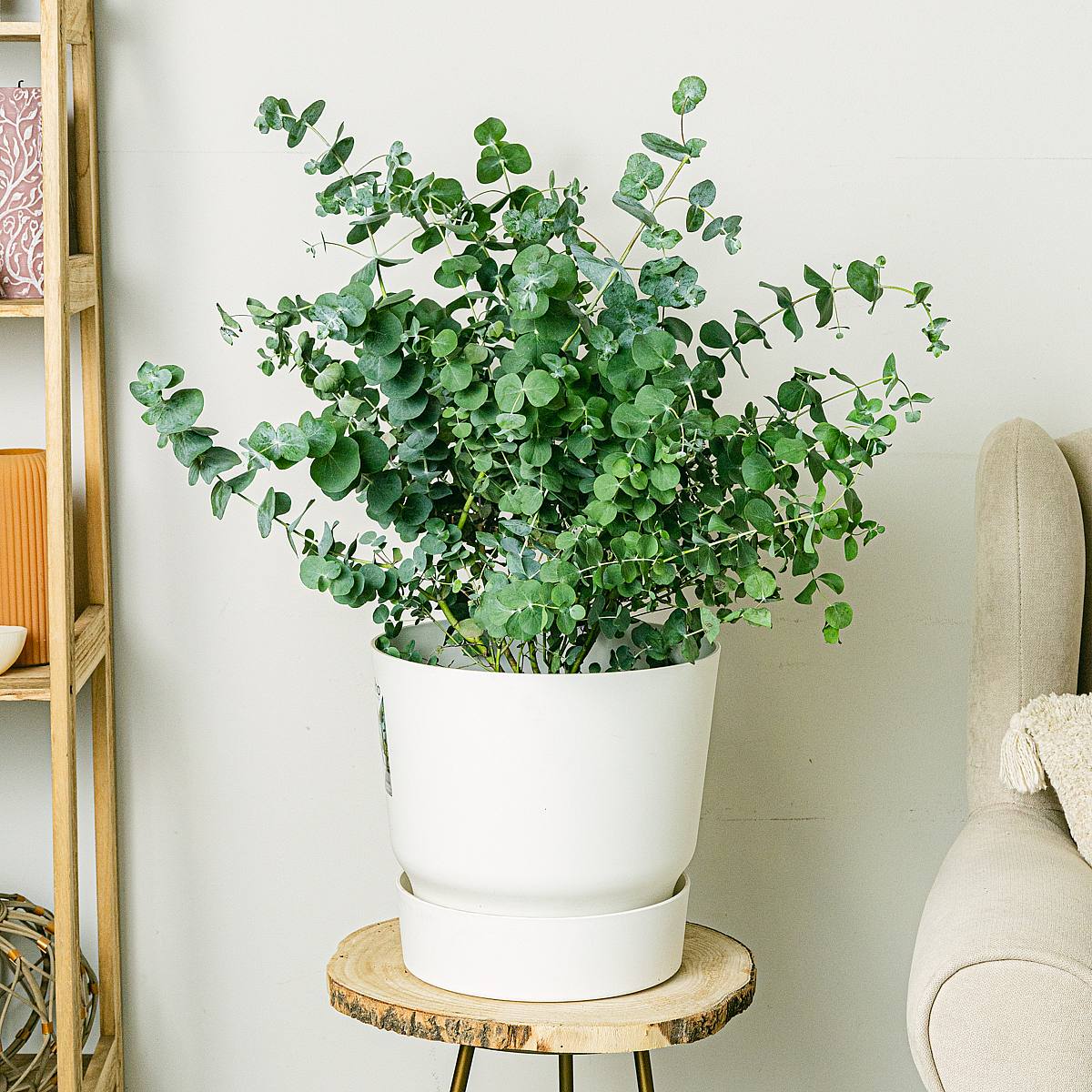
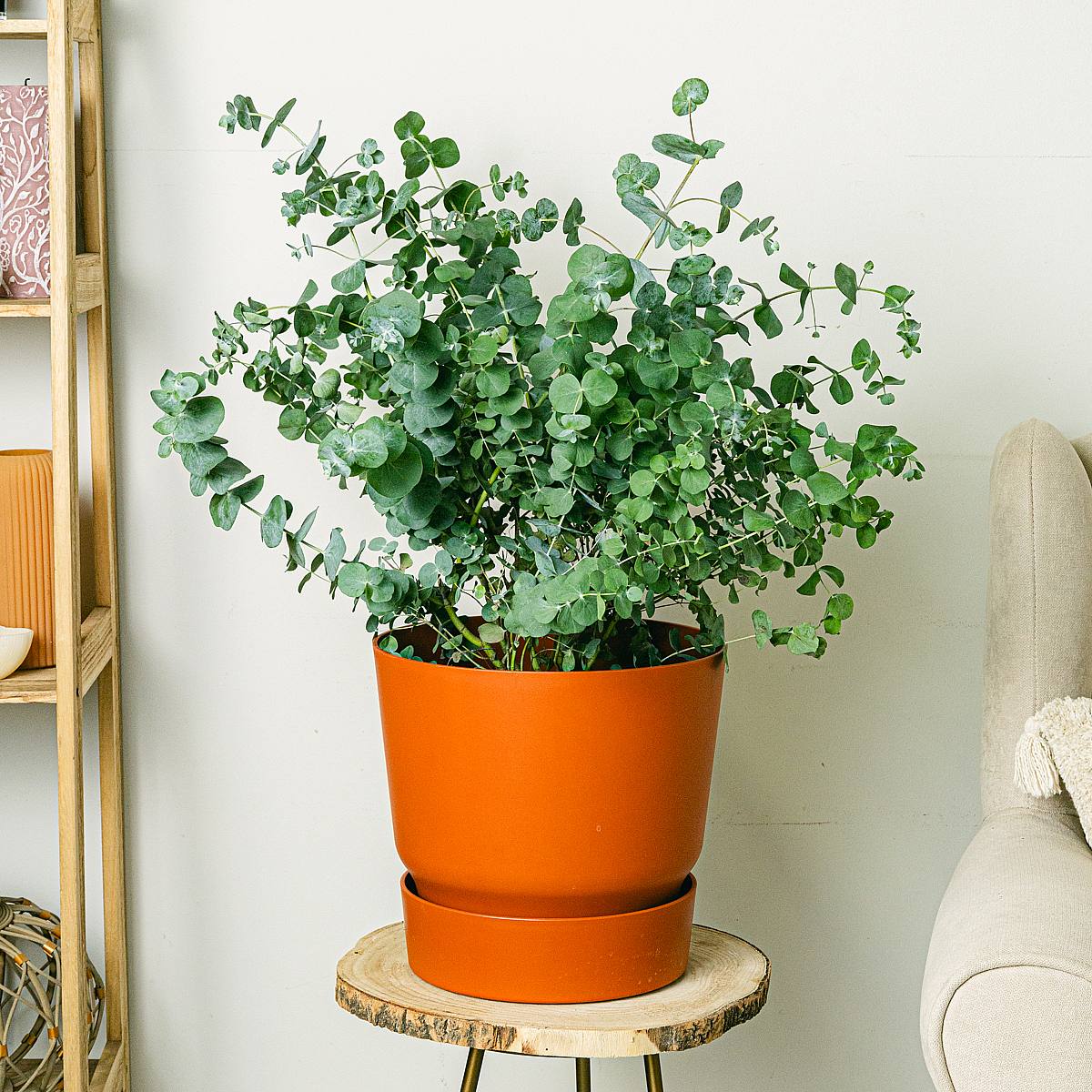
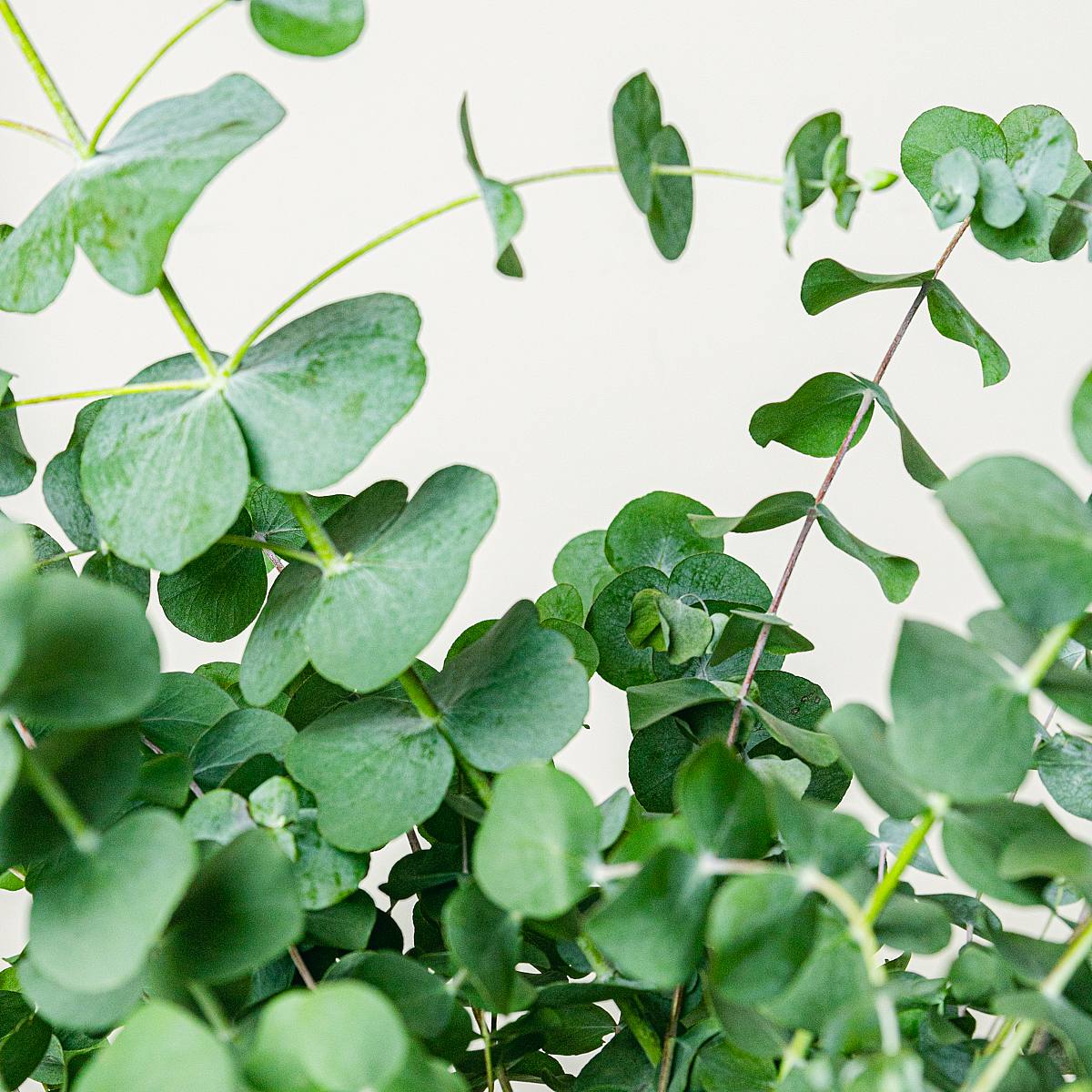
Native to Australia, Eucalyptus is an exceptional plant that brings aromatic freshness with its unique fragrance and beneficial properties.
Briefly and poorly. Eucalyptus needs direct sun, moving air and cool temperatures. In a heated home it weakens fast, losing its scent and getting sick. It is an outdoor plant or, at most, a temporarily-indoor one on a very bright balcony.
Yes, moderately. Eucalyptus essential oils (eucalyptol) are toxic to dogs, cats and horses: salivation, vomiting, depression and diarrhoea. Severe poisoning is rare except in large ingestions, but symptoms are noticeable.
Leaves carry oil glands packed with eucalyptol (1,8-cineole) and other volatile oils. They are antimicrobial, repel insects and produce the characteristic scent released when leaves are bruised. They are the same compounds as in essential oil bottles.
Koalas have a unique digestive system with specialized gut bacteria that detoxify eucalyptus compounds. They feed almost exclusively on eucalyptus and have co-evolved with the plant for millions of years.
In a Mediterranean garden the E. gunnii reaches 10–15 m, while E. globulus can pass 50–60 m (one of the world's tallest trees). Pot-grown versions are not viable long-term: eucalyptus needs huge root space.
The genus Eucalyptus is endemic to Australia, with more than 700 species adapted to every climate of the continent. It was introduced to Europe and the Americas in the 19th century, especially in Portugal, Galicia and California, where it has become invasive in some areas.