From
Free delivery
42.00 €






BeGreen MIX Carnivorous Plants
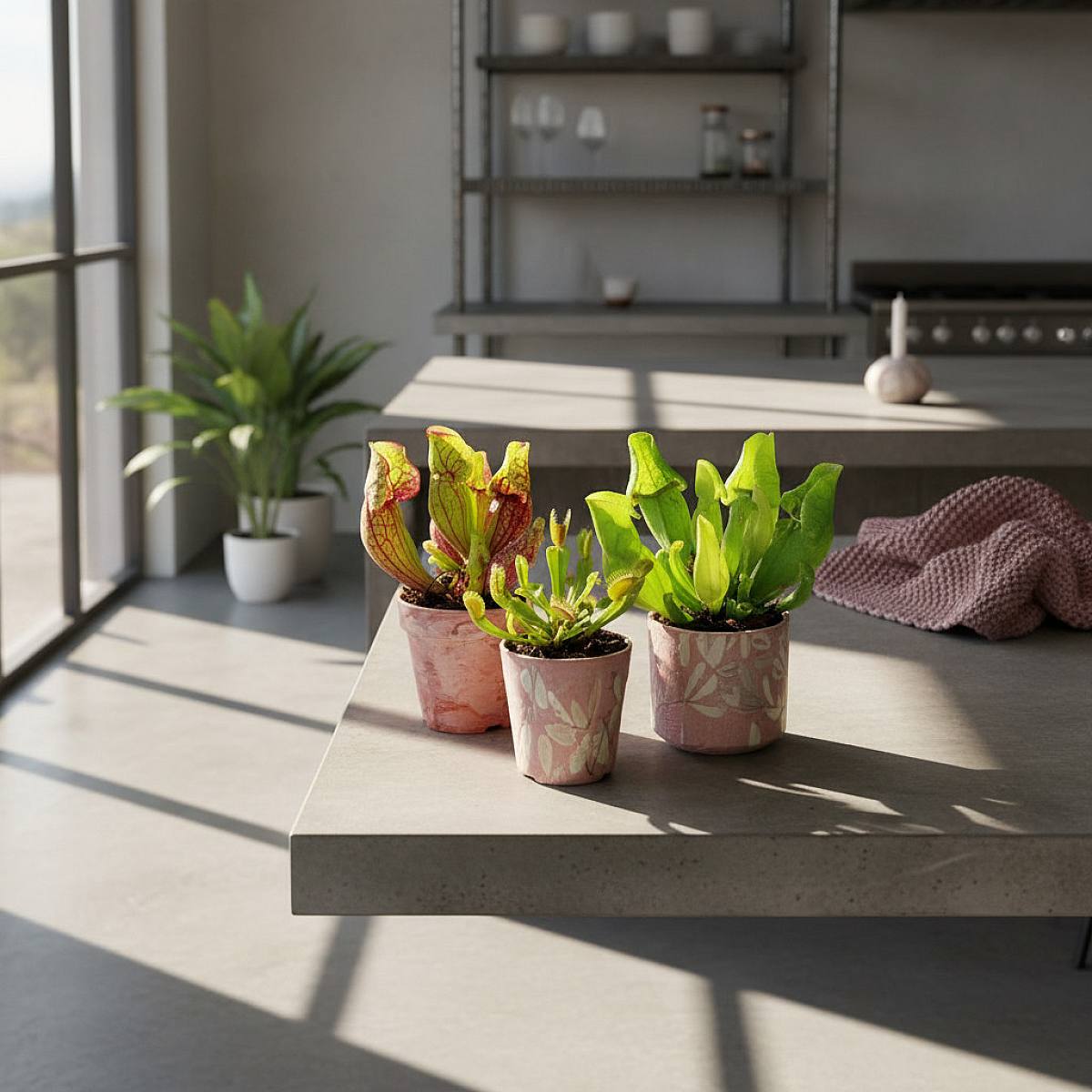
Discover the wonders of nature right at your fingertips with this captivating mix of carnivorous plants. These intriguing wonders are not just a fascinating tabletop display; they reflect the mystery and allure of the plant kingdom. With their curious shapes and distinctive characteristics, these plants promise to be a show-stopper in any setting, bringing an element of enchantment and discovery wherever they are placed.
Perfect for anyone with a sense of adventure, these carnivorous plants invite a playful and intriguing exploration that is both educational and entertaining. Their natural insect-catching abilities provide a mesmerising display of their unique survival tactics, making them an interactive and delightful plant experience.
Alternative Names: Venus Fly Trap, Pitcher Plant, Sundew
Origin: Native to boggy environments across the world.
Recommendations
These plants thrive in bright, indirect sunlight and prefer a humid environment. Perfect for an indoor area where they can show off their interesting nature and catch the occasional fly!
Care
Benefits
The carnivorous plants are perfect for controlling small insect pests in the home, providing a natural and chemical-free solution. Moreover, they are an excellent conversation starter and provide educational value, especially for young, curious minds.
A vibrant mix of carnivorous plants, perfect for an adventurous and educational indoor experience.
BeGreen MIX Carnivorous Plants
Discover the wonders of nature right at your fingertips with this captivating mix of carnivorous plants. These intriguing wonders are not just a fascinating tabletop display; they reflect the mystery and allure of the plant kingdom. With their curious shapes and distinctive characteristics, these plants promise to be a show-stopper in any setting, bringing an element of enchantment and discovery wherever they are placed.
Perfect for anyone with a sense of adventure, these carnivorous plants invite a playful and intriguing exploration that is both educational and entertaining. Their natural insect-catching abilities provide a mesmerising display of their unique survival tactics, making them an interactive and delightful plant experience.
Alternative Names: Venus Fly Trap, Pitcher Plant, Sundew
Origin: Native to boggy environments across the world.
Recommendations
These plants thrive in bright, indirect sunlight and prefer a humid environment. Perfect for an indoor area where they can show off their interesting nature and catch the occasional fly!
Care
Benefits
The carnivorous plants are perfect for controlling small insect pests in the home, providing a natural and chemical-free solution. Moreover, they are an excellent conversation starter and provide educational value, especially for young, curious minds.
Many carnivorous plants have evolved their unique characteristics because they grow in nutrient-poor environments and have adapted to supplement their diet with insects. Interestingly, though they capture and digest insects, very few do so as a primary source of nutrition. For example, the Venus Flytrap closes its traps swiftly when trigger hairs are touched, but it does so only to maintain its nitrogen levels, not solely for sustenance.
Another quirky fact is the delicacy with which these plants perform their catching routines; contrary to their fearsome reputation, they primarily consume smaller insects. So, they won't be feasting on your fingers anytime soon!
Many carnivorous plants have evolved their unique characteristics because they grow in nutrient-poor environments and have adapted to supplement their diet with insects. Interestingly, though they capture and digest insects, very few do so as a primary source of nutrition. For example, the Venus Flytrap closes its traps swiftly when trigger hairs are touched, but it does so only to maintain its nitrogen levels, not solely for sustenance.
Another quirky fact is the delicacy with which these plants perform their catching routines; contrary to their fearsome reputation, they primarily consume smaller insects. So, they won't be feasting on your fingers anytime soon!